
Koenji is a must-visit neighborhood for artsy strolls in Tokyo! This guide covers everything independent-minded travelers need to know, including transportation, local shopping streets, distinctive vintage and variety stores, must-try food, a historic sento bathhouse, the anime pilgrimage spot Weather Shrine, and the spectacular annual Awa Odori Festival—making it easy to plan an authentic one-day trip through Koenji's old-school neighborhood atmosphere!

Koenji is located on the JR Chuo Line, and its name comes from a historic local temple. It is one of the so-called “Three Temples of the Chuo Line.” Compared with the youthful energy of nearby Shimokitazawa and the lived-in charm of Kichijoji, Koenji feels more mature and understated. Although its shopping district is compact, there are relatively fewer tourists, prices are generally affordable, and the neighborhood retains a strong everyday Showa-era shitamachi atmosphere, making it especially popular with creative travelers and backpackers.
Koenji Highlight: A Neighborhood Packed with Shopping Streets
The area around Koenji Station is filled with shopping streets of different styles, including Junjo Shopping Street. Most are concentrated around the station's north and south exits, and many connect directly with one another, making it easy to explore Koenji's lively commercial area entirely on foot.
Comparison of Koenji's Main Shopping Streets
| Shopping Street | Location | Highlights |
|---|---|---|
| Junjo Shopping Street | Directly outside the North Exit | Experience a lively shitamachi atmosphere |
| Koshin-dori Shopping Street | North Exit (West of Junjo Shopping Street) | Great for eating while exploring A deeper local neighborhood stroll |
| あづま通り商店街 | North Exit (East of Junjo Shopping Street) | Secondhand bookstores and renovated old-house shops Quiet and away from the crowds |
| PAL Shopping Street | South Exit | Covered arcade High concentration of vintage shops and cafes |
Recommended Attractions in Koenji
Koenji's down-to-earth neighborhood atmosphere comes with a surprising number of distinctive places worth visiting. From anime pilgrimage spots to nostalgic Showa-era sento bathhouses, these attractions are perfect for capturing the everyday local side of Tokyo.
Koenji Junjo Shopping Street

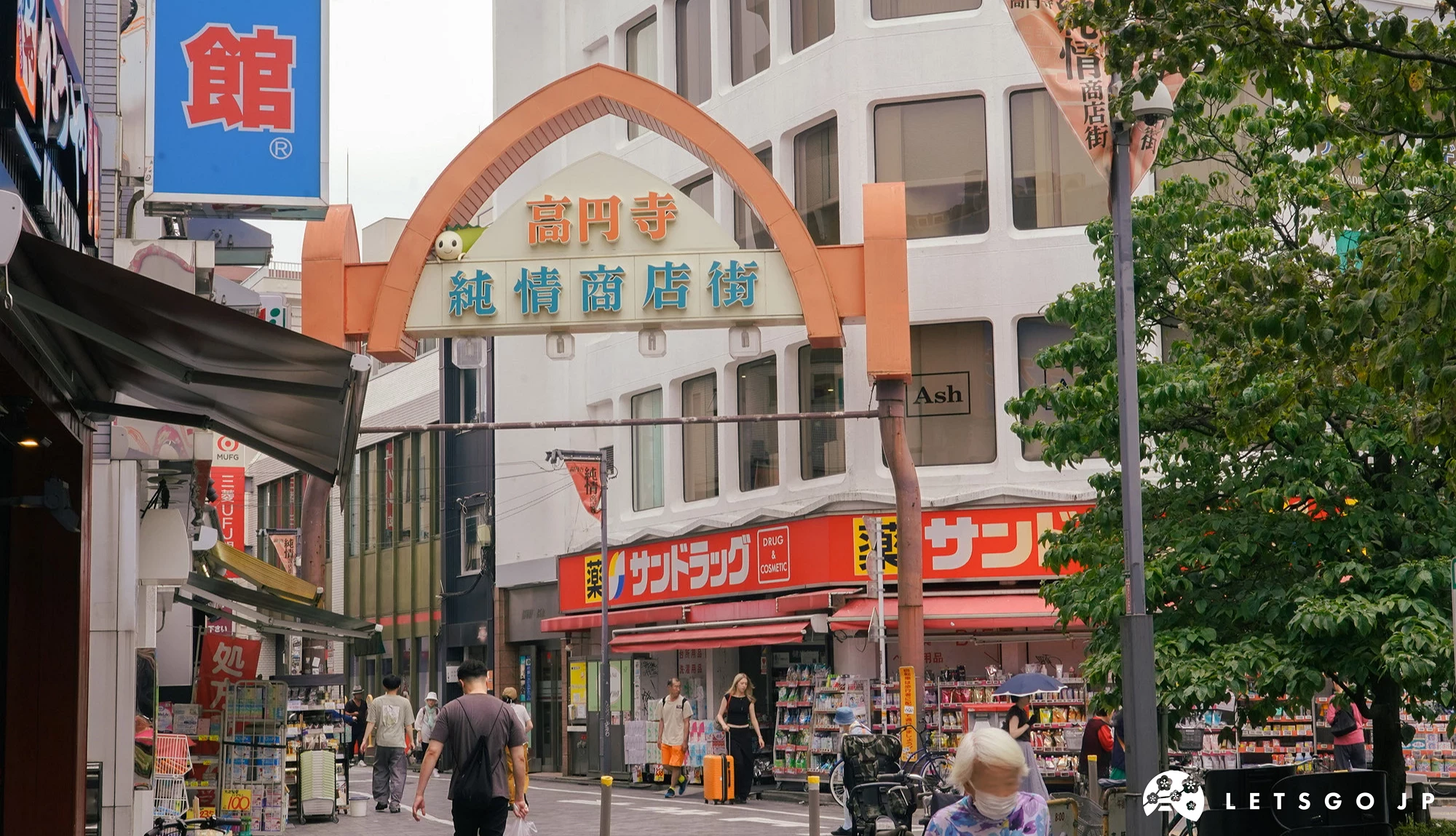
The eye-catching archway of Junjo Shopping Street just outside Koenji Station's North Exit is one of the neighborhood's most iconic photo landmarks. The name “Junjo” comes from a novel of the same name that was set here and won the Naoki Prize for its portrayal of the lives of local shopping-street residents. The shopping street extends roughly 200 meters around the arch and contains a wide variety of stores. It is an important everyday shopping area for local residents and also serves as one of the main venues for the annual Tokyo Koenji Awa Odori Festival.
Address: Around 2-7-13 Koenji-kita, Suginami-ku, Tokyo
Access: In front of the North Exit of JR Koenji Station
Koenji Hikawa Shrine and the Weather Shrine Within Its Grounds

Located not far from the station, Koenji Hikawa Shrine is an important center of local worship. Hidden within its grounds is the Weather Shrine, Japan's only shrine dedicated to a deity of weather. Many worshippers come to pray for clear skies or success in the weather forecaster certification exam. The shrine became even more famous after Makoto Shinkai's animated film Weathering with You, turning it into a pilgrimage spot for anime fans. Its distinctive geta-shaped ema plaques, colorful teru-teru-bozu omamori charms, and teru-teru-bozu fortunes are also very popular. When visiting, it is recommended to first worship at the main hall of Hikawa Shrine before proceeding to the Weather Shrine nearby.
Address: 4-44-19 Koenji-minami, Suginami-ku, Tokyo
Worship Hours: Morning〜17:00
Shrine Office / Amulet Hours: 9:00〜16:00. Check the latest information on the official X account before visiting.
Access: About a 2–3 minute walk from the South Exit of Koenji Station
Koenji Sento Bathhouse “Kosugiyu”

Founded in 1933 (Showa 8), Kosugiyu is a traditional wooden public bathhouse with nearly a century of history. Its elegant karahafu curved roof is one of the most representative sento architectural styles from the reconstruction period following the Great Kanto Earthquake. Step inside and you will find a huge Mount Fuji mural that perfectly embodies the image of a classic Japanese bathhouse. Surrounded by rising steam, visitors can experience the warm and authentic culture of a traditional Japanese sento.
Address: 3-32-17 Koenji-kita, Suginami-ku, Tokyo
Hours: 【Weekdays】14:00~25:30 【Weekends & Holidays】8:00~25:30 Closed Thursdays
Access: About a 5-minute walk from the North Exit of JR Koenji Station
Koenji Theater “座・高円寺”

Opened in 2009, 座・高円寺 is a striking contemporary public theater designed by internationally renowned architect Toyo Ito, a recipient of the Pritzker Architecture Prize. The building contains two professional theater halls as well as a dedicated Awa Odori rehearsal space created for local festivals. On the second floor is the artsy Cafe Henri Fabre, where even visitors who are not attending a performance can stop in for coffee and enjoy the building's masterfully designed three-dimensional spatial aesthetics.
Address: 2-1-2 Koenji-kita, Suginami-ku, Tokyo
Opening Hours: 9:00~22:00
Access: About a 5-minute walk from the North Exit of JR Koenji Station
Recommended Vintage Shops in Koenji
Koenji and Shimokitazawa are two of Tokyo's most popular destinations for vintage clothing. Koenji's vintage shops are concentrated around PAL Shopping Street, エトアール通, and LOOK Shopping Street near the South Exit. The selection ranges from bargain secondhand clothes costing only a few hundred yen to rare vintage pieces priced above ¥10,000, making the area ideal for travelers who love distinctive personal style and the thrill of treasure hunting.
BIG TIME Koenji

BIG TIME Koenji is located inside the covered PAL Shopping Street. The spacious storefront is highly visible and easy to find, making it especially friendly for vintage-shopping beginners. The shop specializes in American casual style and carries a wide selection of men's and women's clothing, retro accessories, bags, hats, and more. Prices range from affordable everyday finds to higher-end pieces, so whether you are browsing alone or shopping with a partner or friends, there is plenty to enjoy.
Address: 4-25-3 Koenji-minami, Suginami-ku, Tokyo (Inside PAL Shopping Street)
Hours: 【Weekdays】11:00~20:00 【Weekends & Holidays】11:00~21:00
Access: About a 2-minute walk from the South Exit of JR Koenji Station
Small Change

Small Change is a well-known shop even among overseas vintage-clothing enthusiasts. Its spacious interior features a carefully selected collection of European and American vintage apparel. The women's section on the second floor is especially photogenic, with raw exposed concrete walls paired with ornate antique lighting to create a dramatic, magical retro atmosphere that adds extra fun to the shopping experience.
Address: 3-45-16 Koenji-minami, Suginami-ku, Tokyo
Hours: 【Weekdays】11:00〜20:00 【Weekends & Holidays】11:00~21:00
Access: About a 4-minute walk from the South Exit of JR Koenji Station
SAFARI

SAFARI, one of Koenji's best-known local vintage shops, carries everything from luxury designer labels and rugged Americana to functional outdoor wear. It operates several branches around Koenji Station, each specializing in different styles and clothing categories, with items carefully classified by age, brand, and condition. Visitors can choose a branch based on the style that interests them most. If you are unsure where to start, begin with Store No. 1, the branch closest to Koenji Station, which focuses on high-quality and rare pieces.
Address: 1F, 3-57-4 Koenji-minami, Suginami-ku, Tokyo
Hours: 13:00~20:00
Access: About a 4-minute walk from the South Exit of JR Koenji Station
Vintage Shop 深緑 (ふかみどり)

深緑 is hidden on the second floor of a building, with only a simple handwritten cardboard sign at the entrance, making it extremely easy to miss if you are not paying attention. This gives the shop a strong “creative secret hideaway” feel. Its collection focuses on distinctive vintage clothing with bold and vivid color combinations. The owner is a professional stylist active in the industry and frequently provides costumes for film and television productions, so the shop is also well known within fashion circles. It is especially suitable for style-conscious shoppers looking to avoid large chains and find truly unique outfits.
Address: 2F, 4-24-4 Koenji-minami, Suginami-ku, Tokyo
Hours: 【Weekdays】13:00~20:00 【Holidays】12:00~20:00
Access: About a 3-minute walk from the South Exit of JR Koenji Station
Recommended Variety and General-Goods Shops in Koenji
Beyond its seemingly endless vintage clothing stores, Koenji is also a treasure trove of retro American goods and old toys. These specialty shops are concentrated around the South Exit just like the vintage stores, making the area perfect for anyone who wants to photograph distinctive street scenes or hunt for unusual souvenirs, retro kitchenware, and cute home decorations.
Kiarry's(キアリーズ)

Kiarry's is located on LOOK Shopping Street and is marked by a distinctive road-sign-style “STOP” sign at the entrance. Step inside and you are greeted by a huge collection of nostalgic American toys from the 1970s and 1980s, along with merchandise featuring classic American cartoon characters. Colorful and full of playful charm, it is a must-visit destination for fans of old-school American toys.
Address: 1F, 2-21-8 Koenji-minami, Suginami-ku, Tokyo (Inside LOOK Shopping Street)
Hours: 13:00~19:00
Access: About a 9-minute walk from the South Exit of JR Koenji Station
DEALERSHIP(ディーラーシップ)

DEALERSHIP is a stylish specialty shop focusing on secondhand mid-century American glassware. It is particularly famous for its large and varied collection of vintage heat-resistant Fire-King glass mugs. With their beautiful retro colors and warm textures, the pieces make this a must-visit shop for antique tableware collectors and kitchenware enthusiasts.
Address: 2F, 3-45-18 Koenji-minami, Suginami-ku, Tokyo
Hours: 12:00~19:00
Access: About a 5-minute walk from the South Exit of JR Koenji Station
Recommended Food in Koenji
In addition to its wide variety of shops, Koenji is also one of Tokyo's hidden treasure troves of affordable local food. Away from the bustle of central Tokyo and with less competition from major chains, the neighborhood is filled with excellent-value restaurants that draw lines as well as long-standing Showa-era flavors. It is easy to find authentic everyday dishes at reasonable prices.
Tensuke

Tensuke is a legendary tempura restaurant near Koenji's North Exit, famous for its lines and known by virtually everyone in the neighborhood. Its signature freshly fried Tamago-ten, a soft-boiled egg tempura, is a must-try. The chef also puts on a unique “cooking show,” stylishly tossing eggshells behind him while preparing the food. At lunchtime, the Tamago Lunch (玉子ランチ) includes seven pieces of freshly fried tempura, including the soft-boiled egg, plus flavorful miso soup, offering incredible value. The restaurant has only around 10 counter seats, so arrive early if you want to eat here.
Address: 3-22-7 Koenji-kita, Suginami-ku, Tokyo
Hours: 【Tue–Fri】12:00~14:45 【Weekends & Holidays】12:00~15:00 Closed Mondays
Access: About a 2-minute walk from the North Exit of JR Koenji Station
Momotarosushi Koenji Honten

Momotarosushi Koenji Honten is located beneath the railway viaduct, only about a 1-minute walk from Koenji's North Exit, and has long been a hugely popular casual sushi restaurant. The shop emphasizes extremely fresh seafood delivered daily from production areas and uses a per-plate ordering system known as 皿売り, with plates starting from ¥100. Takeout is also available. The welcoming atmosphere makes it easy even for first-time international visitors to walk in and dine comfortably.
Address: 4-49-1 Koenji-minami, Suginami-ku, Tokyo
Hours: 11:00〜22:00
Access: About a 1-minute walk from the North Exit of JR Koenji Station
Shichimencho

Hidden inside the shopping streets, Shichimencho is a long-established neighborhood Chinese restaurant filled with strong Showa-era nostalgia. Its signature dish is a beautifully golden omurice. With no flashy decor or gimmicks, this old favorite has earned a devoted local following simply through its comforting flavors, making it the perfect place to experience an authentic and deeply retro side of Koenji.
Address: 4-4-15 Koenji-minami, Suginami-ku, Tokyo
Hours: 11:30~14:00 / 17:30~19:00 Closed Saturdays
Access: About a 5-minute walk from the South Exit of JR Koenji Station
Recommended Accommodation in Koenji
Apart from the shops around the station, most of Koenji is a quiet residential neighborhood, so there are very few large hotels and accommodation choices are limited. If you want to explore Koenji and the surrounding area, staying in Shinjuku, the major transportation hub of western Tokyo, is often more convenient. During the day, you can easily take the Chuo Line between Koenji and other nearby attractions, giving you much greater flexibility when planning your itinerary.
JR-EAST HOTEL METS KOENJI

JR-EAST HOTEL METS KOENJI is directly connected to the North Exit of Koenji Station, allowing you to check in after only about a 1-minute walk from the platform area—an unbeatable location. As a high-quality business hotel operated by JR East, it offers clean facilities, complete amenities, and excellent value for money. The hotel also provides women-only guest rooms, making it comfortable for solo female travelers. One thing to note is that rooms sell out extremely quickly during the summer Awa Odori Festival, so if you plan to visit during the festival period, book as soon as reservations officially open.
Address: 2-5-1 Koenji-kita, Suginami-ku, Tokyo
Access: About a 1-minute walk from the North Exit of JR Koenji Station
Summer Events in Koenji
Tokyo Koenji Awa Odori Festival
Held on the final weekend of August each year, the Koenji Awa Odori Festival traces its origins to 1957. It began when a ceremonial dance event at Koenji Hikawa Shrine was adapted into a larger attraction intended to revitalize the local shopping streets. Today, it has grown into a massive festival drawing as many as one million enthusiastic spectators and is the liveliest moment of the year in Koenji.
The festival is divided into the main street performances and indoor stage performances. Exact event times and prices for paid viewing seats are determined anew each year, so if you are interested in attending, be sure to check the latest announcements on the official website.
Koenji Awa Odori Viewing Guide and Important Tips
The Koenji Awa Odori Festival is held across the area between JR Koenji Station and Shin-Koenji Subway Station, with eight main performance zones. The Central Performance Area in front of Koenji Station is the liveliest but also the most crowded. For a slightly more comfortable viewing experience, head to the Junjo Performance Area on Junjo Shopping Street or to other zones farther from Koenji Station. If you want to secure the best possible view, specially designated paid viewing seats can also be purchased in advance through the official website.
Another important point: during the festival, JR Chuo Line Rapid trains do not stop at Koenji Station. Use the JR Sobu Line instead, or take the Tokyo Metro Marunouchi Line to Shin-Koenji Station.
Koenji Station Transportation Guide
Koenji Station is served by the JR Chuo and Sobu lines and is only about 7 minutes directly from the major transportation hub of Shinjuku Station, making access very quick and convenient. However, note that on Saturdays, Sundays, and Japanese national holidays, JR Chuo Line Rapid trains do not stop at Koenji Station. Weekend visitors should instead take the yellow JR Sobu Line local service.
| Departure Station | Route | Travel Time | One-Way Fare |
|---|---|---|---|
| Shinjuku Station | JR Chuo Line (Rapid) JR Sobu Line (Local) | Approx. 7 minutes | ¥199 |
| Tokyo Station | JR Chuo Line (Rapid) | Approx. 20 minutes | ¥341 |
| Shibuya Station | JR Yamanote Line → Shinjuku Transfer to the Chuo or Sobu Line | Approx. 20 minutes | ¥209 |
※ Fares are reference adult IC-card prices.
Different “Koenji” Stations: Higashi-Koenji and Shin-Koenji
There are actually other stations in the area with “Koenji” in their names, and they are not directly connected to JR Koenji Station. Higashi-Koenji Station is on the Tokyo Metro Marunouchi Line and is relatively far from the main shopping streets described above. Shin-Koenji Station is also on the Marunouchi Line, but walking north from there leads to LOOK Shopping Street near the South Exit of JR Koenji Station, making it a useful alternative entrance or exit for a Koenji shopping stroll.
With lively shopping streets, a dense concentration of distinctive vintage and variety stores, atmospheric sento bathhouses, and affordable local food, Koenji is not only beloved by creative travelers but also simply fun to wander around. On your next independent trip to Tokyo, consider taking a Chuo Line day trip to Koenji and experience the neighborhood's understated yet captivating creative charm for yourself.
Koenji FAQ
1. Is Koenji Better for a Half-Day or Full-Day Visit?
If you simply want to browse Junjo Shopping Street, pick out a few vintage pieces, and have lunch, a half-day of around 3–4 hours can already feel very fulfilling. However, dedicated vintage hunters and cafe lovers who also want to visit the Weather Shrine and experience the nearly century-old Kosugiyu sento should set aside a full day to explore the neighborhood at a relaxed pace. If your time is limited, you can shorten the visit to just experience the local atmosphere around Junjo Shopping Street, then combine Koenji with nearby Nakano and Asagaya for a classic “Chuo Line One-Day Trip.”
2. What Transportation Issues Should I Know About When Visiting Koenji?
There are two key transportation points to remember. First, JR Koenji Station is the central station for shopping and food, so do not confuse it with Higashi-Koenji or Shin-Koenji on the Marunouchi Line. Second, on Saturdays, Sundays, and national holidays, JR Chuo Line Rapid trains do not stop at Koenji Station. If visiting on a holiday or weekend, transfer at Shinjuku to the yellow JR Sobu Line local service.
3. What Time Do Shops in Koenji Open? Is It Good to Visit in the Morning?
Koenji is not an ideal early-morning destination. Most local vintage stores, trendy variety shops, and artsy cafes do not begin opening until around 11:00 or even after 12:00. It is strongly recommended to schedule Koenji for after midday so you can enjoy the shops properly. By early evening, the izakaya also begin opening, letting you experience the neighborhood at its liveliest and most characteristic.
4. What Can I Do in Koenji on a Rainy Day?
PAL Shopping Street at Koenji's South Exit has a high all-weather covered arcade, so even in heavy rain you can comfortably browse its dense concentration of vintage stores and distinctive cafes without opening an umbrella. Ducking into atmospheric kissaten cafes, retro toy shops, and independent variety stores for treasure hunting also makes an excellent rainy-day Koenji itinerary.
5. How Should I Choose Between Koenji, Shimokitazawa, and Kichijoji?
Koenji, Shimokitazawa, and Kichijoji are three of Tokyo's most representative neighborhoods for leisurely exploration, but each has a very different character. Koenji is ideal for travelers who want to hunt for good-value vintage clothing, love retro American toys, and prefer a mature, understated neighborhood with a strong sense of local everyday life. Youthful Shimokitazawa suits fans of street culture, independent bands, and small theaters. Kichijoji, one of Tokyo's most popular residential neighborhoods, is recommended for families and travelers who want spacious parks and greenery, large department stores and shopping complexes, and a convenient visit to the Ghibli Museum in Mitaka. Since all three are on different railway routes, if you have enough time, it is highly recommended to give each neighborhood its own day.
6. How Much Does a One-Day Trip to Koenji Cost?
A basic round trip between Shinjuku and Koenji costs around ¥400. Snacks and set meals are generally about ¥1,000–¥1,500 each, while major shopping items such as vintage clothing and miscellaneous goods start from a few hundred yen. Your total spending will ultimately depend on what you want to do in Koenji.