
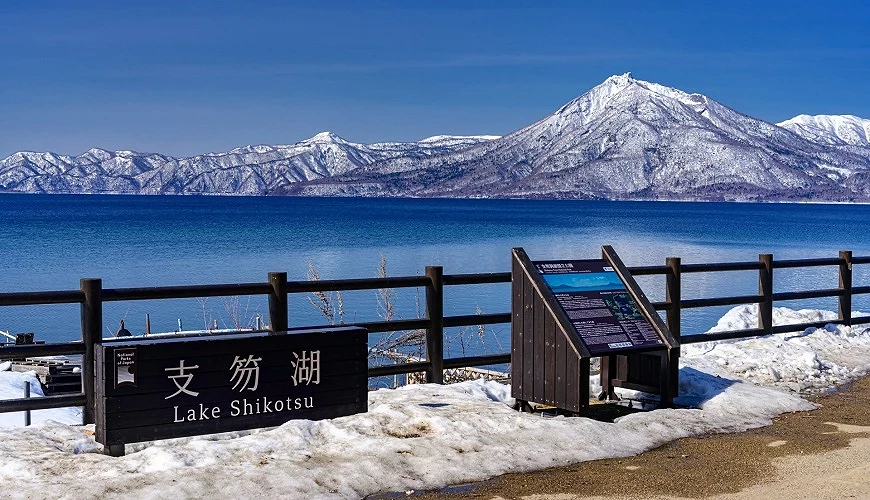
Lake Shikotsu is a crater lake known for its excellent water quality and for remaining unfrozen even in winter. It takes only about an hour by bus from New Chitose Airport. In summer, you can ride an underwater sightseeing boat or paddle a clear canoe to admire the crystal-clear water known as “Lake Shikotsu Blue”; in winter, the magical Ice Festival features spectacular ice sculptures. This guide covers transportation, must-see attractions, seasonal highlights, and other practical information to help you enjoy the natural beauty of Lake Shikotsu with ease!

Lake Shikotsu is located in Chitose, Hokkaido, within Shikotsu-Toya National Park. It is a crater lake formed by volcanic activity about 40,000 years ago. The lake has a circumference of about 40 km and reaches a maximum depth of 363 meters, making it Japan's second-deepest lake after Lake Tazawa in Akita Prefecture. One of Lake Shikotsu's most notable features is its excellent water quality. It has ranked first 20 times in Japan's Ministry of the Environment public water-quality surveys, and its clear water is one of the main highlights for visitors.
The Japanese place name “Shikotsu” comes from the Ainu word “shi-kot,” meaning “large hollow.” Because the water contains few nutrients, plankton do not multiply easily, allowing sunlight to create a beautiful blue sheen known as “Lake Shikotsu Blue.” Thanks to its great depth and high heat-storage capacity, the lake rarely freezes even in the harshest winter weather, earning it the nickname “Japan's northernmost ice-free lake.”
How to Get from Sapporo to Lake Shikotsu
The only public transportation to Lake Shikotsu is Hokkaido Chuo Bus route “Airport 4.” The bus connects New Chitose Airport with Lake Shikotsu and stops at two railway stations in Chitose. Once you board in the correct direction, simply ride to the final stop, “Lake Shikotsu.”
| Route | Take the JR Rapid Airport train from Sapporo Station ↓ Chitose Station West Exit, Bus Stop No. 4 ↓ Transfer to the “Airport 4 Bus” ↓ Lake Shikotsu |
|---|---|
| Fare | JR: ¥1,040 Bus: ¥1,140 Total: ¥2,180 |
| Travel Time (Excluding transfer time) | JR: Approx. 35 minutes Bus: Approx. 45 minutes Total: Approx. 1 hr 20 min |
From Sapporo: JR + Bus

There is no direct public transportation from Sapporo Station to Lake Shikotsu. Travelers first need to take the JR Chitose Line to Chitose Station, then transfer to the Airport 4 bus after exiting the station. Both JR trains and buses accept transportation IC cards such as Suica and PASMO, so preparing one in advance saves time buying tickets and making change. There is some distance between the JR platform and the bus stop, so it is safer to check the schedule in advance and allow at least 15 minutes for the transfer. Also note that the last return bus from Lake Shikotsu departs at 17:45. If you miss it, there is no other public transportation back to a JR station.
| Boarding Point | Domestic Terminal Bus Stop No. 28 or International Terminal Bus Stop No. 85 |
|---|---|
| Route | Airport 4, Bound for Lake Shikotsu |
| Fare | ¥1,260 |
| Travel Time | Approx. 55–60 minutes |
From New Chitose Airport: Direct Bus

New Chitose Airport has a direct bus to Lake Shikotsu. Look for the front display reading “Airport 4, Lake Shikotsu.” The bus passes JR Chitose Station along the way, but no transfer is required. There are four buses per day on weekdays and six on weekends and holidays. The last return service departs at 17:45. Since schedules may change, check the timetable in advance so you are not left without transportation back to the city. There are no large luggage-storage facilities around Lake Shikotsu. If you are not staying overnight, it is best to leave large luggage at the airport or use a luggage delivery service to send it to your hotel.
From Central Sapporo or the Airport: Driving

When driving to Lake Shikotsu, enter “Lake Shikotsu Onsen” into Google Maps. The drive takes about 70 minutes from central Sapporo and around 40 minutes from New Chitose Airport. If you plan to play by the water, canoe, or try SUP, you can park at the paid parking lot at the waterfront “Minamoa Park.” Winter tires are essential when driving in winter. National Route 453 to Lake Shikotsu is sometimes temporarily closed due to snow or falling rocks, so check road conditions before departure and again during the journey.
Lake Shikotsu Visitor Center Parking Lot
Mapcode:867 064 510*41
Open: April 1–November 30
Parking Fee: ¥500 per standard car per entry
Minamoa Park Parking Lot
Mapcode:867 064 186*06
Parking Fee: ¥1,000 per standard car per entry
3 Reasons Lake Shikotsu Is Worth a Special Trip
Crystal-Clear Water Lets You See the Lakebed and Enjoy Water Activities

Unlike some sightseeing lakes where visitors can only admire the scenery from shore, Lake Shikotsu offers water activities that bring you closer to the lake. Because the water is exceptionally clear, many visitors choose the underwater sightseeing boat to view the lakebed through submerged windows or paddle a transparent canoe for an up-close look at the crystal-clear water. In addition to sightseeing boats and canoes, stand-up paddleboarding (SUP) is also available. If you enjoy water activities, it is worth allowing extra time.
Beautiful Ice-Free Lake Scenery in Winter

Lake Shikotsu is Japan's northernmost ice-free lake. Even when the surrounding landscape is covered in white snow, the lake continues to reflect a deep blue glow, and its exceptionally clear water remains visible even in Hokkaido's severe winter. A winter visit may also coincide with Lake Shikotsu's seasonal “Ice Festival,” making winter another excellent season to visit.
Lake Shikotsu Ice Festival
One of Lake Shikotsu's most famous winter scenes is the “Chitose Lake Shikotsu Ice Festival – Ice Museum,” commonly known as the Ice Festival. First held in 1979, it has become one of Hokkaido's signature winter events. The Japanese character used in the festival name means “waves,” referring to “the waves raised in winter” on Japan's northernmost ice-free lake.
4 Highlights of the Ice Festival

Although the shapes and themes of the ice sculptures change each year, four highlights appear almost every year: giant ice sculptures, nighttime illumination, the Ice Shrine, and ice-built structures. The enormous ice sculptures are among the festival's most popular attractions. Over more than two months, Lake Shikotsu water is repeatedly sprayed onto frames and frozen, creating large ice formations that naturally reveal the beautiful “Lake Shikotsu Blue.” At night, colorful lights illuminate the sculptures, producing a completely different atmosphere from daytime and making the venue more vibrant and festive.
The “Ice Shrine,” made by freezing lake water, is another major highlight. Unlike at an ordinary shrine, visitors can stick offering coins onto the icy walls, creating a unique “coin wall.” The venue also features many large-scale ice artworks. For example, in 2027 there will be an ice sculpture themed after the currently closed Lake Shikotsu attraction “Moss Cave,” giving travelers a chance to experience it in another form. Fireworks have also been launched on several Saturday evenings in past years, but whether fireworks will be held in 2027 depends on the official decision. Interested visitors should follow the latest announcements.
2027 Ice Festival Event Information

Basic information for the 2027 Ice Festival has already been announced, so travelers can start planning their visit. Since weekend and holiday admission costs three times as much as weekday admission, visiting on a weekday is strongly recommended. Guests staying at Lake Shikotsu Onsen or Marukoma Onsen can also purchase a weekday-only “Premium Time Ticket” (¥1,500) at their hotel. This allows exclusive ice-sculpture viewing from 20:15 to 21:15 after the regular venue closes, plus re-entry the following morning, making it excellent value.
2027 Chitose Lake Shikotsu Ice Festival – Ice Museum
(Chitose Lake Shikotsu Ice Festival – Ice Museum)
Event Period: January 30, 2027 (Sat)–February 23, 2027 (Tue, Holiday)
Opening Hours: 10:00–20:00
Illumination: 16:30–20:00
Admission:
【Weekdays】¥1,000
【Saturdays, Sundays & Holidays】¥3,000
※ Junior high school students and older; elementary school students and younger are free
Venue: Lake Shikotsu Onsen, Chitose, Hokkaido
Parking: 400 spaces (Free in winter)
Transportation and Tips During the Ice Festival
Night illumination at the Ice Festival begins at 16:30. If you visit by regular bus, you will have only about one hour to enjoy the illuminated venue. To fully experience the festival at night, consider booking the direct shuttle bus “Hyoto BLUE LINER” in advance or staying overnight at Lake Shikotsu. If driving, arrive early to avoid full parking lots.
Also note that the venue is on the lakeshore with no surrounding shelter, so strong winds often pick up after evening and make the temperature feel much colder. For nighttime illumination, wear a down jacket, non-slip boots, gloves, and a hat. For dinner, some restaurants in the onsen district close during winter, so check in advance which places are open if you plan to eat locally.
Must-Visit Attractions at Lake Shikotsu
Lake Shikotsu Walking Route
Most attractions around Lake Shikotsu are concentrated in the Lake Shikotsu Onsen area on the eastern shore and can be reached on foot without extra transportation. A simple walk takes about 40 minutes; including the Visitor Center, around 1.5 hours is usually enough. Add the 30-minute underwater sightseeing boat and lunch, and you have a full half-day trip. You can also extend it to a full day for a more relaxed pace. There is no paid observation deck by the lake, so for beautiful views, enjoy the scenery from the lakeshore or near the Yamasen Railway Bridge.
| Recommended Walking Route | Bus Stop→ Visitor Center→Yamasen Railway Bridge→Waterfront Park |
|---|
Lake Shikotsu Visitor Center

The Lake Shikotsu Visitor Center is a free nature-interpretation facility established by Japan's Ministry of the Environment. Detailed dioramas and large photographs introduce the lake's volcanic terrain, underwater world, and surrounding ecosystem, and there is also an aquarium displaying kokanee salmon, locally known as “chippu.” The center also shows what the interior of the currently closed “Moss Cave” looks like. Since the Visitor Center is close to the bus stop, it is a good idea to pick up a lakeside walking map and guide brochure here before exploring the area.
Address: Lake Shikotsu Onsen, Chitose, Hokkaido
Phone: 0123-25-2404
Opening Hours:
【April–November】9:00–17:30
【December–March】9:30–16:30
Closed: Tuesdays from December to March (or the following day if Tuesday is a holiday), year-end/New Year period (Open during the Ice Festival)
Access: About a 2-minute walk from the Lake Shikotsu bus stop
Yamasen Railway Bridge

The vermilion “Yamasen Railway Bridge” spanning the Chitose River is an iconic Lake Shikotsu landmark. Built in 1899, it is the oldest surviving bridge still in active use in Hokkaido. It was originally an iron bridge over the Sorachi River and was later relocated to its current site by Oji Paper's light railway. Today it is a pedestrian-only bridge. It has been recognized by the Japanese government as a Heritage of Industrial Modernization and selected by the Japan Society of Civil Engineers as a Civil Engineering Heritage site. Its red structure blends naturally into the Lake Shikotsu scenery, making it a must-photograph spot on a lakeside walk. Many visitors also enjoy the lake view from the bridge for a different perspective.
Open: 24 Hours
Access: About a 3-minute walk from the Lake Shikotsu Visitor Center
Lake Shikotsu Waterfront Park

Lake Shikotsu Waterfront Park is located on the opposite side of the Yamasen Railway Bridge and can easily be visited together with it. Visitors can walk right to the water's edge to experience the lake's clear water up close, and canoe and SUP tours also depart from here. To enter the waterside area, visitors aged junior high school and above must pay a ¥500 “Environmental Conservation Cooperation Fee.” Check the official website for details. Also note that water depth changes dramatically along the shore, so use extreme caution when playing near the water, especially with children.
Open: 24 Hours
Admission (Environmental Conservation Cooperation Fee): ¥500 for junior high school students and older
Access: About a 5-minute walk from the Lake Shikotsu Visitor Center
Recommended Things to Do at Lake Shikotsu
Lake Shikotsu has a circumference of about 40 km, and the road along the western shore has long been closed, so driving all the way around the lake is not practical. The best way to experience Lake Shikotsu is to “get on the water.” From easy sightseeing cruises to canoes and SUP that require you to paddle yourself, a variety of activities let you experience the lake's beauty and astonishingly clear water. Afterward, warm up in an onsen to make the trip even more complete.
Lake Shikotsu Sightseeing Boat

The “Underwater Sightseeing Boat” is one of Lake Shikotsu's most popular water activities. No special clothing is required, making it an easy way to see the lake up close. The route mainly circles the eastern part of the lake and takes about 30 minutes. The lower cabin sits about 2 meters below the waterline and has around 16 underwater windows, allowing passengers to clearly see the spectacular columnar joints on the transparent lakebed. If you are lucky, you may also spot Lake Shikotsu's famous kokanee salmon. Two vessels currently operate: the “Emerald,” with a two-level rear deck, and the “Sapphire,” where passengers can stand at the bow. If you are not interested in underwater views, speedboats and swan boats are also available.
Fare: Adults ¥2,000, Elementary School Students ¥1,000
Operating Season: Approx. late April–early November
Hours: 9:00–17:00 (30 minutes per trip; may vary by season)
※ Actual fares and operating information are subject to official announcements.
Ocean Days

A “Clear Canoe” or “Clear SUP” lets you look through the transparent bottom and feel as if you are floating above the water, with a direct view of the clear lakebed while paddling. These are signature Lake Shikotsu activities. For the clearest underwater scenery, spring and summer are recommended because the weather is comfortable and water transparency is high. Most experiences are led by local instructors, so even first-time participants can join with confidence. Always follow instructions, wear a life jacket correctly, and do not enter areas outside the designated waters. Travelers who prefer to stay on land can choose a fat-bike ride through forest roads and still enjoy the natural surroundings.
Opening Hours:
【April–September】8:00–17:00
【October–March】8:30–17:00
Activities: Clear Canoe, SUP, and Fat Bike
Lake Shikotsu Day-Trip Onsen

Lake Shikotsu's hot springs are mainly divided between the “Lake Shikotsu Onsen District” on the eastern shore, where many inns are located, and “Marukoma Onsen” on the northern shore. Kyukamura Shikotsuko on a hill above the eastern shore, Tsuruga Mizu no Uta with its lunch-buffet package, and Marukoma Onsen Ryokan on the northern shore, which has baths at the same water level as the lake, all offer day-use bathing. Even without staying overnight, you can warm up after walking, water activities, or the Ice Festival. If you want to stay for the winter illumination, consider spending a night at an onsen-district inn such as Dai-ichi Hotel Suizantei.
Kyukamura Shikotsuko
Address: Lake Shikotsu Onsen, Chitose
Day-Use Onsen Hours: 11:00–15:00 (Last admission 14:30; closes when the daily capacity is reached)
Day-Use Onsen Closed: Tuesdays and Wednesdays
Day-Use Onsen Fee: Adults ¥800, Elementary School Students ¥400, Children Age 4+ ¥200
Feature: Easy to use and located on a hill overlooking the lake
Access: About 5 minutes by shuttle bus from the Lake Shikotsu bus stop (Notify the property of your bus arrival time in advance)
Tsuruga Mizu no Uta
Address: Lake Shikotsu Onsen, Chitose
Day-Use Onsen Hours: Saturdays, Sundays & Holidays 11:30–15:00
Day-Use Onsen Fee: Adults ¥4,500, Ages 4–Elementary School ¥2,200 (Includes lunch buffet and bath towel rental)
Feature: Resort hotel with a lunch-buffet package
Access: Immediately after getting off at the Lake Shikotsu bus stop
Marukoma Onsen Ryokan
Address: 7 Horobinai, Chitose
Day-Use Onsen Hours: Saturdays, Sundays & Holidays 10:00–15:00 (Last admission 14:00)
Day-Use Onsen Fee: Adults ¥1,200, Children ¥600, Young Children ¥300, Under Age 3 Free
Feature: Naturally fed outdoor baths at the same water level as the lake and an infinity-style open-air bath
Access: About 20 minutes by hotel shuttle bus from the Lake Shikotsu bus stop (Reservation required)
Lake Shikotsu Food
What locals call “Lake Shikotsu chippu” is the must-try specialty kokanee salmon (himemasu). Freshly caught kokanee is easiest to enjoy during the fishing season from June to August. Some lakeside restaurants and shops close during winter, so if you want to eat local food while visiting the Ice Festival, be sure to check restaurant opening status in advance.
Poropinai Shokudo

“Poropinai Shokudo” is a fisher-run restaurant on the northern shore of Lake Shikotsu, with excellent views from its lakeside seats. Here you can enjoy whole grilled kokanee, fried fish, and sashimi set meals, sampling kokanee prepared in several different ways at once. Outside the kokanee fishing season, set meals featuring other fish are served instead.
Address: Horobinai, Chitose, Hokkaido
Opening Hours: 10:00–17:30 (L.O. 17:00)
Closed: Winter closure from November 4
Access: About a 10-minute drive toward Sapporo from the Lake Shikotsu Onsen district
Oshokujidokoro Kotobuki

“Oshokujidokoro Kotobuki” is a popular kokanee restaurant in the Lake Shikotsu Onsen district that serves only fresh fish. Menu highlights include melt-in-the-mouth kokanee sushi, classic salt-grilled kokanee, and multi-course sets featuring vinegared fish, sashimi, and fish soup. You can also try the strongly carbonated local soda “Shikotsu no Shigeki,” which pairs well with kokanee dishes. Note that the restaurant is closed from December to mid-April, so it is not open during the Ice Festival.
Address: Lake Shikotsu Onsen, Chitose
Opening Hours: 10:30–17:00 (Closed December–mid-April)
Closed: December–mid-April
Access: About a 2-minute walk from the Lake Shikotsu bus stop
Showa Bussan

Located at the entrance to the Lake Shikotsu Onsen district, “Showa Bussan” serves a wide range of light meals. Its signature dish is kokanee slowly grilled over charcoal with salt by the owner. Other popular choices include charcoal-grilled pork rice bowls, charcoal-grilled lamb, and nostalgic ramen made with kokanee fish sauce.
Address: Lake Shikotsu Onsen, Chitose
Opening Hours: 11:00–19:00
Access: About a 2-minute walk from the Lake Shikotsu bus stop
Lake Shikotsu Weather and Seasonal Activities
Lake Shikotsu Seasonal Temperatures and Clothing Guide
Lake Shikotsu lies in the mountains at an elevation of about 250 meters. The lakeshore has little shelter and can be windy, so the temperature often feels several degrees colder than the actual reading, especially in winter. Even in summer, early-morning and evening temperatures may drop to around 11°C, so bring an extra jacket.
| Spring (April–May) | Daytime Temperature: 11–17°C Early Morning / Night: 0–6°C |
|---|---|
| Summer (June–August) | Daytime Temperature: 20–25°C Early Morning / Night: 11–18°C |
| Autumn (September–November) | Daytime Temperature: 9–23°C Early Morning / Night: -2–13°C ※ Temperatures differ greatly between September and November |
| Winter (December–March) | Daytime Temperature: -1–4°C Early Morning / Night: -13–-6°C |
Simple Seasonal Clothing Suggestions:
| Spring | Summer | Autumn | Winter |
|---|---|---|---|
| 【Upper Body】 Long-sleeve tops, knitwear Windproof jacket essential (Layered clothing) | 【Upper Body】 Short-sleeve T-shirt or tank top during the day Light jacket for mornings and evenings | 【Upper Body】 Long-sleeve clothing, knitwear Bring a winter coat in November | 【Upper Body】 Thermal base layer, thick sweater Warm down jacket |
| 【Lower Body】 Long pants, jeans Long skirt | 【Lower Body】 Shorts, lightweight pants Breathable skirt | 【Lower Body】 Long pants, windproof pants Long skirt with light tights | 【Lower Body】 Thick fleece-lined pants Thermal leggings |
| 【Shoes】Casual shoes, sneakers | 【Shoes】Sandals, breathable sneakers | 【Shoes】Sneakers, ankle boots | 【Shoes】Warm boots, non-slip snow boots |
Spring: Lakeside Cherry Blossoms in Early May

Cherry blossoms around Lake Shikotsu usually reach full bloom from early to mid-May, nearly a month later than on Honshu. The main varieties are Ezo-yamazakura and Chishima-zakura, with each tree showing a different shade of pink and creating beautiful layers of color. If you miss Japan's cherry blossoms in March or April, consider a May trip to Lake Shikotsu in Hokkaido.
Because of its climate and geography, Hokkaido is usually one of the last regions in Japan to see cherry blossoms. From Sapporo to Hakodate, many areas offer worthwhile viewing spots and a wide variety of cherry blossom species. If you want a different hanami atmosphere from Honshu, see the “10 Best Cherry Blossom Spots in Hokkaido” guide below to plan your trip.
Summer: Peak Season for Cool Weather and Water Activities

The lakeside climate is cool in summer, making it the peak season for sightseeing boats, clear canoes, SUP, and other water activities. Water transparency is high at this time of year, making it the best season to enjoy the famous “Lake Shikotsu Blue.” The lively “Lake Shikotsu Lake Festival” is also held during this period. Summer is also peak kokanee season, so you can enjoy local fish alongside the scenery and water activities.
Autumn: Foliage in Mid to Late October

The best time for autumn foliage at Lake Shikotsu is usually from mid- to late October. Multiple tree species change color at the same time, creating richly layered autumn scenery. The mountains surrounding the lake, including Mount Eniwa and Mount Fuppushi, reflect beautifully against the clear water, making this the most colorful season of the year. In addition to walking along the shore, taking a sightseeing boat to view the foliage from the water is highly recommended.
Hokkaido's vast size and large elevation differences between mountain bases and summits create an exceptionally long autumn foliage season lasting nearly two months. When planning an autumn trip to Hokkaido, see the “Best Autumn Foliage Spots in Hokkaido” guide for locations from Asahikawa and Sapporo to Hakodate.
Winter: The Ice-Free Lake and Ice Festival

Lake Shikotsu does not freeze in winter. Even when the surrounding landscape is covered in snow, the lake continues to reflect a deep blue glow, while strong winds create waves that reveal another side of the lake. The classic “Ice Festival” is also a must-see winter event. If you want to stay for the nighttime illumination, consider spending the night near the lakeshore for a fuller winter experience.
Attractions Near Lake Shikotsu
After exploring Lake Shikotsu, the most convenient extension is Lake Toya, which is also part of Shikotsu-Toya National Park. If you have more time, Noboribetsu is also highly recommended for hot springs. However, there is no public transportation connecting Lake Shikotsu directly with either of these popular central Hokkaido destinations, so a rental car is required to combine them in one itinerary.
Lake Toya

Like Lake Shikotsu, Lake Toya is a crater lake, but it is also recognized as part of a UNESCO Global Geopark. The lake contains islands, and its onsen town is much larger than Lake Shikotsu's. In addition to varied natural scenery, a long-running summer fireworks event lasting several months attracts many visitors to stay overnight. From Lake Shikotsu, drive along National Route 276 over Bifue Pass; the journey takes about 1 hour 20 minutes.
Noboribetsu

Noboribetsu is one of Hokkaido's most famous hot-spring towns. Its signature sight is Jigokudani, where steam constantly rises from the volcanic landscape and walking trails lead through the geothermal crater area. Nearby attractions include a marine park, bear park, and historical theme park, making the area suitable for visitors of all ages.
From Lake Shikotsu, take National Route 276 toward central Tomakomai for about 30 minutes, then transfer to National Route 36 to reach Noboribetsu.
Lake Shikotsu offers a wide range of natural attractions throughout the year: clear “Lake Shikotsu Blue” water in spring and summer, autumn foliage, and the Ice Festival in winter. Transportation from central Sapporo and New Chitose Airport is convenient, and even without renting a car, you can travel by bus. On your next Hokkaido trip, consider spending half a day to a full day experiencing Lake Shikotsu's scenery for yourself.
Recommended Reading:Noboribetsu Travel Guide: Jigokudani, the Hot Spring Town, Attractions, and Transportation
Lake Shikotsu FAQ
1.Can You Visit Lake Shikotsu Without Renting a Car?
Yes. Direct buses run from New Chitose Airport and JR Chitose Station to Lake Shikotsu Onsen, and most attractions are within walking distance after you get off. However, bus services are limited, and the last bus departs at 17:45, so plan your schedule carefully. If you want to see the Ice Festival's nighttime illumination, consider a reservation-only shuttle bus or staying overnight locally.
2.Is Lake Shikotsu Suitable for Families with Children?
Yes. The underwater sightseeing boat, Visitor Center, and lakeside walks are suitable for visitors of all ages. However, water depth changes quickly along the shore, so take extra care if playing near the lake. During the winter Ice Festival, nighttime conditions are cold and windy, so dress warmly.
3.Are There Bears Around Lake Shikotsu?
The Lake Shikotsu area is brown bear habitat, and Chitose City periodically issues bear alerts. Bears are less likely to appear in developed areas such as the onsen district and Visitor Center, but if you plan to hike, fish along the shore, or enter forest and lakeside natural areas for any reason, check the latest notices on the Chitose City website and pay close attention to your surroundings.
4.Can You Play in the Water or Swim at Lake Shikotsu?
Lake Shikotsu has a waterfront park where visitors can get close to the water, but depth changes dramatically and even areas near shore can suddenly become deep. Waves can also form easily. If you want to enjoy the water, it is safer to join an instructor-led canoe or SUP tour and wear a life jacket correctly. Do not swim independently or enter areas outside designated zones.
5.Do You Need Winter Tires to Drive to Lake Shikotsu in Winter?
Winter tires are essential when driving in Hokkaido during winter, and drivers should ideally have experience driving on snow-covered roads. National Route 453 through the mountains toward Lake Shikotsu is often temporarily closed due to snowfall, so check official real-time road information before departure.