
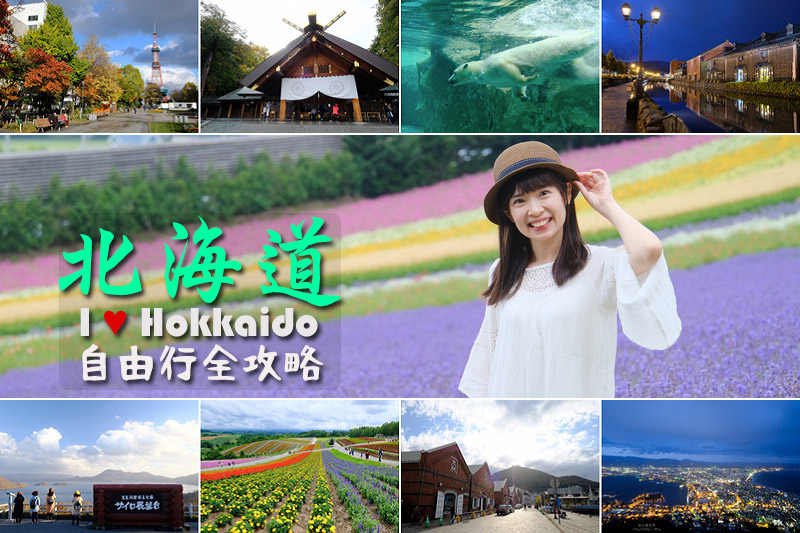
6 Hokkaido Free Travel Guide is here! Hokkaido is so big, how should you plan the route? How many days is just right? What are the must-visit attractions?
Don’t worry. Bibi has condensed the Hokkaido attractions, must-eat foods, must-buy souvenirs, self-driving transportation, flight tickets, and accommodation that beginners are most curious about into this article. In addition to a carefully made “Hokkaido Attractions Map,” there is also a “9 Days 8 Nights Itinerary” that you can follow without getting stuck (with seasonal alternatives for spring, summer, autumn, and winter).
Whether you are a first-time Hokkaido traveler or an experienced visitor who wants to go from Hakodate all the way to Furano’s flower fields, just follow this ultimate Hokkaido travel guide. Pack with no effort and set off easily, and you may end up not wanting to go home.
2026 Hokkaido Latest Travel Info and Avoidance Tips

Hokkaido, located at the northernmost tip of Japan, is Japan’s largest administrative region, with an area about 2.3 times that of Taiwan. It is mainly divided into four major areas: central Hokkaido, southern Hokkaido, northern Hokkaido, and eastern Hokkaido. It is not really possible to visit all of them at once, and the attractions that ordinary travelers often visit are mostly in the first three regions.
For Hokkaido free travel, 7 to 8 days is the most popular duration. Among them, 5 to 6 days is enough for the classic Sapporo, Otaru, and Hakodate route; the remaining 2 to 3 days can be arranged according to the season, with cherry blossoms in spring, flower fields in summer, maple leaves in autumn, and snow activities in winter. It is fun all year round.
In recent years, Hokkaido has not only added many new attractions, but also introduced new systems and local cultural details that are easy for beginners to stumble over. Before you depart, quickly follow Bibi to update yourself and see what the trendiest ways to play in Hokkaido are now.
Hokkaido’s Latest Highlights and Travel Trends

The latest highlights of Hokkaido in 2026, from hot new attractions to the trendiest ways to explore, are all organized here. If you want to keep up with the trend, this is how to do it:
AOAO SAPPORO:
A “museum-style” urban aquarium located in Sapporo’s Tanukikoji, with strong design appeal and jellyfish and penguins as the main stars. There is also a bar inside, so it is very relaxing to enjoy marine animals while drinking. But this place focuses on a refined vibe, so be mentally prepared that there are no dolphin shows or giant tanks. (✅ Buy ahead: AOAO SAPPORO tickets)
Hokkaido Ballpark F Village:
The new home stadium of the Hokkaido Nippon-Ham Fighters, located in Kitahiroshima City between Sapporo and New Chitose Airport. It is a complex park combining baseball games, food, and shopping, and it has the “world’s first natural hot spring overlooking a stadium.” Soaking in the bath while watching the game is especially unique. Taiwanese baseball fans can also go cheer on Taiwanese players such as Gu Lin Ruiyang and Sun Yi-Lei!
Eastern Hokkaido (ひがし北海道):
If you want to see the wildest side of Hokkaido, head to eastern Hokkaido! World Natural Heritage Shiretoko, the mysterious Lake Akan and Lake Mashu, the vast Kushiro Marsh, and the winter-only drift ice of Abashiri make this a favorite for advanced travelers. Because transportation takes a long time, it is recommended to allocate at least 3 to 5 days so it won’t feel too rushed.
Hokkaido Travel Avoidance Tips

Bibi has compiled the latest 2026 Hokkaido travel updates and the 6 biggest pitfalls that beginners are most likely to fall into. Spend one minute reading before you leave, and it will help you avoid traps and enjoy your trip more.
Japan holiday monster:
Don’t just look at Taiwan’s holiday calendar! Avoid Japan’s Golden Week (early May) and Obon Festival (mid-August). Lavender season (July) and ski season (December to February) are also peak periods. During these times, hotel prices soar and popular areas are hard to book. If you want a relaxed trip, remember to avoid them.
Don’t underestimate the “distance reality” of Hokkaido:
This is the biggest pitfall for beginners! Sapporo, Otaru, Furano, Hakodate, Asahikawa, and eastern Hokkaido are all far apart. Don’t think you can visit everything at once and spend 3 to 5 hours driving every day. In winter, navigation times are even less reliable. Blizzard conditions and JR delays can greatly increase travel time. It’s best to visit only 1 to 2 key spots per day.
Biei and Furano farmland is off-limits:
The famous trees along the Patchwork Road and Panorama Road are often next to private farmland. Remember that you can only take photos on the paved road, and never step into the fields. Bacteria on shoe soles may ruin the farmers’ entire season’s crops! The famous “Philosopher’s Tree” was even cut down by the landowner because of chaotic tourist behavior. Please be respectful when taking photos.
Winter self-driving is risky:
In winter, the road surface may look wet but actually be icy black ice, which is very dangerous. Strong wind can blow loose snow across the ground, and visibility can suddenly drop to zero. If you are not familiar with driving in snow, it is recommended not to rent a car from December to March. Taking JR, buses, or joining a day tour is safer. If you must drive yourself, make good use of live road condition tools such as Noko Navi and snowstorm visibility information.
Limited express trains are now fully reserved seating:
JR Hokkaido’s conventional line limited express trains have been changed to fully reserved seating from spring 2026 onward, and unreserved limited express tickets are no longer sold. Even with a JR Pass, you cannot simply board and find a seat. Be sure to reserve a seat ticket at the green window or ticket machine in advance, and make reservations early during peak season to avoid disappointment.
Beware of “double” lodging tax:
Starting April 1, 2026, Hokkaido will levy a prefectural lodging tax of 100 to 500 yen per person per night depending on room price. In addition to the prefectural tax, cities and towns such as Sapporo, Otaru, Hakodate, Furano, and Niseko will also add their own municipal taxes. In Sapporo, the total tax may be around 300 to 1,000 yen. Online hotel bookings usually do not include this tax, so it must be paid separately at check-in.
First Time in Hokkaido? 9 Days 8 Nights Itinerary and Total Budget

How should you arrange a Hokkaido trip? First, here is Bibi’s carefully made Hokkaido attractions map to help beginners understand the relative locations of the major attractions.
The map marks 14 popular travel cities in Hokkaido and the popular attractions within them. The “blue text” represents the must-visit attractions for beginners. If it’s your first time here, just focus on those first.
Reminder: Travel time between Hokkaido cities is at least 1 to 2 hours. When planning your trip, remember not to be too ambitious and try to visit multiple cities in one day, or you’ll spend the whole time rushing around and get tired.

Based on my many Hokkaido trips, Bibi has planned this “Hokkaido 9 Days 8 Nights Itinerary,” which has all been personally visited.
It covers classic Hokkaido attractions such as Sapporo, Otaru, Hakodate, Asahikawa, Biei, and Furano in one go. Lake Toya and Noboribetsu are a pity to leave out; if possible, staying one extra day each for hot springs would be even better. I hope to complete those for everyone soon.
💡 Seasonal / Shorter Trip Adjustment Suggestions
7 days in non-flower season: If you visit in non-flower season (November to April), you can remove the flower-viewing itinerary on Days 7 and 8 and streamline it into a classic 7 days 6 nights trip.
For shorter trips, cut Hakodate first: If you only have 4 to 6 days, it’s recommended to remove the Hakodate portion (since Hakodate is farther from the other attractions) and start directly from Sapporo.
Day 1: Hakodate Mountain Million-Dollar Night View

On the first day of arrival in Hokkaido, pick up your car at Hakodate Airport and begin your self-driving journey! Then head straight to Mount Hakodate to wait for the “world’s three great night views” and the million-dollar night view, setting the most romantic tone for the trip.
📍 Route: Fly to Hakodate Airport -> Hakodate Airport Times Car Rental -> Mount Hakodate Million-Dollar Night View
🏨 Accommodation: Hakodate JR Inn (check room rates)
✏️ Real Experience Notes
Get there early for a good spot: Mount Hakodate night view is extremely popular. When I went in late October, the observatory was already packed with no seats about half an hour before sunset! During summer vacation and holidays, if you want good photos, you should get there at least 1 to 2 hours before sunset to secure a spot.
No self-driving during night-view hours: The Mount Hakodate ropeway road is fully restricted from evening to nighttime (summer 17:00, autumn 16:00 onward), and even parked cars will be cleared. If you want to see the night view, you must take the ropeway, mountain bus, or a taxi.
Avoid the cable car maintenance period: The ropeway is maintained every autumn and closed for about three weeks (in 2026, 10/20 to 11/8). During this period, the only way up the mountain is by mountain bus or taxi. Be sure to check the official website before departure.
Day 2: Hakodate Classic Attractions Tour

On the second day, focus on Hakodate city. From the morning seafood market to the evening red brick warehouse night view, you can cover the port city’s most classic history, cuisine, and exotic atmosphere in one day. It is the most “Hakodate” day.
📍 Route: Hakodate Morning Market -> Goryokaku Park & Goryokaku Tower -> Motomachi Church District & Hachiman-zaka -> Kanemori Red Brick Warehouse
🏨 Accommodation: Hakodate JR Inn (check room rates)
✏️ Real Experience Notes
Hakodate Morning Market tip: Look for the “Fresh Market Safety Declaration” sign, which certifies the shop is approved by the Hakodate Morning Market Association and will not force sales or inflate prices. I once encountered a non-certified Daikoku Drug store there, where staff aggressively promoted uncommon medicines, so be careful!
What to see at Goryokaku: You need to go up Goryokaku Tower to see the full five-pointed star. Bring a wide-angle lens if you want a complete shot. I love going during cherry blossom season (late April to early May), when 1,600 cherry trees bloom and the whole star becomes dreamy pink.
Day 3: Lake Toya and Then to Sapporo

On the third day, drive north from Hakodate to Sapporo. The drive is long, so we arrange a stop at scenic Lake Toya to eat ice cream, admire the lake view and Mount Yotei. In the evening, arrive in Sapporo and head to Mount Moiwa for a night view to end the day.
📍 Route: Lake Hill Farm -> Lake Toya SAIRO Observatory -> Mount Moiwa Night View
🏨 Accommodation: Gracery Sapporo Hotel (check room rates)
✏️ Real Experience Notes
Adding 1 to 2 more days makes it more relaxed: Driving from Hakodate to Sapporo takes 4 hours. If you have time, staying one night at Lake Toya hot spring or Noboribetsu hot spring is a great way to soak and slow down. It is not only more relaxed, but also lets you explore more deeply.
Mount Moiwa ropeway note: Night-view time is very popular, and waiting plus travel can take 30 to 60 minutes. It’s recommended to go up the mountain early. Before leaving, check the live camera to confirm the weather. If visibility is poor, change your plan rather than being disappointed by the view.
Day 4: Sapporo City Day Trip 1

The whole fourth day is spent in Sapporo city. From ranch scenery and city landmarks to observatory night views, you can comfortably enjoy the essence of Sapporo without rushing. It’s a fulfilling day.
📍 Route: Hitsujigaoka Observation Hill -> Odori Park -> Sapporo TV Tower -> Sapporo Clock Tower -> Sapporo Beer Museum -> JR Tower T38 Observatory -> Bic Camera
🏨 Accommodation: Gracery Sapporo Hotel (check room rates)
✏️ Real Experience Notes
Buying tickets online is most cost-effective: Hitsujigaoka Observation Hill, Sapporo TV Tower, and JR Tower T38 Observatory are best booked online in advance. It saves time in line and is often cheaper than buying on-site.
Seasonal highlight at Hitsujigaoka: Every summer there is a free lavender-picking experience (in 2026, 6/26 to 7/12). Don’t miss it if your trip falls then. In winter, it transforms into a free ski playground, which is also worth a visit.
Odori Park festivals: Odori Park is the center of Sapporo events. In summer it hosts Japan’s largest open-air beer festival, and in February it becomes the stage for the famous Sapporo Snow Festival. If your trip coincides with one of them, that’s a bonus.
Autumn bonus: If you come in autumn, Bibi recommends adding the Ginkgo Avenue at Hokkaido University and the maple leaves at Nakajima Park. You can enjoy autumn scenery in the city without any hassle.
Day 5: Sapporo City Day Trip 2

Continue exploring Sapporo on the fifth day. Start with a visit to the solemn Hokkaido Shrine, then head to the Shiroi Koibito Park to experience chocolate magic. In the evening, go to Tanukikoji Shopping Street for food and drugstore shopping, and visit an adult-style aquarium. It’s a slow-paced and very shop-friendly day.
📍 Route: Hokkaido Shrine -> Maruyama Park -> Shiroi Koibito Park -> Tanukikoji Shopping Street -> AOAO SAPPORO Aquarium -> Don Quijote Drugstore
🏨 Accommodation: Gracery Sapporo Hotel (check room rates)
✏️ Real Experience Notes
Maruyama Park by season: Maruyama Park next to the shrine is a famous cherry blossom and autumn leaf viewing spot in Sapporo. If you’re not visiting during those two seasons, you can go to the nearby Maruyama Zoo instead. It’s also very worth visiting.
Buy tickets first to avoid lines: Shiroi Koibito Park and AOAO SAPPORO are both popular indoor attractions. During peak season, there are often lines, so buying online in advance is the easiest and usually cheaper option.
Use drugstore coupons: Tanukikoji has a dense concentration of drugstores. Before shopping, remember to save the Don Quijote coupon and the Sapporo Drugstore coupon. The more you buy, the more you save.
Day 6: Otaru Stroll, Then to Asahikawa

The sixth day is dedicated to the nostalgic atmosphere of Otaru. This canal town is full of retro charm, with seafood, desserts, and glass crafts all very tempting. It’s perfect for slowing down and strolling around all day, then heading to Asahikawa in the evening.
📍 Route: Sankaku Market -> Sakaimachi Street -> Otaru Canal
🏨 Accommodation: Asahikawa Amaneck Hotel (check room rates)
✏️ Real Experience Notes
Eat at Sankaku Market early: The most popular Takinami Shokudo had us waiting nearly 40 minutes even when we arrived at 10 a.m. on a weekday! At lunch time, the line is often more than an hour, so it’s best to come early. The nearby Takeda Fresh Fish Shop has more seating and usually a faster queue.
Sakaimachi Street has everything: This is the must-visit shopping street in Otaru, where famous Hokkaido sweets brands like Rokkatei, Kitakaro, LeTAO, and Ryugetsu are all concentrated. You can walk, sample, and buy souvenirs all in one go.
Alternative if not staying in Asahikawa: Because we had to head to Asahikawa for the hotel, we left in the evening. If you are not going to Asahikawa and want to stay in Otaru, you can go up to Tenguyama Observatory in the evening for a night view and a more complete day.
Day 7: Asahiyama Zoo & Biei Patchwork Road

On this day, start with the family favorite Asahiyama Zoo, then follow the Biei Patchwork Road to enjoy the rolling countryside, and then visit the dreamy Blue Pond. In the evening, step into the fairy-tale-like Forest Fairy Terrace. It is a day full of nature and childlike fun.
📍 Route: Asahiyama Zoo -> Seven Stars Tree -> Hokusei Hill Observatory Park -> Adom’s Hill -> Blue Pond -> Shirahige Falls -> Forest Fairy Terrace
🏨 Accommodation: Hokkaido New Furano Prince Hotel (check room rates)
Recommended reading:[2026 Hokkaido Asahiyama Zoo Guide] Everything you need to know: must-see star animals, the penguin walk and transport information!
✏️ Real Experience Notes
Asahiyama Zoo tip: Every year during the spring (around early to mid-April) and autumn (around early November) changeover periods, the zoo closes for 1 to 3 weeks, and it also closes at the end of the year. Be sure to check the official calendar before you go, and buying tickets in advance is the easiest.
Adom’s Hill backup plan: This is mainly for summer flower viewing, with colorful flower fields matching the rolling hills and very photogenic. In winter, you can switch to “Christmas Tree,” where a lone tree in the snow has a particularly poetic mood.
Choose a sunny day for Blue Pond: The color of the lake looks much worse on rainy days, so if possible, choose a sunny day. In winter, there is a limited-time illumination, and its lonely, otherworldly beauty is also very moving.
Day 8: Farm Tomita & Shikisai-no-Oka

The flower-field day trip Bibi looks forward to the most! From Farm Tomita in Furano to Shikisai-no-Oka in Biei, enjoy Hokkaido’s most iconic summer lavender and colorful flower seas. You’ll take so many photos you won’t want to leave.
📍 Route: Farm Tomita -> Farm Tomita Melon House -> Shikisai-no-Oka -> New Sakae Hill Observatory Park
🏨 Accommodation: Dormy Inn Premium Sapporo Hot Spring (check room rates)
Recommended reading:[2026 Hokkaido Hot Spring Accommodation Guide]Handpicked & Reviewed: 15 Hotels Put to the Test! Where Should You Stay? A Full Breakdown of Pros and Cons
✏️ Real Experience Notes
Lavender season timing: The best time for lavender at Farm Tomita is mid to early July. Around August, it is harvested (about three weeks after blooming), so make sure to time your visit right if you want to see the dreamy purple fields!
Flower season at Shikisai-no-Oka: Usually colorful flower fields can be seen from May to October (best from late July to early September). You can also ride a tractor bus around the park and feed alpacas, which is great for families.
Return to Sapporo early in the evening: After flower viewing in the afternoon, you still need to drive back to Sapporo. The route from Furano/Biei to Sapporo is relatively remote and the drive is long, so don’t leave too late.
Seasonal replacement: If there are no flower fields in winter, you can spend the whole day at the ski area of New Furano Prince Hotel.
Day 9: Nijo Market and Last Shopping at the Airport

Time flies, and the last day of the trip has arrived! Make the most of the precious time before departure with a seafood rice bowl and some airport shopping, and give this Hokkaido journey a perfect ending.
📍 Route: Nijo Market -> Return car at New Chitose Airport & souvenir shopping -> Fly back to Taipei
✏️ Real Experience Notes
Must-eat at Nijo Market: The top crowd favorite is Ohiso (remember to take a queue number first; there are 3 branches and the line moves quickly). Their signature three-color seafood rice bowl is under TWD 1,000, and the horsehair crab sea urchin is very sweet with no bitterness. Donburi Chaya has a relatively smaller crowd, and their five-color rice bowl is also highly recommended.
If you want live crab, go elsewhere: Most king crabs at Nijo Market are cooked or frozen. If you want live crab that is selected and cooked on the spot, it is recommended to go to “Sapporo Central Wholesale Market (Outer Market),” which is much larger and has richer fresh seafood.
New Chitose Airport is great for shopping: Almost all Hokkaido must-buy items can be found here! There is also Ramen Dojo, a Hello Kitty themed area, and hot springs. But note that most shops and facilities are in the “domestic terminal,” so if you want to shop thoroughly, make sure to leave enough time.
Total cost revealed (based on a 7-day trip)
| project | Amount per person (Taiwan Dollars) | Notes |
|---|---|---|
| Round-trip airfare | $20,000 | Traditional airlines typically charge less during peak seasons (low-cost carriers can charge less than $15,000 during off-peak seasons). |
| Hotel | $10,500 | Divided equally at $3,500 per night for a double room ($1,750 x 6 nights) |
| Car rental + insurance + one-way rental | $8,750 | Approximately $2,500 per day, split equally between the two. |
| Fuel + tolls + parking fees | $2,500 | The total cost is approximately $5,000, split equally between the two. |
| Attraction tickets | $2,700 | Includes round-trip tickets to the observation deck, aquarium, and cable car. |
| Food expenses | $10,500 | Get $1,500 x 7 days (the amount will be increased if you have a big meal). |
| Total cost per person | $54,950 | Explore Hokkaido for around 55,000 yen! |
Taking the previously planned "7-day, 6-night Hokkaido itinerary" as an example (excluding Day 7 and Day 8 Biei & Furano itinerary), the total cost is approximately NT$55,000. Hokkaido airfare and transportation costs are more expensive than in other cities in Japan, so the travel expenses will be higher than in Tokyo and Osaka.
If there are more people, the cost of accommodation and transportation will be much cheaper when split among the group. For a group of four traveling together in Hokkaido, the budget per person can be kept below NT$50,000!
If you're traveling for a longer period, or during peak seasons like flower season or Chinese New Year, how should you adjust your budget? Here's a range to give you an idea:
Upgraded 9-day, 8-night complete version : If you want to complete the entire Biei and Furano trip, including additional accommodation, transportation, entrance fees, etc., the suggested total budget per person is around 65,000 yuan.
Summer Flower Season/Chinese New Year Peak Season : During the lavender blooming season in July and the Lunar New Year, airfares and accommodations may double! For a 7-day, 6-night trip during this period, it's safest to budget at least 60,000 to 70,000 yuan.
🔔Exclusive Money-Saving Secrets
Buy car rentals and tickets in advance : Use Tabirai to find the cheapest car rental options, which also include liability waiver insurance; book popular tickets such as observation decks and aquariums in advance on Taiwanese platforms to avoid queuing and often at a lower price than on-site.
Make good use of "high-return credit cards" : Most stores in Japan accept credit cards! Choose credit cards with overseas cash back of 3% or more (such as Fubon J Card, Cathay CUBE Card, etc.), and you can even make a profit after deducting the 1.5% overseas transaction fee.
Double the savings with coupons and tax-free shopping : When purchasing Japanese cosmetics or electronics, be sure to bring the [Japan coupons] that Bobbi has prepared for you . They're available for Don Quijote, Bic Camera, Sapporo Drugstore, and more. In addition to the 10% tax-free discount, you can also enjoy an extra 3-10% off!
Must-see attractions in Hokkaido: Four major areas + must-see highlights all in one go
Sapporo Attractions: Hokkaido Fun, Food & Shopping Center

Sapporo is the capital of Hokkaido and a base for most people traveling independently in Hokkaido. It has a concentration of attractions and convenient transportation, which can be easily connected by subway and bus.
Bobby has selected these 6 must-visit attractions in Sapporo, from solemn shrines and popular observation decks to shopping paradises. First-time visitors, these are the places to prioritize!
| attractions | Reasons for recommendation | Must-see highlights |
|---|---|---|
| Sapporo TV Tower | Odori Park is a landmark in Sapporo and one of the most classic landmarks. The observation deck offers a panoramic view of the entire Odori Park. | ✅Night view from the observation deck ✅Roasted corn in Odori Park ✅Summer Beer Festival / Winter Snow Festival |
| Hokkaido Shrine | The largest and most important shrine in Hokkaido, located next to Maruyama Park, is beautiful in spring when the cherry blossoms are in bloom and in autumn when the leaves are in fall. | ✅Hello Kitty amulet✅Visit Yuanshan Park✅Spring cherry blossom viewing/Autumn maple viewing |
| Tanukikoji Shopping Street | Sapporo's ultimate shopping paradise is a shopping street spanning seven city blocks, offering everything from cosmetics and souvenirs to restaurants. | ✅Garaku Soup Curry ✅AOAO SAPPORO Aquarium ✅Pharmacy Shopping |
| Second Market | Sapporo People's Kitchen is located in the bustling area of Sapporo, making it a great place to enjoy a seafood donburi for breakfast. | ✅Oiso Seafood Rice Bowl ✅Yubari Melon ✅Buy Japanese Kelp and Dried Goods |
| Shiroi Koibito Park | The Dream Chocolate Sightseeing Factory boasts European-style architecture and gardens that are perfect for taking photos and also ideal for families. | ✅Fairytale European-style Garden✅DIY White Lover Cookies✅Bicester Production Line Tour |
| Hitsujigaoka Observatory | The oasis near Sapporo offers panoramic views of vast grasslands and the Sapporo skyline, providing a different experience in each season. | ✅ Dr. Clark statue ✅ Summer lavender experience ✅ Winter ski resort |
Central Dokor attractions: Otaru Canal & famous hot spring resort

Extending out from Sapporo, the central part of the region also boasts the romantic Otaru Canal , as well as the two famous hot spring resorts of Noboribetsu and Lake Toya .
These places are perfect for spending an overnight stay, taking a leisurely stroll, soaking in hot springs and enjoying the scenery. Below are three selected representative spots in the central part of the region, where you can enjoy a nostalgic walk and hot spring therapy all in one go!
| attractions | Reasons for recommendation | Must-see highlights |
|---|---|---|
| Otaru Canal | Otaru / Nostalgic Canal Charm: Hokkaido's representative romantic canal, with red brick warehouses and stone streets exuding a retro atmosphere. | ✅Canal stroll/boat ride ✅Sakaimachi-dori sweets and souvenirs ✅Glass crafts, music boxes |
| Triangle Market | The Otaru/Otaru Station Seafood Market is located next to JR Otaru Station and is a popular market for enjoying king crab and seafood rice bowls. | ✅Takiba Shokudo✅Takeda Fish Restaurant✅King Crab/Seafood Donburi |
| Noboribetsu Hell Valley | Noboribetsu / A volcanic geothermal wonder, Hokkaido's premier hot spring resort, with its volcanic crater ruins shrouded in mist, resembling a living hell. | ✅ Jigokudani Observatory ✅ Oyunuma ✅ Date Jidaimura |
| Lake Toya | Lake Toya is a volcanic lake and hot spring resort , the third largest crater lake in Japan. Staying at a hot spring hotel and taking the cable car are the classic ways to experience it. | ✅Lake Toya sightseeing boat ✅Mt. Usu Ropeway ✅Showa Shinzan Bear Ranch |
Northern Dodo attractions: Asahikawa Zoo & Biei Flower Fields in Furano

The Asahikawa, Furano, and Biei areas in northern Hokkaido are the most romantic flower fields in Hokkaido during the summer, and also the locations of zoos that families love.
These attractions are scattered among the hills and fields, making them perfect for a road trip. Bobby has selected the following 4 must-visit spots, each with its own unique charm: flower viewing in summer and snow play in winter!
| attractions | Reasons for recommendation | Must-see highlights |
|---|---|---|
| Asahiyama Zoo | Asahikawa Zoo, Japan's northernmost zoo , is famous for its "movement displays," allowing visitors to see animals up close in their natural state—a must-visit for families! | ✅ Penguin walk ✅ Polar bear feeding show ✅ Seal swimming upright |
| Farm Tomita | Furano / A representative lavender spot in Hokkaido, a signature summer landscape with vast fields of purple lavender that can be visited without admission. | ✅Stunning purple flower fields in July ✅Must-try lavender ice cream ✅Visit the Tomita Hami Melon Farm |
| Shikisai no Oka | Biei / The patchwork-like colorful flower fields have a long flowering period and cover a large area, making them perfect for taking panoramic photos that capture a grand and magnificent view. They are also fun for families. | ✅Colorful flower fields from May to October ✅Tractor bus tours ✅Alpaca ranch/snow activities |
| Platinum Blue Pond | Biei / The dreamy blue lake has a dreamy blue-green color and was once selected as a built-in wallpaper for macOS. It is most beautiful on a sunny day. | ✅Azure lake surface in summer ✅Limited-time lighting in winter ✅Side trip to Shirabebu Falls |
Southern Hokkaido Attractions: Hakodate's Million Dollar Night View & Exotic Atmosphere

Hakodate, located in southern Hokkaido, is the most exotic city in the region, boasting world-class night views, retro red-brick warehouses, and fresh seafood—it's incredibly charming.
Bobby has selected the following 4 must-visit attractions in Hakodate, from the morning seafood market to the million-dollar night view from the mountaintop, the most authentic Hakodate experience!
| attractions | Reasons for recommendation | Key points to watch |
|---|---|---|
| Night view of Mount Hakodate | The world-class million-dollar night view was once ranked among the world's three best night views, and the fan-shaped street lights are a must-see attraction in Hakodate. | ✅Michelin three-star attraction✅Secure your spot 1 hour before sunset⚠️Cable car maintenance notice in autumn |
| Kanemori Red Brick Warehouse | The retro shopping mall on the harbor has been transformed from a century-old red brick warehouse complex into a shopping and dining area, offering romantic and photogenic night views of the bay. | ✅ Must-try cheesecake ✅ Grocery souvenir gift ✅ Romantic night view of the harbor |
| Wulingguo | Japan's only two star-shaped castles. Japan's first Western-style star-shaped fortress, the most breathtaking view is from the tower overlooking the pentagram. | ✅ Goryokaku Tower Observatory ✅ 1,600 cherry trees in spring ✅ Illumination in winter |
| Hakodate Morning Market | A foodie paradise where you can choose and enjoy king crab, sea urchin, and seafood donburi at the seafood market in the early morning . | ✅ Must-try live king crab ✅ Kikuyo Shokudo Seafood Donburi ✅ Look for the "Safety Declaration" label |
Hokkaido Flights and Accommodation: Get these two things sorted and you're ready to go!
Analysis of the advantages and disadvantages of the four major accommodation areas
Hokkaido is a vast country with many attractions scattered around, so the most important thing when choosing accommodation is to "change hotels as needed"! For example, stay in Sapporo when visiting the central part of Hokkaido, Asahikawa when visiting the northern part, and Hakodate when visiting the southern part, so as not to spend a lot of time traveling back and forth every day.
Bobby provides a comprehensive analysis of the advantages and disadvantages of Hokkaido's four most popular accommodation areas, considering factors such as transportation convenience and living amenities. Choose the areas that best suit your needs and avoid making a bad choice:
1. Sapporo: Hokkaido's top choice! One-stop solution for eating, shopping, and entertainment.
⭕Advantages : Hokkaido's most bustling hub! It's a direct JR rapid transit route to New Chitose Airport, taking about 37 minutes. The subway connects to various attractions, and Tanukikoji, Nijo Market, and Odori Park are all just downstairs. Restaurants and drugstores are readily available.
❌Disadvantages : The area has the highest property prices in Hokkaido; during major events (Snow Festival, Beer Festival), rooms are hard to find and expensive.
✅Suitable for : Beginners | First time visiting Hokkaido | Those who value convenient transportation and shopping facilities
👉Must -see : Top 13 Sapporo Accommodation Recommendations
2. Hakodate: Million-dollar night view, exotic atmosphere
⭕Advantages : Located in the heart of southern Hokkaido, it's convenient for enjoying the night view from Mount Hakodate and strolling through the morning market. There are many hotels near Hakodate Station, and the "enter Hakodate, exit Sapporo" option saves travel time.
❌Disadvantages : It is far from Sapporo (about 4 hours by JR Limited Express); the attractions are concentrated around Hakodate Station and Motomachi, while other areas are relatively quiet at night.
✅Suitable for : Lovers of night views | Seafood enthusiasts | Those who want to travel on a "Hakodate-Sapporo" itinerary
👉Must Read : Top 7 Hakodate Accommodation Guide
3. Otaru: Nostalgic canals, seafood desserts
⭕Advantages : Only 30-40 minutes from Sapporo JR station, the canal night view, Sakaimachi Street sweets, and Sankaku Market seafood are all within easy reach; staying overnight allows you to avoid the crowds and leisurely experience the romance of the canal.
❌Disadvantages : The city is small and there are few hotel options; most attractions are concentrated around the canal and Sakaimachi-dori, and shops gradually close after nightfall.
✅Suitable for : People who love taking beautiful photos | People who enjoy a leisurely pace of life | People who want to avoid day-trip crowds
👉Must -see : Top 7 Otaru Accommodation Picks
4. Asahikawa: Tohoku hub, proceed to Furano Biei
⭕Advantages : As the largest city in northern Dokho, it is the best transit point for visiting Asahiyama Zoo, Furano, and Biei Flower Fields; the area around the station has complete amenities, with convenient access to Asahikawa ramen and shopping.
❌Disadvantages : There aren't many tourist attractions, making it more like an "overnight transit point"; getting to Furano and Biei still requires driving or transferring for a distance.
✅Suitable for : People traveling by car | Chongxushan Zoo | Summer flower viewing, winter skiing
👉Must -see : Top 7 Asahikawa Accommodation List
⚠️Bobby Lightning Avoidance Reminder
Peak season warning : During the Furano lavender season in July, the ski season from December to February, and the Sapporo Snow Festival in February, accommodations in Hokkaido are extremely popular and expensive. It is recommended to book a room with free cancellation at least 2 to 3 months in advance to secure your spot.
Change accommodations according to your itinerary : Hokkaido is too big, don't be greedy and stay in Sapporo for the whole trip and return every day! It is recommended to change cities in segments according to your itinerary (Hakodate → Sapporo → Asahikawa, etc.) so that you don't waste time traveling by car.
How to choose transportation in Hokkaido? Self-driving/car rental vs. not driving
Quickly compare! Which is right for you: driving or not driving?
| Comparison items | Self-drive car rental | Not driving (JR + bus) |
|---|---|---|
| Flexible itinerary | ✅ Go wherever you want, stop anytime to enjoy the scenery | ❌ Subject to JR and bus schedule restrictions |
| Suburban attractions | ✅Most convenient direct access to flower fields, green ponds, etc. | ❌The stations are scattered and require a combination of bus or day trip. |
| intercity travel | ❌Driving long distances like in Hakodate is very tiring. | ✅JR Limited Express direct service is super easy |
| Sapporo city | ❌Traffic jams and expensive parking in the city center | ✅ Convenient access to subway and tram lines |
| Winter snowfield | ❌Driving on snow and black ice is highly risky. | ✅No need to worry about slipping on the snow |
| Luggage purchase | ✅Put your luggage and spoils directly into the car | ❌Dragging luggage while waiting for or transferring is tiring. |
| Who is it suitable for? | • 3 or more people • Family trip • Running around Furano and Biei | • 1-2 people • Winter travel • Mainly major cities |
For first-time independent travelers to Hokkaido, the biggest dilemma is whether or not to drive. A simple checklist will help you quickly assess the situation!
Bobby always chooses to drive because there are many beautiful sights in Hokkaido that are not directly accessible by train (such as Farm Tomita, Shikisai-no-oka, and Aoike). Plus, with the whole family carrying lots of bags, they can just throw their luggage in the trunk, making their trip easy and enjoyable.
1. Hokkaido self-driving tour

To find the best value car rental in Hokkaido, you absolutely cannot rely on just one company's website!
Bobby's most frequently used car rental comparison website for the past 10 years is Tabirai . It has a fully Chinese interface, covers top car rental companies (such as Toyota, ORIX, Times, etc.), and offers transparent pricing and liability waiver insurance, making it the most convenient option for beginners.
Vehicle selection : The most important thing is not to fill the seats completely and to leave room for luggage! You can choose according to the number of people and the amount of luggage.
Small cars (such as Fit or Yaris, suitable for 2 people) : Approximately 6,000 to 9,000 yen per day
SUVs (such as Corolla Cross, CX-5, suitable for 3-4 people) : Approximately 10,000-15,000 yen/day
Seven-seater (such as Serena or Alphard, suitable for 4-6 people) : Approximately 14,000–30,000 yen/day
⚠️Reminder : Prices are for reference only and may vary depending on the peak and off-peak seasons, rental companies, and vehicles equipped with snow tires in winter will be more expensive.
Must-buy insurance : Make sure to buy all the necessary insurance! In addition to the basic "exclusions insurance", you must also purchase "NOC (No Liability Insurance) for Business Loss" to avoid paying a lot of money in case of minor collisions.
HEP (Hokkaido Expressway Pass) : If you frequently travel long distances (such as Sapporo ⇔ Hakodate, Sapporo ⇔ Eastern Hokkaido), you may consider purchasing the " HEP (Hokkaido Expressway Pass) ". It is available in 4-8 day versions and requires an ETC card. You can purchase it when you pick up your car.
After securing a car rental, there are a few common mistakes that beginners often make before hitting the road. Bobby has compiled a list for you, so be sure to check it before you set off.
Three essentials for renting a car : Before setting off, be sure to double-check your "original Taiwanese driver's license + Japanese translation + passport". You won't be able to rent a car if you're missing any of these!
Right-hand drive adaptation tips : Remember the three principles of "drive on the left", "make small turns when turning left and large turns when turning right", and "look right before looking left when crossing an intersection". Be sure to drive carefully and slowly when you first start driving.
Navigation using MapCode : Japanese car navigation systems often support entering "MapCode" or phone number to locate the destination; if you are used to using Google Maps, remember to bring your own phone holder.
Winter snow is the most dangerous : It is recommended to rent a 4WD vehicle with snow tires and check the Snow Vision information at any time to keep track of real-time road conditions; from December to March, there is often "black ice" that looks wet but is actually frozen, and roads may be closed during blizzards, so it is essential to keep your itinerary flexible.
Beware of wild animals : Deer and foxes often dart out in the suburbs and mountain roads of Hokkaido, especially in the early morning and after nightfall. Be sure to slow down when you see "Animal Caution" signs.
Accident handling : No matter how minor the collision, you can't pretend nothing happened! You must "1. Call the police (110), 2. Contact the car rental company". Without a police report, no matter how expensive your insurance is, it will not cover the accident!
Self-guided tour of Hokkaido without a car: JR Pass

For those who want to travel long distances without driving, the Hokkaido JR Pass is highly recommended . It allows unlimited rides on Hokkaido JR trains within the validity period. For "limited express" trains, you need to reserve a seat in advance, while for rapid and local trains, you can simply ride in the ordinary car.
The most popular areas such as Sapporo, Hakodate, Otaru, Furano, Asahikawa, and Noboribetsu are all included, with 5-day, 7-day, and 10-day passes available to suit different itineraries. If you only want to visit certain areas, there are also cheaper "regional" passes. Below is a simple comparison for you:
| plan | price | Coverage | Who is it suitable for? |
|---|---|---|---|
| Hokkaido Rail Pass | • 5 days: 22,000 yen • 7 days: 28,000 yen • 10 days: 37,000 yen | Sapporo, Hakodate, Asahikawa, Furano, Kushiro, Abashiri, and all of Hokkaido | ✅Travel all over Hokkaido✅Including long distances to Hakodate or eastern Hokkaido |
| Sapporo-Furano Area Pass | • 4 days: 11,000 yen | Furano, Biei, Asahikawa, Otaru, New Chitose Airport | ✅Only visit the Daoyang area and the flower fields. |
| Sapporo-Noboribetsu Area Pass | • 4 days: 10,000 yen | Noboribetsu, Otaru, and New Chitose Airports | ✅Sapporo suburban hot spring trip |
| 🔔The table can be swiped left and right. | |||
Hokkaido Food Recommendations: Eat Your Way Through the Itinerary

Hokkaido is vast, so instead of traveling across cities just for a single dish, the smartest approach is to "eat your way through the city!" This guide covers Hokkaido's major culinary hubs: Sapporo, Otaru, Hakodate, and Furano. We've curated a selection of must-try restaurants in each area, so follow our itinerary and you can't go wrong!
📍Sapporo Food: Soup Curry, Genghis Khan, Seafood Donburi
Regional Highlights : The heart of Hokkaido's culinary scene! Soulful dishes like soup curry, Genghis Khan barbecue, crab, and conveyor belt sushi are all gathered here.
Recommended restaurants : GARAKU (Soup Curry) , Daruma Genghis Khan , Nijo Market Oiso , Nemuro Hanamaru Revolving Sushi , Kushitori Izakaya
📍Hakodate Food: King Crab, Salt Ramen, Limited-Edition Burgers
Regional specialties : The king crab and seafood donburi at Hakodate Morning Market are exceptionally fresh, and there are also Hakodate-exclusive clown burgers and refreshing salt ramen.
Recommended restaurants : Hakodate Morning Market King Crab , Kikuyo Shokudo Seafood Donburi , Clown Burger , Salt Ramen with Sauce , Dragon Phoenix Ramen
📍Otaru Food: Fried Chicken, Seafood Rice Bowl, Dreamy Desserts
Area Highlights : The seafood donburi at the Sankaku Market and the famous dessert shops along Sakaimachi Street are prime locations for dining while strolling along the canal.
Recommended restaurants : Takiba Shokudo Seafood Donburi , Wakagi Era Fried Half Chicken
📍Furano Cuisine: Country-style Sweets, Honeydew Melon Ice
Regional Highlights : After enjoying the colorful flower fields, Furano and Biei offer a variety of rustic desserts and ice cream, making it the perfect ending to your flower field trip.
Recommended shops : Furano Delice cheesecake , Popura Farm melon ice cream, Mori Tokicho café.
Must-buy souvenirs from Hokkaido: local snacks, cosmetics, electronics & coupons
Hokkaido specialty souvenirs

Hokkaido has an abundance of souvenirs, from popular airport snacks to famous dessert shops, all of which will drive you crazy with shopping!
Bobby personally visited Sapporo, Otaru, and New Chitose airports, buying and sampling dozens of items. She then selected a few of the most representative must-buy items, most of which can be found at New Chitose airport. You can't go wrong buying from her recommendations:
1. Calbee Three Brothers French Fries
Special Feature : A star product dominating the airport! These golden potato chip cookies are crispy on the outside and soft and fluffy on the inside, with a delicious, irresistible flavor that's like they're freshly fried.
Purchase locations : New Chitose Airport, local specialty shops.
2. White Lover
Features : A legendary Hokkaido specialty, with annual revenue exceeding 10 billion yen! Delicate and crisp cat tongue cookies sandwiched with smooth and rich white chocolate, sweet but not cloying.
Purchase locations : New Chitose Airport, Shiroi Koibito Park, local souvenir shops
3. Royce Nama Chocolate
Features : The most popular raw chocolate is the "milk flavor (blue box)," which melts in your mouth and is incredibly blissful; the chocolate potato chips are a delightful mix of salty, sweet, and bitter, making them a dream snack.
Purchase locations : New Chitose Airport, local specialty shops.
4. Rikkatei
Specialties : The signature " Rum Raisin Cream Sandwich Cookies " are soft and rich, the "Strawberry Chocolate" is sweet and sour and comforting, and the jewel-like "Alcoholic Candy" is for adults only.
Purchase locations : New Chitose Airport, major department stores in Sapporo, Otaru-Sakaimachi Street, Hakodate, Asahikawa, etc.
5. Beiguolou
Specialties : "Pioneer Millet Cake" has a rich seafood flavor, "Fairy Forest Baumkuchen" is moist and fluffy, and "Dreamlike Cream Puff" is also worth trying.
Purchase locations : New Chitose Airport, Sapporo Main Building, Daimaru Sapporo, Otaru-Sakaimachi Street
6. LeTAO
Special Features : The signature double-layer cheesecake once sold 2.5 million units annually. The top layer is soft and melts in your mouth, while the bottom layer is dense and rich in milk flavor, making it a "miracle texture"!
Purchase locations : New Chitose Airport, Sapporo, Otaru-Sakaimachi Street
7. Sapporo Agricultural School Milk Biscuits
Features : Winner of the highest gold award at the Monde Selection International Quality Awards for three consecutive years! Made with a large amount of rich and creamy Hokkaido fresh milk, individually packaged, with an exceptionally strong egg and milk aroma.
Purchase locations : New Chitose Airport, local specialty shops.
Top 4 Popular Shopping Locations

Don't want to lug heavy bags around during your trip? Bobby suggests focusing your main shopping spree on the last day or two! Hokkaido's shopping destinations each have their own unique charm. Here are 4 must-visit spots where you can buy everything from airport duty-free shops and drugstores to desserts and souvenirs:
📍New Chitose Airport (Final shopping trip before departure)
Hokkaido's ultimate shopping destination! A vast array of souvenirs and limited-edition sweets are available, and duty-free prices are usually the best deal; however, be aware that they are often only available in large packages. Also, most shops are concentrated in the domestic terminal , so remember to allow ample time to shop thoroughly on the domestic terminals before heading to the international terminals.
Recommended stay duration : 2-3 hours
📍Sapporo Tanukikoji Street (a popular shopping street in the city center)
Spanning seven city blocks, this covered shopping paradise is rain or snow resistant! In addition to souvenirs and food, it's also a top-tier drugstore battleground, with Don Quijote, Sapporo Drugstore, Matsumoto Kiyoshi, Sundrug, and Tsuruha Drugstore all gathered together. Price comparison enthusiasts absolutely cannot miss it.
Recommended stay duration : 2-3 hours
📍Otaru Sakaicho Street (a street lined with dessert and souvenir shops)
The best shopping street in Otaru! Famous Hokkaido confectionery and glass craft shops such as Rokkatei, Kitakaro, LeTAO, and Kitaichi Glass are all gathered here. You can sample the treats and buy souvenirs all at once. It is a must-visit shopping spot when you stroll along the Otaru Canal.
Recommended stay duration : 1-2 hours
📍Hakodate Kanemori Red Brick Warehouse (Minato-side Arts and Culture Mall)
This shopping district, converted from a century-old red brick warehouse complex, brings together general merchandise, souvenir shops, and numerous famous dessert shops. Must-try Hakodate treats like Petite Merveille and Pastry Snaffle's cheesecake can be found here, satisfying both shopping and nighttime viewing needs in one place.
Recommended stay duration : 1-2 hours
Must-buy Japanese drugstore cosmetics, electronics & great value coupons
You definitely won't miss out on drugstores and electronics when you come to Japan, right? If you want to focus your shopping spree, just head to the Tanukikoji and Sapporo Station shopping districts! You can find Don Quijote, Sapporo Drugstore, Matsumoto Kiyoshi, Bic Camera, and other stores that Taiwanese tourists are most familiar with here.
Below is a brief list of some of the hottest products of 2026. For more detailed comparisons, please stay tuned to the two super-comprehensive guides below!
Must-buy drugstore cosmetics : Helitacin, Chocola BB Plus, WAKAMOTO, EVE pain relievers, Taisho Hyakubain Gold A, various face masks and eye drops.
Must-buy appliances : Panasonic hair dryer/beauty device, IRIS OHYAMA mite-removing vacuum cleaner, SALONIA ion clip, and Gorilla Grip massager.
Japan's latest tax refund process
When you're making a big shopping spree at drugstores, electronics stores, or department stores in Japan, don't forget to apply for a tax refund (10% tax-free)!
The current tax refund threshold and process are very simple, but the Japanese government is expected to implement a "new tax refund system" soon, so be sure to pay attention when planning your trip.
🛍️ Current tax refund regulations in Japan (direct deduction is the most convenient)
Tax refund threshold : You can apply for a tax refund if you spend 5,000 yen (excluding tax) or more at the same store on the same day.
How to process : Show your physical passport at checkout, and the clerk will directly charge you the "duty-free price". You don't need to go to the airport to get a refund.
Bobby reminds you : "Consumables" such as cosmetics and snacks will be sealed in a tax-free transparent bag after checkout. Do not open the bag within Japan. If it is found by customs, you will be required to pay an additional 10% consumption tax!
⚠️ The new airport tax refund system will be implemented starting November 1, 2026.
Future process : When shopping in the city, travelers will need to pay the "price including consumption tax" first. Upon departure, travelers will complete "departure confirmation" at the airport through self-service kiosks or the customs system. Only after confirming that the goods have been taken out of Japan will the consumption tax be refunded to the original credit card or electronic payment account.
Bobby reminds you : After the new system is implemented, the airport tax refund process may take some time. It is recommended to allow an extra 30 to 60 minutes to process the refund, so as not to affect your boarding time.
Hokkaido Pre-trip Preparations & Super Practical Travel Tips
Entry Requirements & Pre-departure Preparations
1. Essential for Entry: Visit Japan Web
Taiwanese passport holders enjoy a 90-day visa-free entry to Japan! However, I strongly recommend filling out the Visit Japan Web form online within 14 days of your departure date .
The interface is entirely in Chinese; simply follow the steps to fill it out. Once completed, remember to take a screenshot and save the "Immigration Inspection/Customs Declaration" QR code. You can then quickly scan the code to enter the country, saving you the trouble of writing an arrival card by hand.
2. Preferred network: eSIM
Ditch the hassle of physical SIM cards and bulky Wi-Fi devices! Bobby highly recommends the "Japan eSIM" after testing it out. No need to change cards, just scan a QR code or use the app to activate it with one click. It connects to the internet instantly when you're offline, making navigation, checking off landmarks, and finding delicious food in Hokkaido a breeze.
But remember to check if your phone supports eSIM first. If it doesn't, just remember to buy a physical data SIM card in advance!
3. Must-have top-tier apps
In addition to the most commonly used Google Maps, I recommend installing these apps before your trip to make your Hokkaido journey smoother and communication barrier-free!
Japan Transit Planner : Japan's most downloaded app! Extremely accurate for finding complex subway routes, transfers, and platform numbers.
GO / UBER : A lifesaver for those with heavy legs or carrying luggage! A Chinese interface for booking rides and credit card linking saves a lot of communication hassle.
VoiceTra : A powerful two-way voice translation tool, a great helper to overcome language barriers when ordering food or shopping.
👉App Download Links : Japan Transit Planner | GO | UBER | VoiceTra
4. Cash and Payments: Don't rely solely on credit cards in the suburbs.
In Sapporo city, most department stores, convenience stores, and chain restaurants accept credit cards and electronic payments without any problems.
However, in areas like Furano, Biei, and eastern Hokkaido, local shops, farmers' markets, private restaurants, and taxis may still only accept cash. It is recommended to carry enough Japanese yen cash and small change.
Hokkaido Weather & Outfits for All Seasons
Hokkaido is a vast country with slightly different temperatures in different areas (Asahikawa and eastern Hokkaido are usually colder, while Hakodate is slightly warmer). If you are going to multiple cities in one trip, remember to prepare both thick and thin clothing. The following is based on Sapporo, the city where the most people stay.
Spring (March-May): Cherry blossom season, large temperature difference
Climate : There may still be residual snow in March, and the roads will be slippery; from mid-April onwards, the daytime will gradually warm up, while the mornings and evenings will be cool; from late April to early May, it will be the cherry blossom season in Sapporo.
Outfit suggestions : March to early April: down jacket + sweater + scarf + non-slip shoes; mid-April to May: switch to a light windbreaker and long-sleeved top, and add a jacket in the morning and evening.
Summer (June-August): Cool Summer Resort
Climate : Daytime temperatures are around 22-26°C, with cooler mornings and evenings, making it a popular summer retreat for Taiwanese people; however, in recent years there have been occasional high temperatures approaching 30°C, so it is still important to take precautions against sunburn when visiting outdoor flower fields, ranches, etc.
Outfit suggestions : Short sleeves are fine during the day, but bring a light jacket for the mornings and evenings; don't forget sunscreen and sunglasses when visiting flower fields.
Autumn (September-November): The season for viewing autumn foliage, with noticeably cooler temperatures.
Climate : September still has a comfortable lingering heat of around 20°C, October is cool and pleasant and the season for viewing autumn leaves; from November onwards it will turn significantly colder, with temperatures possibly approaching 0°C in the morning and evening, and the temperature will vary greatly.
Outfit suggestions : In September, wear long sleeves and a light jacket; in October, wear a cardigan and a trench coat or light overcoat; in November, switch to a thick coat and scarf. Those who are sensitive to the cold can prepare thermal clothing.
Winter (December-February): Frigid snowy landscape, slip-resistant and warm clothing.
Climate : January and February are the coldest months, with daytime temperatures around 0°C and nighttime temperatures often below -6°C. Cold waves can cause temperatures to drop to -10°C, resulting in extreme temperature differences between indoors and outdoors.
Outfit suggestions : Wear a "corn coat" style of clothing for easy adjustment when moving between indoor and outdoor areas. A thermal undershirt + sweater/thick cotton T-shirt + a windproof and waterproof thick jacket, with thermal pants on the bottom; shoes must be "ski boots," as regular shoes are slippery on icy surfaces. Also, bring a beanie, gloves, scarf, and hand warmers.
Frequently Asked Questions about Independent Travel in Hokkaido
I'm sure everyone is eager to head to Hokkaido after reading this! Finally, I've compiled a summary of the four most common questions you'll encounter when traveling independently in Hokkaido, Japan.
How many days are enough for a trip to Hokkaido?
A 6-day, 5-night independent trip to Hokkaido is the most common, with 3-4 days spent in the most popular Sapporo, Hakodate, and Otaru; the remaining 2-3 days can be arranged according to different tourist seasons, such as flower viewing in summer, autumn foliage viewing, and snow playing in winter.
What are the must-see attractions in Hokkaido?
Sapporo TV Tower, Tanukikoji Street, Mount Hakodate, Goryokaku, Otaru Canal, Farm Tomita, Biei Blue Pond... these are all must-see attractions in Hokkaido. For more information on these attractions, please refer to the Hokkaido Attractions Guide .
Where would you recommend staying in Hokkaido?
Sapporo is the center of Hokkaido, with many attractions and restaurants nearby, and convenient transportation; Hakodate offers stunning night views and a wonderful exotic atmosphere. These two cities are the top choices for accommodation in Hokkaido.
How much does it cost to travel independently in Hokkaido?
The cost for 7 days and 6 nights is about 43,000 yuan. The travel expenses are relatively high due to the high transportation costs in Hokkaido. If 4 or more people share the accommodation and transportation costs, it is possible to reduce the cost to below 38,000 yuan.