
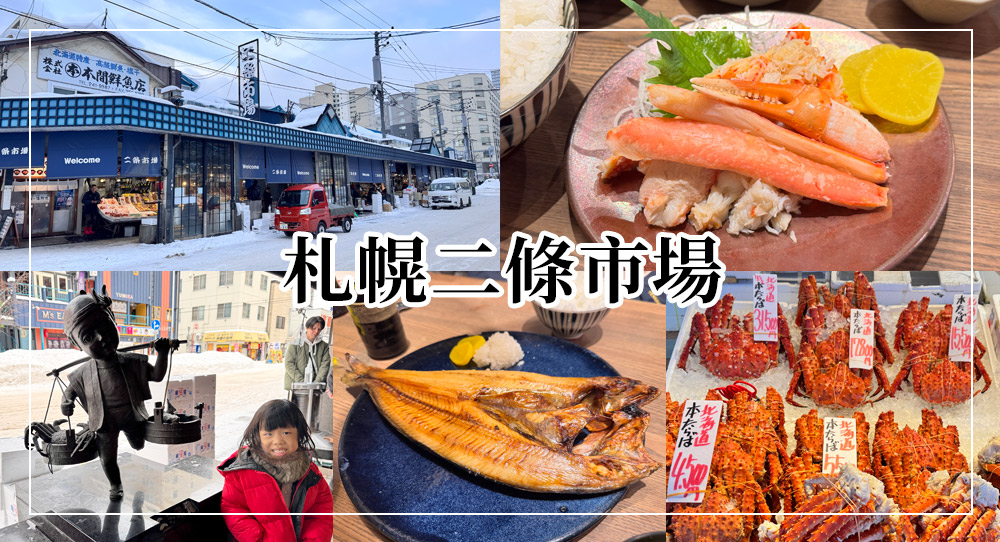
When traveling independently in Hokkaido, tasting fresh seafood is a must. The most famous markets include Sapporo Nijo Market, Hakodate Morning Market, and Otaru Sankaku Market. We visited Nijo Market in central Sapporo and put together this detailed food guide, including our dining experience, transportation information, and nearby attractions. Recommended foods at Nijo Market include the popular seafood bowls at Oiso, as well as must-try Hokkaido corn, melon soft-serve ice cream, and must-buy dried scallop products. Keep reading if you are ready to eat!
Nijo Market
Address: (Google Map)
Opening hours: Daily, 7.00 am – 5.00 pm
Nijo Market Food Map

Here is a Nijo Market food map for your reference. I have specially marked the must-visit shops and must-try food stalls with stars.
With a history of more than 100 years, Nijo Market is known as “Sapporo’s Kitchen.” Compared with Otaru Sankaku Market, it is larger in scale.
Most of the stores are indoors and arranged along the street, making the walking route very easy to follow. You can also explore the market comfortably on rainy days.
Nijo Market opens very early, so I recommend making it the first stop of your itinerary and beginning your food-filled day with a generous seafood breakfast.
What Are the Must-Try Foods at Nijo Market?
Oiso at Nijo Market

Among the must-try seafood restaurants at Nijo Market, Oiso is the most popular. Its reputation has spread far and wide, and during busy dining hours, visitors usually need to take a numbered ticket and wait for a table.
Oiso has three branches inside the market. We visited Oiso Branch No. 2 on this trip. The most popular dish on the menu is the No. 1-ranked three-color seafood bowl, which is completely covered with seafood. Every bite is filled with the fresh flavor of premium ingredients. The restaurant also serves Hokkaido abalone that can be eaten raw or grilled, as well as limited-quantity sea urchin and tuna rice bowls.
Oiso Branch No. 2 at Nijo Market offers exclusive dishes that are only available at this location. This platter allows you to taste three different kinds of crab at once: king crab, snow crab, and Hanasaki crab. All of the shells have already been removed, making them extremely easy to eat.

For elderly visitors or children who are not accustomed to eating raw food, the restaurant also offers cooked dishes, including various grilled fish and cooked set meals, so there is no need to worry about limited choices. We also ordered overnight-dried atka mackerel. The surface was slightly charred and very fragrant, while the fish itself was fresh and delicious. It was served with grated daikon radish and pickled yellow radish. The set meals all include rice, a chilled lotus root side dish, and hot soup. The miso soup even contains crab legs, giving it an additional layer of seafood flavor.
Address: (Google Map)
Opening hours: 7.30 am – 3.00 pm, 5.00pm – 8.30 pm; closed on Wednesdays
Donbei

Another seafood restaurant with a high Google rating is Donbei. Its most popular dishes are the No. 1 Satisfaction Bowl and the No. 2 Special Sapporo Morning Market Bowl. The seafood toppings include crab, sweet shrimp, sea urchin, salmon roe, and various kinds of sashimi, making them incredibly delicious.
Sea urchin lovers can choose the Tsukimi Bowl, which is completely covered with sea urchin and topped with a raw egg yolk. In addition to raw seafood rice bowls, the restaurant also offers a wide selection of à la carte dishes and cooked seafood, including platters of oysters, grilled scallops, and whelks, as well as extra-large grilled crab legs.
Address: (Google Map)
Opening hours: Daily, 7.00 am – 8.00 pm
Yubari Melons and Hokkaido Corn

Yubari melons and Hokkaido corn are extremely popular must-buy items at Nijo Market. There are many fruit stalls, so you can simply choose any shop that you like. There is no need to visit a particular stall, as they are widely available throughout the market.
Hokkaido corn comes in both white and yellow varieties. I recommend trying the white corn, which has a sweet and crisp texture similar to fruit and is exceptionally juicy. The most convenient thing is that white corn tastes delicious even when eaten raw, so there is no need to steam or heat it. Children also love it, making it an excellent healthy dessert after a meal.
Kondo Noboru Shoten

Several shops in the market are well worth visiting. They sell overnight-dried fish, surf clams, oysters, and large scallops, as well as crab paste, vacuum-packed Hokkaido squid rice, seafood delicacies, and other items that make excellent souvenirs from Nijo Market.
Kondo Noboru Shoten sells delicious fresh milk and coffee milk, and the staff can also warm the drinks for you.
Osanai Shoten

Osanai Shoten at Nijo Market sells king crab, although the crabs are frozen, so their texture and freshness are generally not as good as freshly caught ones.
I found that the staff at this shop were slightly too aggressive when promoting their king crab, which made me feel a little pressured.
Address: (Google Map)
Opening hours: Daily, 8.00 am – 5.00 pm
Koguma Shoten

Koguma Shoten sells melon soft-serve ice cream. Two small black bear figures are placed on the ground to welcome customers. It is the perfect treat after a meal, and every bite is filled with the rich aroma of melon.
Address: (Google Map)
Opening hours: Daily, 7.00 am – 2.00 pm
Hasegawa Noboru Shoten

If you want to purchase souvenirs along the way, you can also find the extremely popular Hokkaido must-buy Shiroi Koibito cookies at Hasegawa Noboru Shoten.
The shop offers a wide selection of souvenirs, including Hidaka kelp for making soup stock, dried sakura shrimp, shredded squid, and other dried seafood products. Seafood snacks such as individually packaged cheese scallop candies and grilled scallops are also easy to carry home.
Address: (Google Map)
Opening hours: Daily, 7.00 am – 5.00 pm
How to Get to Nijo Market

How do you get to Nijo Market? The market is conveniently located, and the most common transportation options are listed below.
Public transportation: Walk for approximately 3 to 5 minutes from Odori Station or Bus Center-mae Station on the Sapporo Subway. It is easy to reach even without driving.
Driving: If you are traveling by car, paid parking lots are available around the market.
What Attractions Are Near Nijo Market?
Nijo Market is located in the liveliest part of central Sapporo. It is only a two-minute walk from the first block of Tanukikoji Shopping Street, while Sapporo TV Tower is diagonally across the road. Odori Park and Sapporo Clock Tower, two other major Sapporo attractions, are also within a ten-minute walk.
For your itinerary, visit the market in the morning for a seafood rice bowl and local white corn, then walk to Tanukikoji Shopping Street for shopping and lunch. In the evening, take the ropeway to the Mount Moiwa Observation Deck and enjoy Sapporo’s glittering night view.
Nijo Market one-day itinerary: Nijo Market → Tanukikoji Shopping Street Block 1 → Odori Park → Sapporo TV Tower → Sapporo Clock Tower → Mount Moiwa Night View
Is Sapporo Nijo Market Worth Visiting?
Prices for king crab, seafood, and melons at Nijo Market are noticeably higher than at Hakodate Morning Market and Sankaku Market. Many people consider it more tourist-oriented. However, because it is located in the city center, it remains a popular destination for buying souvenirs and enjoying local food.
The Nijo Market restaurants introduced above all have fairly good reviews. The most practical strategy is to see which famous restaurant has no queue when you arrive and simply eat there. Saving your valuable travel time for more beautiful scenery will make the trip more worthwhile.