
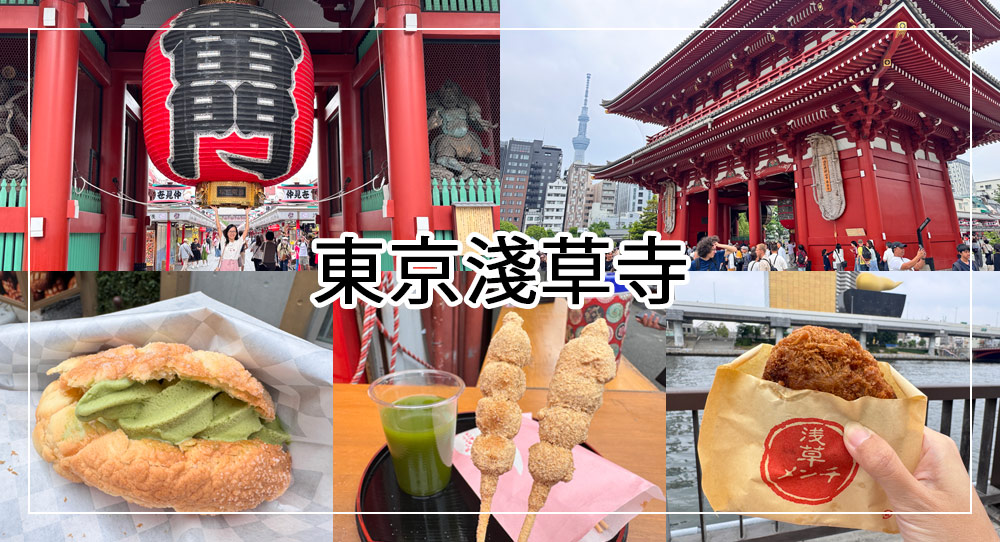
For an independent trip to Tokyo, I highly recommend the conveniently located Senso-ji Temple! On this Asakusa day trip, we got up especially early and quickly managed to photograph the iconic giant lantern at Kaminarimon Gate while experiencing the atmosphere of the Edo period.
This Tokyo Senso-ji and Kaminarimon guide covers the worship route, must-see attractions, fortune slips, kimono experiences, and useful shopping tips. Follow in our family’s footsteps and begin a cultural and culinary journey filled with Edo-period charm!
Address: (Google Map)
Opening hours: Daily, 6.00 AM – 5.00 PM (6.30 AM – 5.00 PM from October to March)
Senso-ji Temple Map

The Senso-ji and Kaminarimon area is quite large, with many attractions between Kaminarimon Gate and the Main Hall. Including time to eat and browse along Nakamise Shopping Street, the visit takes approximately two hours. All of the must-see highlights are marked with yellow stars on the Senso-ji Temple map.
Must-See Highlights at Senso-ji Temple
Kaminarimon Gate

The most famous attraction at Senso-ji Temple is Kaminarimon Gate, known for the enormous red lantern hanging in the center and constantly surrounded by visitors taking photos. After 9:00 AM, the line was already long enough to make people want to give up. Fortunately, we arrived at 8:30 AM and waited only a few minutes. I recommend staying overnight in Asakusa so that you can take photos early the following morning and return in the evening to see the beautifully illuminated lantern!
Kaminarimon’s official name is Furaijinmon, or the Gate of the Wind and Thunder Gods. When viewed from the front, the Thunder God stands to the left of the lantern and the Wind God to the right, guarding the temple.
Nakamise Shopping Street

After passing through Kaminarimon Gate, you will enter Nakamise Shopping Street, one of the oldest shopping streets in Japan. It takes approximately four minutes to walk from here to Senso-ji Temple’s Main Hall. The street is filled with delicious Asakusa food. I recommend exploring it on your way out so that you can photograph Senso-ji before the crowds grow larger—the later you arrive, the busier it becomes—and then enjoy the food and shopping without rushing!
Hozomon Gate

After walking through the shopping street, you will see another large red gate called Hozomon. It was originally known as Niomon Gate, and a towering Nio guardian statue stands on each side.
It is called Hozomon, or the Treasure-House Gate, because its upper level was once used to preserve the temple’s sacred scriptures and treasures. Two enormous straw sandals hang on the rear of the gate, symbolizing prayers for safe journeys and good health—a reassuring kind of treasure for travelers!
A lantern bearing the name Kobunacho also hangs here. With crowds constantly moving around me, it was difficult to capture a photo without people, but the view of Tokyo Skytree from this spot creates another distinctive scene.
Main Hall

We finally saw the Main Hall of Tokyo’s oldest temple, together with an astonishing number of visitors.
Senso-ji Temple’s Main Hall is also known as Kannondo Hall and enshrines Kannon, the Bodhisattva of Compassion. Founded in 628, Senso-ji is Tokyo’s oldest temple. After surviving wars and earthquakes, the Main Hall was rebuilt in 1958.
The reconstructed Main Hall retains its historic appearance. Its black-tiled roof and bright red structure are supported by 56 pillars, while the central lantern measures 4.5 meters and looks exceptionally impressive. The board in front listing the temple’s annual events is equally dignified. It is easy to understand why this famous temple welcomes 30 million visitors every year!
How to Worship at Senso-ji Temple

Before worshipping, visit the purification basin and use the wooden ladle to rinse your left hand and then your right hand. Pour water into your left hand to rinse your mouth, and remember not to use the ladle as a cup or place it directly against your mouth!
One difference between worshipping at Senso-ji Temple and visiting the shrines we had previously seen is that, before praying, you may purchase incense for JPY 100, light it, and place it in the large incense burner. You can then wave the smoke toward your body, as it is said to protect against illness and bring wisdom. It is also perfectly acceptable not to purchase or burn incense.
Next, place an offering in front of the Main Hall, bring your hands together, pray silently, and finish with one bow to convey your wishes to the deity. Senso-ji’s fortune slips are considered especially accurate, so we also drew one and asked the Bodhisattva for guidance.
After inserting JPY 100, shake the fortune-slip cylinder. A numbered stick will fall out, and you can open the drawer with the corresponding number to collect your fortune. Chinese and English translations are printed on the back, so there is no need to worry about understanding it. Senso-ji is said to produce bad fortunes quite often, so my younger child was delighted to draw a good fortune, or kichi. Good fortune slips may be taken home as souvenirs.
What should you do if you draw a bad fortune at Senso-ji Temple? There is no need to worry. Fold the fortune slip and tie it to the nearby wooden rack so that the bad luck does not follow you home.
Senso-ji Temple Omamori Charms

Senso-ji offers many kinds of omamori charms for health, family wellbeing, safe childbirth, protection from misfortune, fulfillment of wishes, and more. The designs are so varied that we hardly knew where to look.
The most famous is the lotus petal-shaped Renben-mamori, a charm for fulfilling wishes, recovering from illness, and enjoying health and longevity. It usually contains a golden image of Kannon representing the temple’s enshrined Sho Kannon Bodhisattva. Other popular choices include the Kaminarimon lantern-shaped success charm, the Golden Dragon bell charm, and beaded good-luck bracelets.
Five-Story Pagoda

The Five-Story Pagoda is another must-see attraction at Senso-ji Temple. It was designated a National Treasure in 1911 but was destroyed during wartime in 1945. The current pagoda was rebuilt in 1973, and sacred Buddhist relics are still preserved on its top floor. It is said to be approximately as tall as a 15-story building. Although visitors cannot enter, it looks magnificent even from the outside.
Asakusa Shrine

According to tradition, two fisherman brothers discovered a statue of Kannon in the Sumida River, leading to the establishment of Senso-ji Temple. Asakusa Shrine was later built to enshrine the two fishermen, Hinokuma Hamanari and Hinokuma Takenari, together with Haji no Matsuchi, the village leader who helped them establish the temple.
This shrine has survived since the Edo period. Compared with the vivid red and ornate Senso-ji Temple, it has a simple, peaceful atmosphere.
Stone Bridge

This is Tokyo’s oldest stone bridge. The pond is an unbelievably vivid blue, with fish swimming leisurely through the water. Cherry trees stand beside it, so visiting in spring while wearing a kimono must be especially beautiful.
Rokkakudo Hall

Rokkakudo is the oldest surviving building at Senso-ji Temple and enshrines Jizo Bodhisattva. According to legend, a wish will come true if you choose a date and pray to Jizo. Nearby Yogodo Hall is an important place for receiving goshuin temple seals, including seals for Kannon Bodhisattva and Daikokuten.
Nitenmon Gate, Bentendo Hall, Awashimado Hall, Yakushido Hall, and Yogodo Hall

With more time, you can explore several other attractions. These include Nitenmon Gate to the right of the Main Hall, which is designated an Important Cultural Property of Japan; Bentendo Hall, where people pray for academic and professional success and wealth; Awashimado Hall, where women pray for health and safe childbirth; and Yakushido Hall, where visitors pray for recovery from illness and good health. Green trees surround each historic building, and walking among them made us feel deeply peaceful.
Food at Senso-ji Temple
What should you do when you become hungry after sightseeing? The temple grounds have their own food area, and vendors can also be found along Nishi-sando, although it is not as lively as Nakamise Shopping Street. Next, let us explore the food available along Nakamise!
Nakamise Shopping Street is approximately 250 meters long and dates back to the 17th century. Its uniformly designed shop signs create a strong nostalgic atmosphere. The street is filled with Japanese sweets and souvenirs such as ningyo-yaki and senbei rice crackers, making it extremely enjoyable to browse. It is no wonder that it is always crowded.
Mangan-do Chestnut and Sweet Potato Pie

Asakusa Mangan-do is a long-established shop with more than 70 years of history and several branches in Tokyo. Its most famous product is a thin-skinned sweet potato and chestnut confection, made by placing sweet potato and chestnut filling inside a baked pastry shell. The texture is smooth and dense, with a sweetness that is not overwhelming.
This time, however, we bought the chestnut and sweet potato pie available exclusively at Asakusa Mangan-do. The outer layer is a flaky puff-pastry crust filled with a thick mixture of sweet potato, chestnut, and red bean paste. The filling was so generous that it was difficult to bite through in one mouthful. The layered pastry had a rich buttery aroma and was simultaneously crisp, fragrant, and flaky. It was incredibly satisfying, and I highly recommend trying it!
Address: (Google Map)
Opening hours: 10.00 AM – 6.00 PM; closed on Tuesdays
Strawberry Daifuku

For strawberry daifuku, I recommend Nakatomi Shoten. The mochi exterior is soft and chewy without being too thick, while the red bean paste balances the sweet and tart flavor of the large strawberry. It is refreshing as an after-meal dessert and was so delicious that my children could not stop eating it.
Nakatomi Shoten
Address: (Google Map)
Opening hours: Monday to Saturday, 10.00 AM – 5.30 PM; closed on Sundays
Kagetsudo Melon Bread

When people think of food in Asakusa, Kagetsudo’s melon bread immediately comes to mind. It uses a fermentation technique derived from Japanese sake production, producing an exceptionally light and fluffy texture. More than 2,000 pieces can be sold each day!
I sincerely recommend adding ice cream. The bread is crisp on the outside and soft inside, and it pairs surprisingly well with matcha ice cream. The combination is moister and smoother, making it especially suitable for older visitors. Watching the staff add the ice cream in front of us was also strangely satisfying.
Address: (Google Map)
Opening hours: Monday to Friday, 9.00 AM – 4.30 PM; Saturday and Sunday, 9.00 AM – 5.00 PM
Kibi Dango

Kibi dango is another must-try food in Asakusa and is associated with the story of Momotaro. The version sold here is made from millet, giving it a springy, chewy texture. It is dusted with slightly salty soybean flour and makes a perfect afternoon snack when paired with green tea.
Address: (Google Map)
Opening hours: Monday to Friday, 9.00 AM – 5.30 PM; Saturday and Sunday, 9.00 AM – 6.30 PM
Grilled Dango

Do not worry if you miss the kibi dango. Grilled dango is one of Japan’s most representative foods, and many delicious versions are waiting to be discovered here.
Senbei Rice Crackers

For a souvenir from Asakusa that is suitable for all ages, choose senbei rice crackers. They come in many flavors, including soy sauce and black pepper, and are easy to carry and store. Although they were slightly salty for me, they have a distinctly Japanese taste and are among the country’s most representative souvenirs.
Asakusa Menchi

The piping-hot Asakusa Menchi cutlet is extremely popular. Minced Koza pork and Japanese Black wagyu beef are mixed with onions and pepper, then fried until crisp outside and tender inside. The moment you bite into it, the meat juices burst out together with the natural sweetness of the onions. It is incredibly delicious, although visitors who do not eat beef should take note!
Address: (Google Map)
Opening hours: Daily, 10.00 AM – 7.00 PM
Ningyo-yaki

Kimuraya is Asakusa’s oldest ningyo-yaki shop. Its cakes come in four designs associated with Asakusa: the Five-Story Pagoda, Kaminarimon Gate, a Kimuraya lantern, and a pigeon. They are not only adorable but also have a thin exterior that is crisp yet soft, together with a delicious sweet red bean filling. I think they are best enjoyed with a drink so that they do not feel too dry.
There is also Kimuraya Ningyo-yaki Honpo, identified by its pigeon logo. This shop also has a history of around 100 years and serves generously filled, delicious ningyo-yaki that are worth trying.
Kimuraya Main Store
Address: (Google Map)
Opening hours: Daily, 9.00 AM – 6.00 PM
Kimuraya Ningyo-yaki Honpo
Address: (Google Map)
Opening hours: Daily, 9.30 AM – 6.30 PM
Kokonoe Age Manju

Kokonoe’s fried manju is always included among the most popular snacks on Nakamise Shopping Street. Fillings include red bean, sesame, matcha, sweet potato, pumpkin, and cherry blossom. The selection is so varied and unusual that I wanted to order every flavor!
We eventually chose sesame and sweet potato. They were crisp outside and soft inside, but Japanese fried manju is made by wrapping a previously fried filling in dough and frying it again, so it can become slightly rich. Pairing it with tea makes the experience even better.
Address: (Google Map)
Opening hours: Daily, 10.00 AM – 7.00 PM
Ichiran Ramen Asakusa

The recommendations above mainly cover snacks and sweets, but I also have a restaurant near Senso-ji Temple to share. After walking approximately five minutes from the temple, you will see the long line outside Ichiran Ramen Asakusa. Ichiran originated in Fukuoka, but its many branches throughout Japan—and the crowds at its Asakusa location—show just how popular and delicious it is.
The noodles are smooth and the tonkotsu broth is wonderfully rich, making us want to order bowl after bowl. Unfortunately, the portion of sliced pork was slightly small.
The most interesting feature is that, in addition to a shared dining area, the restaurant offers individual seats divided by partitions like private study cubicles. A curtain hangs in front, and my daughter found it fascinating when the staff lifted the curtain to serve the food.
Address: (Google Map)
Opening hours: Daily, 9.30 AM – 10.00 PM
Kimono Experiences Near Kaminarimon and Senso-ji Temple

Wearing a kimono is another highlight of a day trip to Senso-ji Temple. Although the crowds make it difficult to photograph yourself with the Kaminarimon lantern, there are many attractive photo spots after entering the temple grounds in a kimono. Several kimono rental shops that I personally like are within walking distance of Senso-ji Temple, and I have recommended them below.
| Asakusa Aiwafuku Kimono | Edo Waso Kobo Miyabi Kimono | Asakusa Kimono Sunny | |
|---|---|---|---|
| Transportation | 3-minute walk from Senso-ji Temple | 3-minute walk from Kaminarimon Gate | 5-minute walk from Senso-ji Temple |
| Kimono and Accessories | A wide selection including komon kimono, lace kimono, hakama, and furisode, with many patterns and colors | Higher-quality kimono with elegant accessories | A broad selection of kimono styles, including children’s kimono, with accessories such as hair ornaments and bags |
| Hairstyling | Free braided hairstyles and a variety of hair accessories | The best feature is the huge selection of hair accessories that you can choose yourself | Makeup and hairstyling services are available, and the stylist will choose the most suitable style based on the condition of your hair |
| Language Support | Chinese-language service is available | The staff speak Chinese, so there is no need to worry about communication. They will also proactively help you choose the most suitable style | English-speaking staff are available |
| Price | JPY 4,800 | JPY 2,800 | Mid-range pricing |
Transportation to Kaminarimon and Senso-ji Temple
How do you get to Senso-ji Temple? Transportation is extremely convenient, with four nearby stations served by different lines: Asakusa Station on the Tokyo Metro Ginza Line, Asakusa Station on the Toei Asakusa Line, Asakusa Station on the Tobu Skytree Line, and Asakusa Station on the Tsukuba Express. These routes make it easy to explore central Tokyo and travel to and from the airports.
Take Exit 1 of Asakusa Station on the Tokyo Metro Ginza Line. This is the closest exit to Kaminarimon Gate, only a 1–2 minute walk away.
Take Exit A4 of Asakusa Station on the Toei Subway and walk for approximately five minutes.
Take the Tobu Skytree Line to Asakusa Station and walk for approximately five minutes.
Take Exit A1 of Asakusa Station on the Tsukuba Express and walk for approximately six minutes.
What Attractions Are Near Senso-ji Temple?
After worshipping at Senso-ji Temple, you can also explore several nearby attractions. I highly recommend the Asakusa Culture Tourist Information Center opposite Kaminarimon Gate. In addition to tourist information and currency exchange, this multi-purpose building contains displays about Asakusa’s history and culture. The eighth-floor observation deck and café overlook Senso-ji Temple and Nakamise Shopping Street, with Tokyo Skytree also visible in the distance.
When traveling with children, visit Asakusa Hanayashiki beside Senso-ji Temple. It is Japan’s oldest amusement park. Although compact, it offers rides and attractions suitable for many different age groups.
These include Japan’s oldest surviving roller coaster, which is both exciting and delightfully nostalgic. The carousel blends beautifully with the surrounding Japanese architecture and is ideal for the whole family. At the ninja challenge area, children can become little ninjas and tackle obstacles. The haunted house has a Showa-era design and tells ghost stories passed down from the Edo period, making it especially distinctive. Asakusa Hanayashiki combines historical and modern elements, allowing visitors to experience the charm of a traditional amusement park.
Street go-karting is also available near Senso-ji Temple. Participants can wear character costumes and safely drive on public roads under the guidance of a tour leader. Although I did not see it personally, it sounds extremely entertaining. To appreciate the beauty of Asakusa at a slower pace, you can also take a traditional rickshaw ride.
Tokyo’s famous discount store Don Quijote is only a three-minute walk from Senso-ji Temple. We bought plenty of snacks and face masks here to take home.
The Sumida River Walk is a pedestrian route connecting Senso-ji Temple, Tokyo Skytree, and the surrounding area. You can sit beside the river and admire Skytree in the distance or place a love lock on the bridge. It is especially beautiful in spring when the cherry blossoms are in full bloom!
After crossing the bridge on the Sumida River Walk, you will reach Sumida Park. It is a famous cherry-blossom viewing destination and is also known for its summer fireworks festival. Even outside spring and summer, the park offers large lawns for picnics, views of Hyotan Pond and Tokyo Skytree from different angles, and seasonal flowers such as hydrangeas.
Tokyo Skytree and Sumida Aquarium are also located in this area. I recommend visiting Kaminarimon Gate and Senso-ji Temple early in the morning to avoid the largest crowds, enjoying food along Nakamise Shopping Street at lunchtime, and visiting Sumida Aquarium or Asakusa Hanayashiki in the afternoon. In the evening, head to Tokyo Skytree for sunset and the night view. This makes an enjoyable and rewarding one-day itinerary in Asakusa.
Are Kaminarimon Gate and Senso-ji Temple Worth Visiting?
This full and enjoyable day trip to Senso-ji Temple left our whole family wanting more! From the dignified Main Hall to the peaceful historic shrine, every attraction around Senso-ji is filled with stories. The happiest moments of the journey were sharing local Asakusa food with my family while admiring unforgettable scenery.
Do not forget that you can also wear a beautiful kimono when visiting Senso-ji Temple. I hope this detailed guide helps you create your own memorable Asakusa and Senso-ji journey.
Senso-ji Temple FAQs Q&A
What Are Senso-ji Temple’s Opening Hours?
Senso-ji Temple is open from 6:00 AM to 5:00 PM. From October to March, it opens at 6:30 AM.
How Long Should You Spend at Senso-ji Temple?
Our family spent approximately one hour visiting the temple and taking photos, followed by another hour eating and browsing along Nakamise Shopping Street.
Does Senso-ji Temple Require an Admission Ticket?
No. Admission to Senso-ji Temple is completely free.
What Is the Best Time to Visit Senso-ji Temple?
To avoid the crowds at Senso-ji Temple, I recommend visiting between 6:00 AM and 8:00 AM. This time is especially suitable for photographing the giant lantern at Kaminarimon Gate.
When Is Senso-ji Temple Illuminated at Night?
The illumination begins after sunset, usually from approximately 6:00 PM to 11:00 PM. Once illuminated, Senso-ji Temple has an even more magical atmosphere and becomes a popular destination for night photography.