
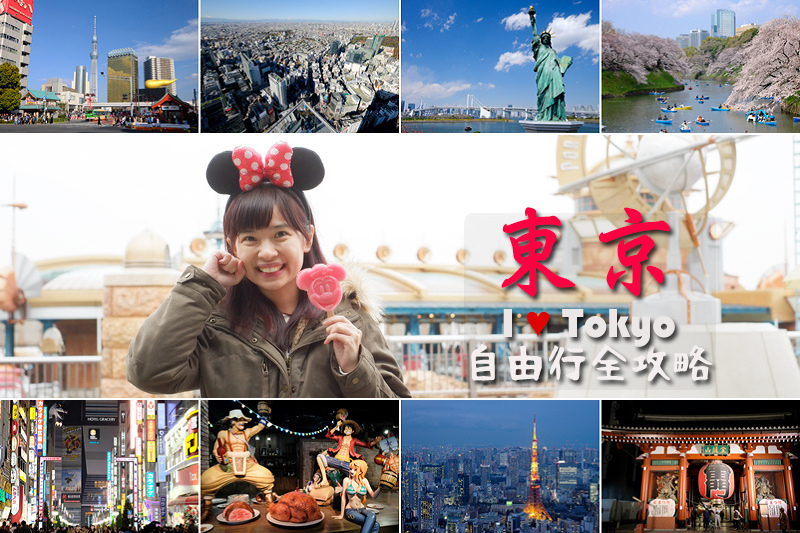
The 2026 Tokyo free travel guide is finally done! The most troublesome parts for beginners — Tokyo itinerary planning, attractions and food, budget spending, and airport/subway transportation — are all handled in this one article.
The editor has condensed more than 15 years of Tokyo travel experience into this ultimate lazy-person guide. It not only organizes “2026 latest trending landmarks” such as Azabudai Hills and the “travel avoidance guide,” but also uniquely creates a “Tokyo attractions subway map” that beginners can understand at a glance.
Whether you want to plan a 5 days 4 nights city highlights trip, a family-friendly Disney trip, or head straight to the nearby Lake Kawaguchi to see Mount Fuji, with the must-eat foods and must-buy drugstore coupons in this article, you can just follow along and depart with no effort. Hurry up and plan your itinerary!
2026 Tokyo Latest Travel Info and Avoidance Tips

Tokyo (Tokyo) is Japan’s largest metropolitan area, with countless world-class attractions and shopping districts, and it has always been the first choice for beginners challenging themselves with independent travel in Japan!
Tokyo evolves at an unbelievable speed. Whether you are a first-time visitor or a seasoned traveler who has been there many times, be sure to update yourself before departure and see what the hottest ways to enjoy Tokyo in 2026 are!
Tokyo Latest Highlights & Travel Trends

The latest Tokyo highlights for 2026, including brand-new attractions, shopping centers, and the trendiest ways to explore, are all organized here! If you want to keep up with the trend, this is how to do it:
PokéPark KANTO (Pokémon Park):
A must-visit pilgrimage site for Pokémon fans! Opening in February 2026, this global first Pokémon park at Tokyo’s “Yomiuriland” brings the original Kanto region into the real world. Tickets sell out instantly, so be sure to grab them exactly at 17:00 two months in advance!
DisneySea “Fantasy Springs”:
A newly opened area that perfectly recreates the three fairy tales of Frozen, Tangled, and Peter Pan. The most popular attraction, “Anna and Elsa’s Frozen Journey,” often requires a wait of more than 2 hours. If you want to save time, arrive early and queue 2 hours before opening to secure DPA!
Azabudai Hills + teamLab Borderless:
Japan’s tallest building and Tokyo’s newest landmark! It combines top-tier dining and architectural beauty, plus an unbeatable observation deck with close-up views of Tokyo Tower. The massively popular “teamLab Borderless” is back — if you don’t include it in your itinerary, people will laugh at you.
Tokyo Harry Potter Studio Tour:
Claimed to be the world’s largest magical world! It fully recreates classic scenes such as the Great Hall of Hogwarts, Diagon Alley, and Platform 9¾. There are so many details to photograph and experience that movie fans are advised to reserve at least 4 to 5 hours to enjoy it properly.
New Odaiba Landmark & Fountain Show:
The newly opened next-generation arena “TOYOTA ARENA TOKYO” in 2025 is a performance venue that combines AI and cutting-edge technology. There is also the brand-new “Tokyo Aqua Symphony,” Japan’s largest water fountain show, with Rainbow Bridge as the backdrop — super romantic~
Tokyo Travel Avoidance Tips

Here is a summary of Tokyo’s latest travel situation in 2026, along with the 6 most common beginner pitfalls. Spend one minute reading this before you leave, and it will definitely help you avoid traps and enjoy your trip more!
Japan holiday monster:
Don’t just look at Taiwan’s holiday calendar! Try to avoid Japan’s Golden Week (early May), Obon (mid-August), as well as cherry blossom season (late March to early April) and autumn foliage season (late November to early December). During these periods, hotel prices skyrocket and travel quality is greatly affected.
DisneySea queue hell:
Want to leisurely enjoy Frozen or Tangled in “Fantasy Springs”? You must arrive 1.5 to 2 hours early to queue at the entrance. Once you enter, grab DPA immediately, or you’ll end up spending even longer waiting and may only manage a few attractions all day!
Rush-hour train overcrowding nightmare:
Tokyo trains during rush hour (roughly 07:30–09:00 and 17:30–19:30) are terrifying, especially on arteries like the Yamanote Line and Chuo Line. The crowds are packed like sardines, and “feet off the ground” is normal. Never bring large luggage onto the train during this period — people will glare at you!
Large station maze warning:
Shinjuku, Tokyo Station, and Shibuya are known as the “three major mazes of Tokyo,” especially Shinjuku Station, which has more than 200 exits! I recommend walking on the surface streets and following landmarks whenever possible. If you really get lost, the fastest way is to show a screenshot of the destination name and ask station staff directly.
Popular food spots are hard to queue for:
Places like Mutekiya, Rokurinsha, and the famous shops inside Tsukiji/Toyosu Market often require 1 to 2 hours of waiting during meal times. It’s best to make choices wisely — spending all your travel time in line is such a waste.
Tax refund system change coming soon:
Japan will introduce an “airport unified tax refund system” on November 1, 2026. When planning your trip, be sure to pay attention to the latest implementation status and allow an extra 1 to 2 hours for tax refund procedures so you don’t miss your flight.
First Time in Tokyo? 5~8 Day Itinerary Planning and Total Cost

How should you plan a Tokyo itinerary? Just bring along this carefully made “Tokyo Attractions by Area Map”!
The map divides Tokyo’s popular attractions into 11 major areas by geographic location, and the spots marked with the “★ star symbol” are must-visit attractions for beginners. Choosing 1–2 areas per day is about right, whether you’re planning a Tokyo day trip or a deep exploration — it’s easy either way~
When arranging your trip, I recommend using areas along the “JR Yamanote Line,” such as Ueno, Tokyo Station, and Shinjuku, as the core, then combining them with routes like the JR Chuo Line and the Tokyo Metro Ginza Line / Hibiya Line. This can connect nearly 80% of Tokyo city’s highlights.
Based on my own experience of visiting Tokyo more than 10 times, I’ve planned 8 super exciting “Tokyo day trip itineraries” for everyone.

The hottest spots in Tokyo city — whether the latest trending Azabudai Hills, the Harry Potter Studio Tour, or classics like Sensoji Temple, Tokyo Skytree, and Tokyo Disney — are all covered, and the routes are guaranteed to be smooth with no backtracking!
💡 5 days 4 nights itinerary suggestion
If it’s your first time in Tokyo and you’re planning a “5 days 4 nights trip,” I recommend removing the Day 4, 5, and 7 itineraries and saving them for next time. Don’t worry about missing out — after all, Tokyo is impossible to finish in one trip, and you’ll definitely come back again!
Day 1: Head Straight to Tokyo’s Newest Landmark! Azabudai Hills

On your first day in Tokyo, after handling airport transportation, go straight to the most talked-about and futuristic place in Tokyo right now: “Azabudai Hills”!
📍 Route: Narita Airport Skyliner to Ueno ➝ Azabudai Hills ➝ teamLab Borderless
🏨 Accommodation: APA Hotel – Keisei Ueno Ekimae (check room rates)
✏️ Real Experience Notes
Airport transport: From Narita Airport, it’s recommended to buy the Skyliner ticket in advance. It’s the fastest way to reach Ueno Station in about 40 minutes.
Free your hands: When you arrive at Ueno, you can first return to the hotel to store your luggage; or book a luggage delivery service to send your bags directly from the airport to the hotel, so you can start exploring right away!
Ticket trick: Make sure to buy teamLab Borderless tickets in Taiwan in advance. They often sell out on-site, so don’t be stubborn.
Day 2: Classic Downtown Culture! Sensoji Temple, Skytree, Ameyoko

On the second day, focus on Tokyo’s "downtown" area full of Edo atmosphere, then continue to an anime holy site, and finally move to accommodation near Disney to prepare for tomorrow’s battle at the park.
📍 Route: Sensoji Temple ➝ Tokyo Skytree ➝ Ameyoko ➝ Akihabara Electric Town
🏨 Accommodation: Disney Ambassador Hotel (check room rates)
✏️ Real Experience Notes
Time-saving tip: Buying Tokyo Skytree tickets on-site often means waiting more than 30 minutes! Be sure to buy your Skytree ticket in advance and enter directly by scanning the QR code — super time-saving.
Family-friendly add-on: If you’re traveling with kids, I recommend stopping by the Sumida Aquarium under Skytree to see the penguins.
Accommodation switch: If you want to enjoy Disney easily, I strongly recommend staying at an official Disney hotel. The next day you can enter 15 minutes early and get first pick of the attractions!
🌸 Spring-only add-on route: After visiting Sensoji in the morning, take a walk to nearby Sumida Park to admire the cherry blossoms.
Before heading to Ameyoko in the afternoon, stop by Ueno Onshi Park — one of Tokyo’s three major cherry blossom viewing spots!
Day 3: Step Into a Dreamy Fairy Tale! Tokyo Disneyland

This day is all about spending the whole day at Disney! Whether you want the classic “Disneyland” with castle parades, or “DisneySea” to visit the latest Fantasy Springs, either is fine.
📍 Route: Tokyo Disneyland or Tokyo DisneySea
🏨 Accommodation: Hilton Tokyo Odaiba (check room rates)
✏️ Real Experience Notes
Tickets are a must: Disney no longer sells tickets on-site! Be sure to buy Tokyo Disney tickets in advance in Taiwan, and just scan the QR code to enter.
New area strategy: If you’re going after DisneySea’s “Fantasy Springs,” be sure to arrive 1.5 to 2 hours before opening to queue at the entrance, so you have a chance to secure Frozen DPA.
Accommodation switch: We changed to Hilton Tokyo Odaiba. After the park closes, there is a free shuttle bus directly to the hotel entrance (advance booking required on the official website).
Day 4: Odaiba Waterfront Day Trip! Toyosu Market & Odaiba

Today follows a healing route of “eating well, relaxing, and enjoying the sea.” In the morning, go to Toyosu to feast on fresh seafood, then enjoy the hot spring facility at the new complex, and in the afternoon stroll through Odaiba and feel the futuristic tech vibe.
📍 Route: Toyosu Market ➝ Toyosu Senkyakubanrai ➝ Odaiba (Unicorn Gundam, Odaiba Seaside Park)
🏨 Accommodation: Shinjuku Granbell Hotel (check room rates)
✏️ Real Experience Notes
Money-saving tip: Buy the entrance ticket for Mange Club at Senkyakubanrai in advance to enjoy a drink discount. Soaking your feet while admiring Tokyo Bay scenery is incredibly relaxing!
Odaiba backup: Many Odaiba attractions are newly opened or still under preparation. If you’re worried the area may not be enough, you can replace the afternoon itinerary with teamLab Planets TOKYO or Shinagawa Aquarium.
Accommodation switch: Staying in Shinjuku is convenient for the following days. From Odaiba, take the “Rinkai Line (through-service with JR Saikyo Line)” to reach Shinjuku directly.
Day 5: Magical World & Anime Holy Land! Harry Potter Studio Tour & Ikebukuro

In the morning, become a wizard and enter Asia’s first magical world; in the afternoon, head straight to Ikebukuro to collect an aquarium, a high-altitude night view, and Japan’s largest Pokémon Center all in one go.
📍 Route: Tokyo Harry Potter Studio Tour ➝ Ikebukuro Sunshine City (Sunshine Aquarium, Sunshine 60 Observatory, Pokémon Center Mega Tokyo)
🏨 Accommodation: Shinjuku Granbell Hotel (check room rates)
✏️ Real Experience Notes
Tickets are a must: Make sure to buy Tokyo Harry Potter Studio Tour tickets in advance. Each time slot is limited, and it is very possible to be turned away on-site!
Super strong rainy-day backup: Sunshine City brings together an aquarium, observatory, Pokémon Center, and Chiikawa Park. Families can easily spend the whole day here.
Day 6: Ghibli & Trendy Landmarks! Kichijoji & Shibuya

In the morning, step into the world of Ghibli animation; in the afternoon, head back to the city center to experience the busiest crossing in the world, and finally end with a beautiful sunset and night view from the observatory.
📍 Route: Mitaka Ghibli Museum ➝ Kichijoji Shopping Street ➝ Shibuya Scramble Crossing ➝ Miyashita Park ➝ Shibuya Sky
🏨 Accommodation: Shinjuku Granbell Hotel (check room rates)
✏️ Real Experience Notes
Ghibli ticket rush: Tickets for the Mitaka Ghibli Museum cannot be bought on-site! Be sure to grab tickets exactly at 10:00 on the 10th of the previous month (09:00 Taiwan time).
Ghibli backup: If you can’t get tickets or you’re a Doraemon fan, I recommend going to the Fujiko F. Fujio Museum. It also cannot be purchased on-site, so remember to buy it in advance on the official website.
Shibuya Sky ticket rush: The sunset time slot is extremely hard to get! Remember to buy Shibuya Sky tickets exactly 14 days in advance at 00:00 (23:00 the previous day Taiwan time).
🌸 Spring-only add-on route: After visiting Ghibli in the morning, you can paddle swan boats at nearby Inokashira Park while admiring the beautiful cherry blossoms.
Before heading to Shibuya in the afternoon, you can stop by Meguro River to see the cherry blossoms and visit the unbelievably beautiful “Nakameguro Starbucks”!
Day 7: Green Shrine & Vibrant Nightlife! Meiji Shrine, Omotesando, Shinjuku

First, go to the urban oasis of “Meiji Shrine” to soak up phytoncides, then stroll through Omotesando and Takeshita Street, beloved by young people. In the evening, return to Shinjuku and experience Tokyo’s most dazzling nightlife!
📍 Route: Meiji Shrine ➝ Omotesando ➝ Takeshita Street ➝ Tokyo Metropolitan Government Building ➝ Kabukicho
🏨 Accommodation: Shinjuku Granbell Hotel (check room rates)
✏️ Real Experience Notes
Free night view: Shinjuku's "Tokyo Metropolitan Government Building" is one of the few free observatories in Tokyo. Budget travelers should definitely not miss it if they want to save on admission!
🌸 Spring / 🍁 Autumn bonus route: Cherry blossom season: head first to Shinjuku Gyoen, the Japanese imperial garden, and have a romantic picnic under the cherry trees.
Autumn foliage season: You can add Shinjuku Gyoen and Yoyogi Park for autumn leaves; or visit Meiji Jingu Gaien and stroll along the golden ginkgo avenue!
Day 8: Seafood Breakfast & Last Shopping! Tsukiji, Ginza, Tokyo Station

On the last day of your Tokyo free trip, start by eating a wave of seafood at the market, then go crazy shopping in Ginza and Tokyo Station, and end the trip with a perfect full load!
📍 Route: Tsukiji Market ➝ Ginza shopping district ➝ Ginza Art Aquarium ➝ Tokyo Station ➝ Take the NEX from Tokyo Station back to Narita Airport
✏️ Real Experience Notes
Luggage relief: It’s hard to enjoy sightseeing while dragging luggage on your last day! Before heading out, I recommend first finding a large locker at Tokyo Station; or directly booking a luggage delivery service to send your bags from the hotel to the airport so you can travel hands-free.
Airport transportation: For the final leg, taking the Narita Express N’EX from Tokyo Station directly to the airport is super convenient. I recommend booking N’EX tickets on Klook to avoid sold-out trains!
🌸 Spring bonus route: Before going to Tokyo Station in the afternoon, you can add Chidorigafuchi and Yasukuni Shrine for cherry blossom viewing. Chidorigafuchi, especially with boat rides on the moat, is incredibly romantic!
5 Days 4 Nights Total Cost Breakdown
| project | Amount per person (Taiwan Dollars) | Notes |
|---|---|---|
| Round-trip airfare | 66,000 | Traditional airlines typically charge less than $9,000 during peak seasons (low-cost carriers can reduce this to below $9,000). |
| Hotel | 40,000 | Divided equally at $4,000 per night for a double room ($2,000 x 4 nights) |
| Disney tickets | 5,000 | Tickets only (DPA applies separately). |
| teamLab Borderless | 5,000 | |
| Ghibli Museum | 1,000 | |
| Shibuya Sky | 3,400 | |
| Ginza Art Aquarium | 2,500 | |
| Skyliner | 2,200 | |
| N'EX Narita Express | 3,200 | |
| Miscellaneous transportation expenses | 5,100 | Includes 5 days of subway and some private rail transfers |
| Food expenses | 38,000 | Earn 1,500 x 5 days (adjustments will be made if a large meal is planned). |
| Total cost per person | 180,960 | 35,000 yen to have a blast in Tokyo! |
Using the above “Tokyo 5 days 4 nights itinerary” as an example (excluding Days 4, 5, and 7), the total cost is about 180,000, and you can enjoy Tokyo Disney, the latest check-in spots, stunning observatories, and more — isn’t it rich and full of experiences?
If you extend the trip or travel during peak seasons such as cherry blossom season or New Year, how should you adjust the budget? Here’s a direct range to help everyone get an idea:
Upgraded 8 days 7 nights full version: If you want to complete all 8 days, including extra accommodation, transport, and tickets, it is recommended to budget around 240,000–260,000 per person.
Cherry blossom season / New Year peak season: During Lunar New Year or cherry blossom season from late March to early April, flights and accommodations can easily double! For a 5 days 4 nights trip during this period, it is safer to budget at least 230,000–255,000.
🔔 Exclusive money-saving tips
Buy transportation & tickets in advance: Book Skyliner, subway passes, and popular attraction tickets on Taiwan platforms in advance. Not only can you avoid queues and sold-out situations, but stacking discount codes is usually cheaper than buying locally!
Make good use of “high cashback credit cards”: Most shops in Japan accept cards! Choose a card with over 3% overseas cashback (such as Fubon J Card, Cathay CUBE Card, etc.). Even after the 1.5% overseas fee, you can still come out ahead.
Departing from Tokyo! Day Trips to Lake Kawaguchi, Hakone, Kamakura, and More

The most popular Tokyo suburban cities and transportation methods are listed here. Except for some private railways (such as the Keio Line and Odakyu Romancecar), almost all can be taken with the JR Tokyo Wide Pass (3 days / 15,000 yen), which is a great money-saving companion for exploring Kanto.
Below are the most popular suburban routes. Choose the style you like and refer to the detailed guides below~
Route 1: Lake Kawaguchi Day Trip (A once-in-a-lifetime view of Mount Fuji)

📍 Route: Arakurayama Sengen Park → Mt. Tenjo Park → Lake Kawaguchi Sightseeing Boat → Oishi Park → Music Forest Museum
✏️ Real Experience Notes
A day trip is very rushed: the round trip from Tokyo takes 4 hours. If time and budget allow, I recommend arranging at least “1 night 2 days,” and you might even catch the reverse Mt. Fuji at dawn!
Fuji Excursion: The only direct train from Tokyo is very popular. Once your plan is confirmed, be sure to grab tickets 30 days in advance, or use the Klook Fuji Excursion pre-booking feature.
Put the big view in the morning: Mount Fuji is usually most likely to show itself in the morning. In the afternoon it’s easy for clouds to cover it, so make sure important spots are scheduled first!
Route 2: Hakone Day Trip (Classic Pirate Ship & Romantic Hot Spring Town)

📍 Route: Owakudani → Hakone Ropeway → Lake Ashi Pirate Ship → Hakone Shrine → Hakone-Yumoto Shopping Street
✏️ Real Experience Notes
A day trip is very rushed: Hakone attractions are spread out and require a lot of transport transfers, so completing the whole route in one day is extremely tiring. I recommend arranging “1 night 2 days” for a more relaxed experience!
Money-saving trick: Be sure to buy the Hakone Free Pass! It includes round-trip tickets from Shinjuku and 8 types of Hakone transportation, including the pirate ship and ropeway — just ride and you’ll get your money’s worth.
Ropeway suspension note: The ropeway at Owakudani is often temporarily suspended due to volcanic gas or excessive wind. Be sure to check the official website before departure so you don’t arrive for nothing.
Route 3: Kamakura Day Trip (Anime Pilgrimage & Ancient Capital Charm)

📍 Route: Tsurugaoka Hachimangu → Komachi Street Shopping District → Hase-dera → Great Buddha of Kamakura → Slam Dunk Crossing
✏️ Real Experience Notes
A day trip is just right: compared with Lake Kawaguchi and Hakone, Kamakura is relatively simple to get around, and it’s only about 1 hour from Tokyo, making it perfect for beginners as a round-trip day visit!
Optional Enoshima add-on: Many people plan to include Enoshima, but since the island is large and full of sights, I recommend staying 1 night 2 days to enjoy it more fully.
Don’t be a nuisance: When visiting the “Slam Dunk Crossing” pilgrimage spot, never stand in the middle of the road like Sakuragi Hanamichi — it disrupts local traffic and is dangerous.
Route 4: Kawagoe Day Trip (Travel Back in Time to Little Edo)

📍 Route: Hikawa Shrine → Kumano Shrine → Koedo Kawagoe Ichibangai → Kashiya Yokocho → Kita-in
✏️ Real Experience Notes
One day is enough to explore it all: Kawagoe is only about 30 minutes from Ikebukuro in Tokyo. The attractions are concentrated and the pace is relaxed, so a day trip is more than enough, and it’s easy even with elders and children.
Walking is fastest on holidays: sightseeing buses are extremely crowded and traffic-jammed on holidays! I recommend walking or renting a bicycle to get around — it’s much more pleasant than taking the bus.

If you still have no idea after reading the above, or you’re thinking about how to enjoy Yokohama’s million-dollar night view, Karuizawa’s ski resort atmosphere, or Nikko’s stunning autumn leaves?
Don’t worry, be sure to continue with this super-complete Tokyo suburban travel guide, which teaches you how to plan the most perfect and smooth personalized itinerary based on “season” and “travel companions”!
Tokyo Must-Visit Attractions Summary: The Strongest Map & Check-in Spots
Tokyo Attractions Subway Map (Beginners Can Understand the Routes at a Glance!)

Don’t know how to arrange the attractions? Don’t worry — the editor has created this “Tokyo Attractions Subway Map” with more than 50 popular landmarks included!
I’ve clearly marked the “nearest subway station” for each attraction. Even if you don’t have time to study before departure, just save this map on your phone and you can ride around Tokyo without thinking!
Must-Visit Theme Parks & Aquariums

Tokyo is a paradise for theme parks and aquariums! These world-class must-visit spots should definitely be prioritized in your itinerary:
📍 Tokyo Disney Resort must-go once in a lifetime: The “Land” is the top choice for families with elders and children, with beautiful parades; if you want excitement and Duffy Bear, choose “Sea.” If you want to rush to Sea’s newest “Fantasy Springs,” you almost can’t play anything without arriving 1.5 hours early to queue for DPA — buying time with money is the expert move!
📍 Tokyo Harry Potter Studio Tour, the world’s largest: The scene recreation is so realistic it gives you goosebumps! It’s huge inside, and you need at least 4 to 5 hours to walk and take photos, so be sure to wear comfortable shoes. You must drink the super popular “Butterbeer,” and you can even take the mug home as a souvenir.
📍 Mitaka Ghibli Museum, Miyazaki fairy tale world: Once you enter, be sure to rush to the rooftop first to photograph the “Castle in the Sky robot” and avoid the crowds; although photos are not allowed inside the exhibition, just seeing the original drawings and exclusive short films is worth the ticket price! Remember to grab next month’s tickets on the 10th of each month — they are not sold on-site.
📍 Shinagawa Aquarium Maxell Aqua Park, the strongest in the city: A must-visit indoor spot and rainy-day backup for families! It combines exaggerated light projection art with the aquarium. Don’t miss the “night dolphin show,” with colorful lights and water dance effects — the visual impact is amazing~
Check-in Spots & Cultural Landmarks

Classic landmarks you absolutely cannot miss on your first visit to Tokyo! These places are not only photogenic, but also the best places to experience the blend of Tokyo’s tradition and modernity:
📍 Azabudai Hills latest landmark: Japan’s tallest building! It combines the super popular “teamLab Borderless,” and you are guaranteed to take so many photos your phone battery dies. The 33rd-floor observatory now requires consumption to enter; the cheapest option is to buy a drink at “Sky Room Cafe & Bar” plus the admission fee — only 1,300 yen!
📍 SHIBUYA SKY hottest observatory: A must-visit open-air observation deck for Instagram lovers! The sunset time slot (one hour before sunset) is super hard to book, so be sure to buy tickets online 14 days in advance. The wind is very strong and the rules are strict — hats, tripods, and selfie sticks are prohibited.
📍 Tokyo Skytree, symbol of Tokyo: Not only is it Tokyo’s tallest landmark, but if you want to go up to the observatory, I strongly recommend buying discounted tickets in Taiwan in advance. The on-site queue is terrifying, and scanning the QR code for direct entry is the true experienced traveler move; the “Tokyo Solamachi” below is also a great shopping paradise!
📍 Sensoji Temple, classic must-visit: If you don’t take a photo with the giant red lantern at Kaminarimon, don’t say you came to Tokyo! To get a perfect empty shot without people, make sure to arrive before 7 a.m. After worshipping, don’t forget to eat a fried meat bun on Nakamise Street, and girls should definitely rent a kimono for beautiful photos.
Must-Visit Shopping Districts & Traditional Markets

How could a trip to Tokyo not include shopping and food? These four major shopping districts each have their own charm, and are guaranteed to make your hands tired from carrying bags and your stomach full!
📍 Ameyoko, a low-price shopping paradise: A must-visit for cheap drugstores (OS Drug, Sundrug, Don Quijote) and souvenirs (Niki no Kashi, Takeya)! Don’t forget to try the crazy fried meat bun at “Meat’s Ooyama,” and the street izakayas at night are also full of local atmosphere.
📍 Tokyo Station souvenir treasure trove: The underground “Tokyo Character Street” and Ramen Street are super complete, and you’ll definitely walk until your legs go numb; if you want to capture the beautiful full view of the red-brick station, I highly recommend the free observatory on the 6th floor of the “KITTE” shopping mall across the street — only insiders know this!
📍 Ginza, top-tier shopping holy land: A frontline battlefield for international luxury brands and century-old stores. The weekend-only pedestrian paradise makes shopping super comfortable! When tired, go to “Kimuraya” to buy an anpan, or choose a stylish café and enjoy an elegant afternoon tea~
📍 Tsukiji Market, a must-visit for seafood lovers: Although the inner market moved, the “outer market” is still a food paradise, with seafood bowls, tamagoyaki, and Foxy’s gyudon satisfying every craving. The best time to visit is 8 a.m. to 1 p.m.; many famous shops close in the afternoon!
Tokyo Seasonal Attractions

One of Tokyo’s greatest charms is its “distinct four seasons”! If you’re traveling in a specific season, don’t miss these once-a-year limited-time scenic spots — miss them and you’ll have to wait another year!
🌸 Spring dream cherry blossom season: Chidorigafuchi, Shinjuku Gyoen, Ueno Onshi Park, and the cherry blossom sea along the Meguro River are unreal! Flights and hotels are extremely competitive during cherry blossom season, so if you want to go, be sure to plan at least six months in advance to avoid disappointment.
☀️ Summer fireworks festival season: The most important highlight of summer is definitely the “Sumida River Fireworks Festival”! I love renting a yukata and enjoying the fireworks with locals by the riverbank — it’s the most authentic Japanese drama-like experience.
🍁 Autumn ginkgo and maple season: Around November, autumn foliage and ginkgo season begins. The ginkgo avenue at Meiji Jingu Gaien, as well as the maple leaves at Yoyogi Park, Rikugien, and Shinjuku Gyoen, make for postcard-worthy photos and are highly recommended!
❄️ Winter romantic illumination season: In December, the extravagant Christmas illuminations (Shibuya Ao no Dokutsu, Roppongi) are a must-see, along with the “Odaiba Rainbow Fireworks”! During New Year (1/1–1/3), be sure to go to Sensoji Temple or Meiji Shrine to take part in “hatsumode” and pray for good luck.
Tokyo Flights and Accommodation: Get These Two Things Sorted and Go!
Budget Airlines / Full-Service Airlines Comparison & Price Range

How do you buy Tokyo flights most cheaply? I most often use the Skyscanner flight comparison website, which finds the lowest prices from all airlines in one click — super convenient!
Based on real experience, Tokyo flights are more expensive during the New Year period in January-February, cherry blossom season in March-April, summer vacation in July-August, and maple leaf season in November-December; May-June and September are relatively cheaper and are the best times to save on travel budget.
Currently, there are an incredible number of direct flights from Taiwan to Tokyo, and the competition is intense. Taking the largest route, “Taoyuan Airport to Narita Airport (TPE-NRT),” as an example, the round-trip ticket prices are roughly as follows:
Full-service airlines (China Airlines, EVA Air, STARLUX, JAL, ANA, etc.)
Low season: NT$12,000–16,000
Peak season: NT$18,000–26,000 or more
Budget airlines (Tigerair Taiwan, Peach Aviation, Jetstar, Scoot, etc.)
Low season: NT$6,000–10,000
Peak season: NT$12,000–18,000 or more
⚠️ Pitfall warnings & time-saving tips
Budget airline trap: Budget fares usually do “not include” checked baggage. If you add a round-trip 20 kg baggage fee, the total price can sometimes get close to a full-service airline, so compare carefully before checking out.
Matsuyama to Haneda direct flight: For friends living in northern Taiwan, I highly recommend choosing “Matsuyama to Haneda (TSA-HND).” Although the ticket is usually NT$2,000–3,000 more expensive, Haneda gets you to downtown Tokyo in just 30 minutes, saving a huge amount of time!
Pros and Cons of the 4 Major Accommodation Areas

When choosing accommodation in Tokyo, the most important thing is definitely “location”! Tokyo’s subway system is very developed, but many big stations are basically giant mazes. If you don’t want to transfer every day until you’re mentally exhausted, or drag your souvenirs around until you collapse, choosing the right accommodation area is extremely important.
Combining transportation convenience and daily living needs, I’ve accurately analyzed the pros and cons of Tokyo’s strongest “4 major accommodation areas.” Follow this and you won’t go wrong:
1. Ueno: The top choice for beginners! Super convenient transportation
⭕ Pros: Fastest direct access from Narita Airport! Easy transportation, and right downstairs are Ameyoko and Ueno Park.
❌ Cons: The izakaya area around Ameyoko can be noisy at night; there is no direct connection between the Keisei and JR Ueno stations, so dragging large luggage is a bit exhausting.
✅ Best for: beginners | traveling with elders and children | entering/leaving through Narita Airport
2. Shinjuku: Shopping and nightlife city, suburban transport hub
⭕ Pros: The strongest starting point for trips to Mount Fuji, Hakone, and other Tokyo suburbs! Department stores are everywhere, shopping is convenient, and the classic Shinjuku Gyoen is nearby.
❌ Cons: Hotel prices are the highest in all of Tokyo! The station is like a huge maze and easy to get lost in; the area around Kabukicho is complex at night, so families should choose carefully.
✅ Best for: shopping addicts | night owls | people exploring the suburbs extensively
3. Asakusa: Downtown atmosphere, with Skytree views from the window
⭕ Pros: Direct access to both Narita and Haneda airports! Affordable hotel prices, and many hotels have views facing Skytree. Sensoji Temple is within walking distance.
❌ Cons: Most shops close after 8 p.m., so there is no nightlife; traveling to western Tokyo (such as Shibuya and Harajuku) takes longer.
✅ Best for: budget travelers | people who love taking beautiful photos | those who prefer a relaxed pace
4. Tokyo Station: Shinkansen transfer hub, luxurious atmosphere
⭕ Pros: The entire country’s Shinkansen hub, so getting anywhere is convenient. Tokyo Station Ichibangai is excellent for souvenirs, and Ginza is nearby with a bustling cityscape.
❌ Cons: Hotel prices are relatively high; the station area is huge, and walking inside the station to transfer to the Keiyo Line (for Disney) takes 10–15 minutes.
✅ Best for: those with sufficient budget | nationwide cross-region travel | top-tier luxury
⚠️ Pitfall warning
Peak season alert: Tokyo accommodations are extremely hard to book during cherry blossom and autumn foliage seasons. It’s recommended to book a room with “free cancellation” at least 3–4 months in advance to secure your spot.
Mini rooms: Business hotel rooms in central Tokyo are usually very small. Even laying out a 29-inch suitcase in a double room can be difficult! If you’re traveling with children and using “free shared bedding,” it can become so cramped you’ll question life. If budget allows, booking a “triple or quadruple room” is much more comfortable.
Tokyo Airport & City Transportation Guide
How to Choose Tokyo Transport Cards / Tickets

There are three transport cards most commonly used by tourists in Tokyo, each with different strengths and target users. Which one should you buy? Below I’ve organized the must-have 2026 card essentials and notes for everyone.
1. Suica: the most famous and most versatile basic card
Features: Like Taiwan’s EasyCard, it can be used to pay for Tokyo subways, JR, private railways, buses, and convenience stores — valid all over Japan!
Where to buy: Ticket machines or counters at major JR stations in Tokyo.
⚠️ Note: The classic green card requires a 500 yen deposit; at the airport you can buy the red “Welcome Suica,” which does not require a deposit, but it is only valid for 28 days and any remaining balance is non-refundable.
2. PASMO: exactly the same as Suica
Features: Almost exactly the same as Suica, and can be used on all transportation and in convenience stores.
Where to buy: Ticket machines or counters at Tokyo Metro, Toei Subway, and private railway stations.
⚠️ Note: It also requires a 500 yen deposit. The no-deposit “PASMO PASSPORT” has been discontinued.
✏️ Real Experience Notes
Apple Pay is your best friend: I strongly recommend adding Suica or PASMO directly to your iPhone Wallet, which saves you the trouble of finding a physical card. If credit card top-up fails, using a JCB card has the highest success rate.
Android users, note: Most Android phones bought in Taiwan cannot use the digital transport card function, so you still need to buy a physical card!
ICOCA is also valid: If you bought an ICOCA card in Kansai before, you don’t need to buy another one. It works perfectly fine for transport and shopping in Tokyo too.
3. Tokyo Subway Ticket (24/48/72 hours): the money-saving card for city travel
Features: Unlimited rides for Tokyo Metro and Toei Subway (a total of 13 lines) during the validity period.
Price: 1,000–2,000 yen; if you ride 3–4 times a day, you’ll get your money’s worth!
⚠️ Note: Can only be used on the two subway systems above; cannot be used on JR or other private railways.
Narita Airport / Haneda Airport Transportation

After sorting out your Tokyo flights and accommodation, the first step is to simplify the complicated airport transportation. I’ve organized the key points for both Narita and Haneda airports!
Narita Airport ⇔ Tokyo City
1. Skyliner: top choice for staying in Ueno or Nippori
Time / price: About 40 minutes directly to “Keisei Ueno,” one-way 2,580 yen.
💡 Tip: It’s recommended to buy the e-ticket online in advance and exchange it at the ticket machine by scanning the QR code — cheaper than buying on-site!
🔥 Book now: SKYLINER discount ticket
2. N’EX Narita Express: top choice for staying in Shinjuku, Shibuya, or Tokyo Station
Stops / time / fare:
Tokyo Station: about 55 minutes.
Shinjuku, Shibuya: about 80 minutes.
Round-trip discount fare for foreigners: 5,200 yen.
💡 Tip: Free transfer to JR lines inside the station (within specific zones); if you hold a Kanto JR Pass such as Tokyo Wide Pass, you can reserve seats and ride for free.
🔥 Book now: N’EX round-trip ticket | N’EX one-way ticket reservation
3. ACCESS Express / Keisei Main Line Express: top choice for Asakusa, Oshiage, or ultra-budget travelers
Train type / time / fare:
ACCESS Express: about 70 minutes directly to “Asakusa,” one-way 1,380 yen.
Keisei Main Line Express: about 80 minutes to “Ueno” (1,060 yen) or “Asakusa” (1,180 yen).
💡 Tip: This is a regular commuter train, so it’s slower and doesn’t have large luggage racks, but it’s the cheapest option!
4. Limousine Bus: top choice when you have lots of luggage and want to go straight to Disney or a big hotel
Route / time / fare:
Tokyo Disney: about 70 minutes, one-way 2,300 yen.
Tokyo city (Shinjuku, Ikebukuro, Tokyo Station, etc.): 80–120 minutes, one-way 3,200–3,600 yen depending on the route.
💡 Tip: The biggest advantage is that it stops directly in front of some major hotels. It’s very useful when traveling with elders and children.
🔥 Book now: Limousine Bus discount ticket
Haneda Airport ⇔ Tokyo City
1. Tokyo Monorail: top choice for staying near Tokyo Station or Ueno
Time / fare: From “Hamamatsucho Station,” transfer to JR Yamanote Line to “Tokyo Station” in about 25 minutes (690 yen); to “Ueno” in about 35 minutes (700 yen).
💡 Tip: The carriages have large luggage racks; if you hold a Kanto JR Pass such as Tokyo Wide Pass, you can ride for free.
2. Keikyu Railway: top choice for staying in Asakusa, Shinjuku, or Ikebukuro
Time / fare:
Asakusa: through-service on Toei Asakusa Line, about 35 minutes to “Asakusa,” one-way 610 yen.
Shinjuku: transfer from “Shinagawa Station” to JR Yamanote Line and reach Shinjuku in about 40 minutes, one-way 540 yen.
💡 Tip: This is a regular commuter train and does not have dedicated luggage racks for large bags.
3. Limousine Bus: top choice when you have lots of luggage and want to go straight to Disney or a big hotel
Route / time / fare:
Tokyo Disney: about 40 minutes, one-way 1,300 yen.
Tokyo city (Shinjuku, Ikebukuro, Tokyo Station, etc.): 50–80 minutes, one-way about 1,400–1,500 yen.
💡 Tip: The biggest advantage is that it stops directly in front of some major hotels. It’s very useful when traveling with elders and children.
🔥 Book now: Limousine Bus discount ticket
Tokyo City Transportation (Subway, JR, Taxi)

Although Tokyo’s city transportation network looks like a spider web, once you grasp the three key points below, you can travel without obstacles! Here is a practical avoidance guide based on countless walks through Tokyo:
1. Tokyo subway (Tokyo Metro & Toei Subway): the top choice for exploring the city center
Features: Most city attractions (such as Ueno, Asakusa, Shinjuku, Ikebukuro, Ginza, etc.) can be reached directly.
Fare: 180–330 yen depending on distance.
💡 Tip: If you ride more than 3–4 times a day, it’s more cost-effective to buy the Tokyo Subway Ticket.
🔥 Recommendation: Tokyo subway 24–72 hour pass | Tokyo subway route map
2. JR East: connecting major sightseeing battle zones
Popular routes:
Yamanote Line: a circular line linking Tokyo, Shibuya, Harajuku, Shinjuku, Ikebukuro, Ueno, and Akihabara, and the route tourists use most often.
Chuo Rapid Line: crosses east and west Tokyo, and is the fastest direct route between “Tokyo Station ⇔ Shinjuku Station.”
Fare: starting from 150 yen depending on distance.
💡 Tip: If you have a Kanto JR Pass such as Tokyo Wide Pass, you can ride for free. But if you’re only staying in the city, don’t buy it — it’s not worth it!
🔥 Recommendation: Tokyo JR route map
3. Taxi: for group travel and saving tired legs
Features: When 3–4 people travel together, splitting a short ride can sometimes be cheaper than taking the subway plus walking. It’s a lifesaver when your legs are too tired from shopping!
Price: More than 2.5 times more expensive than Taipei! Starting April 20, 2026, fares increase, with a base fare of 500 yen, and after 1 km, every 232 meters costs an additional 100 yen.
💡 Tip: It’s very hard to hail a taxi during peak hours, so I recommend using the “GO” or “Uber” app to call one, which also helps avoid language barriers.
Tokyo Food Recommendations: 7 Must-Try Categories & Queue-Worthy Restaurants

Tokyo is basically a food United Nations! From premium wagyu, century-old restaurants, to affordable ramen, there’s simply too much good food.
I’ve organized the 7 most representative Tokyo food categories, and included the must-eat restaurants we’ve personally tried and that have extremely high Tabelog ratings. Follow along and you definitely won’t go wrong:
1. Ramen & tsukemen
Features: Ramen schools are countless! Whether it’s rich seafood tsukemen or refreshing yuzu salt ramen, it’s worth queuing as long as it takes for a warming bowl.
Recommended restaurants: Mutekiya, AFURI yuzu salt ramen, Menya Sho, Rokurinsha tsukemen
2. Yakiniku & sukiyaki
Features: The top choice for rewarding your taste buds! Melt-in-your-mouth A5 black wagyu and authentic Kanto-style premium sukiyaki are definitely the climax of a Tokyo trip.
Recommended restaurants: Rokkasen Yakiniku, Jojoen Yakiniku, Asakusa Imahan Sukiyaki
3. Sushi & seafood bowls
Features: Head straight to Tsukiji or Toyosu Market! Freshly hand-formed Edomae sushi by artisans and luxurious seafood bowls piled high with toppings — the freshest ocean flavors are all here.
Recommended restaurants: Sushi Dai, Daiwa Sushi, Tsukiji Itadori
4. Tonkatsu & fried beef cutlets
Features: Crispy, hearty, and super satisfying with rice! The super popular “fried beef cutlet” even comes with a small hot stone grill so you can DIY the doneness — a must-try for meat lovers.
Recommended restaurants: Yamabe Tonkatsu, Gyukatsu Motomura, Gyukatsu Ichi-ni-san
5. Unagi rice & omurice
Features: The aroma of charcoal-grilled kabayaki eel is irresistible; old-fashioned omurice that bursts with half-cooked sauce when cut is loved by both adults and children.
Recommended restaurants: Nadai Unatoto, Kissa You
6. Udon
Features: A lifesaver when you’re tired of rich flavors! Chewy udon paired with sweet clear broth and freshly fried tempura instantly heals your stomach.
Recommended restaurants: Godaime Hanayama Udon, Menchirashi
7. Desserts & specialty bread
Features: A paradise for dessert lovers! From century-old anpan, giant melon bread, to dreamy fruit mille-feuille, make sure to leave room for afternoon tea.
Recommended restaurants: Ginza Kimuraya, HARBS, Asakusa Kagetsudo, bills pancakes
Tokyo Must-Buy Souvenirs: Local Snacks, Drugstore Items, Electronics & Coupons
Tokyo Local Souvenirs

Tokyo shopping is absolutely crazy, a true battlefield of spending, where international snack brands, local century-old sweets, and limited-edition trendy cookies all compete for a place!
All the items on the list below are gifts I’ve personally bought and eaten, and I truly think they’re must-bring masterpieces! Best of all, most of these famous products can be bought all at once at Tokyo Station, so just buy according to this list:
1. NY Perfect Cheese crispy cheese butter biscuits
Features: The queue king of Tokyo Station! Crispy cat tongue cookies wrapped with rich cheese and fresh cream, creating an addictive salty-sweet combination.
Where to buy: Tokyo Station, Keio Department Store in Shinjuku, Tobu Department Store in Ikebukuro, Haneda Airport
2. N.Y.C. SAND chocolate caramel sandwich cookies
Features: Sinfully delicious! Butter cookies sandwich “stringy” rich caramel and chocolate for an ultra-luxurious texture.
Where to buy: Daimaru Tokyo, Haneda Airport
3. Tokyo Banana
Features: A classic Tokyo favorite! Soft sponge cake with banana custard cream. Don’t miss the cute Pokémon and Doraemon collaboration versions.
Where to buy: Tokyo Station, major stations / department stores / airports
4. Press Butter Sand caramel butter cookies
Features: A stylish, minimalist souvenir! The double-layered pressed cookies “burst” when bitten, releasing rich caramel and Hokkaido butter aroma.
Where to buy: Tokyo Station, Lumine EST Shinjuku, Narita / Haneda Airport
5. Echire butter cookies
Features: The Hermès of the dessert world! Made with premium hand-crafted Echire butter from France, the box is filled with rich buttery aroma, and the beautiful tin is very collectible.
Where to buy: Marunouchi, Shibuya Scramble Square, Shinjuku Isetan
6. NUMBER SUGAR handmade milk caramels
Features: A high-appearance Omotesando specialty! Handcrafted milk candies in 12 flavors such as sea salt and rum, making them a very stylish gift.
Where to buy: Omotesando main store, Marunouchi, Daikanyama
7. Sugar Butter Tree
Features: An evergreen high-CP classic! Grain crisps coated with butter and sugar, sandwiched with white chocolate — never gets old.
Where to buy: Tokyo Station, major stations / department stores / airports
8. My Captain Cheese Tokyo cheese chocolate burger
Features: 100% eye-catching! A mini burger filled with cheddar cheese chocolate, with a creative sweet-salty combination that will definitely make people ask about it at the office.
Where to buy: Tokyo Station (GRANSTA TOKYO)
Must-Buy Japanese Drugstore Items, Electronics & Super Value Coupons
You definitely won’t miss drugstore items and electronics when coming to Japan, right?
If you want to focus your shopping, just target the major districts of “Ueno,” “Shinjuku,” “Ikebukuro,” and “Shibuya”! The Don Quijote, Matsumoto Kiyoshi, Sundrug, BicCamera, EDION, and others familiar to Taiwanese travelers can all be found here.
Below I’ve listed a few of the hottest products in 2026. For more detailed comparisons, please keep an eye on the two super guides below~
Must-buy drugstore items: Alinamin, Chocola BB Plus, WAKAMOTO, EVE pain relievers, Taisho Pabron Gold A, various face masks and eye drops.
Must-buy electronics: Panasonic hair dryers / beauty devices, IRIS OHYAMA mite vacuums, SALONIA hair straighteners, Gorilla Grip massagers.
Also, we’ve prepared super powerful coupons that are essential for Tokyo shopping — the more you buy, the more you save, so don’t miss them!
💊 Must-have coupons for drugstores
1. Don Quijote
Super discount: Up to 17% off with no upper limit!
Short note: The most loved drugstore by Taiwanese travelers, with branches in Ueno, Asakusa, Shinjuku, Shibuya, Ikebukuro, and more.
2. Sundrug
Super discount: In addition to 10% tax-free, 3–7% off for purchases over 10,000 yen
Short note: A chain drugstore seen everywhere in Tokyo, and the prices are usually very good.
3. Matsumoto Kiyoshi
Super discount: In addition to 10% tax-free, 3–7% off for purchases over 10,000 yen
Short note: Japan’s largest drugstore chain, with a full range of products, but prices are usually a bit firmer.
4. SUGI Pharmacy
Super discount: In addition to 10% tax-free, 4–8% off for purchases over 10,000 yen
Short note: Often a treasure trove of deeply discounted drugstore goods.
5. Tsuruha Drug
Super discount: In addition to 10% tax-free, 3–7% off for purchases over 10,000 yen
Short note: Mostly located in suburban Tokyo, with relatively larger store spaces, making shopping less crowded.
6. Kokumin Drug
Super discount: In addition to 10% tax-free, another 5–8% off for purchases over 10,000 yen
Short note: An old Osaka brand drugstore, and the biggest-discount drugstore for purchases under 50,000 yen!
7. COSMOS
Super discount: In addition to 10% tax-free, another 5–9% off for purchases over 10,000 yen
Short note: The biggest-discount drugstore, but note that only the Kabukicho 1-chome store in Tokyo can use the coupon.
🔌 Must-have coupons for electronics stores
1. BicCamera
Super discount: In addition to 10% tax-free, electronics get an extra 7% off for purchases over 5,000 yen, and drugstore items and alcohol get 3–5% off
Short note: The top choice for buying Japanese electronics! Branches in Shinjuku, Shibuya, Ikebukuro, and Akihabara — hair dryers, beauty devices, and other popular electronics are all available.
2. Takeya
Super discount: In addition to 10% tax-free, another 5–7% off for purchases over 5,000 yen
Short note: A must-visit “purple building”! It covers everything from electronics and snack souvenirs to fresh groceries — one-stop shopping and super time-saving.
3. EDION
Super discount: In addition to 10% tax-free, electronics get an extra 7% off for purchases over 5,000 yen, and drugstore items and food get 5% off
Short note: A six-story building in Akihabara with not only electronics but also models, mini 4WD cars, suitcases, alcohol, and more.
👜 Airport / city duty-free store coupons
1. Narita Airport Fa-So-La DUTY FREE
Super discount: 5% off on top of tax-free shopping
Short note: The largest duty-free shop in Japan, with more than 80 branches just inside Narita Airport!
2. Narita Airport JAPAN DUTY FREE
Super discount: 5% off on top of tax-free shopping
Short note: The final airport shopping stop, with luxury cosmetics, perfumes, watches, cigarettes, and alcohol all available.
3. ANA DUTY FREE SHOP (Narita / Haneda Airport)
Super discount: 5% off on top of tax-free shopping
Short note: Branches in both major airports, where you can buy cigarettes, alcohol, perfumes, cosmetics, and souvenirs from all over Japan in one go.
4. Ginza Rakuten Duty Free
Super discount: In addition to tax-free shopping, 1,000 yen off for purchases over 10,000 yen, and 2,000 yen off for purchases over 20,000 yen
Short note: Located in Ginza in central Tokyo, with counter-brand skincare and fashion luxury goods at the same great duty-free pricing as the airport.
Japan’s Latest Tax Refund Process
When shopping heavily at major Japanese drugstores, electronics stores, or department stores, don’t forget to do tax refund (tax-free 8%~10%)!
At present, the tax refund threshold and process are very simple, but the Japanese government is expected to implement a “new tax refund system” soon, so be sure to pay attention when planning your trip.
🛍 Current tax refund rules (applicable before 2026/10/31)
Refund threshold: Spend at least 5,000 yen (pre-tax) at the same store on the same day to qualify for tax refund.
How to process: Show your “physical passport” at checkout, and the staff will directly settle the bill at the “tax-free price,” so you don’t need to go to the airport to get your money back.
Reminder: Consumables such as drugstore items and snacks will be sealed in a transparent tax-free bag after checkout, and cannot be opened within Japan. If customs catches you opening it, you’ll be required to pay the 10% consumption tax!
⚠️ Starting November 1, 2026, the upcoming “airport tax refund system”
Future process: When shopping in the city, travelers must first pay the “price including consumption tax.” Upon departure, they must complete “exit confirmation” at the airport through a self-service machine or customs system. Only after confirming that the goods are taken out of Japan will the consumption tax be refunded to the original payment credit card or e-payment account.
Reminder: After the new system begins, the airport tax refund process may take some time, so it is recommended to allow an extra 30 to 60 minutes to avoid affecting boarding time.
Tokyo Pre-Trip Preparation & Super Practical Travel Advice
Entry Notes & Pre-Trip Preparation
1. Must-have for entry: Visit Japan Web
Fill out Visit Japan Web online within 14 days before departure.
Just follow the steps to complete it; after finishing, remember to take a screenshot and save the “immigration inspection / customs declaration” QR code. You can then scan and enter quickly, saving yourself the trouble of filling out paper entry cards.
2. Best internet option: eSIM
Say goodbye to troublesome physical SIM cards and bulky WiFi devices! I strongly recommend a “Japan eSIM” in real-world use — no SIM swapping, just scan a QR code or activate with one tap in the app, and you’re online the moment you land. It’s been unbeatable for Tokyo check-ins, finding food, and listening to music.
But remember to confirm whether your phone supports eSIM first. If it doesn’t, just buy a “physical data SIM card” in advance.
3. Must-install super apps
Besides the most commonly used Google Maps, I recommend installing these apps before departure to make your Tokyo trip smoother and communication barrier-free!
Japan Transit Planner: The most downloaded must-have in Japan! Super accurate for checking complicated subway routes, transfers, and platform numbers.
GO / UBER: Lifesaver for tired legs or heavy luggage! Call a car with a Chinese interface, link your credit card, and avoid huge communication hassles.
VoiceTra: A magical two-way voice translation app, a great helper for breaking language barriers when ordering food or shopping.
4. Voltage and plugs
Japan’s voltage is 100V (Taiwan is 110V), and the plugs are also two-prong flat type. Taiwan phone and camera chargers can be used directly, unless it’s a three-prong laptop plug, which needs an adapter.
Four Seasons Weather & Outfit Guide
Except for summer, Tokyo’s climate is very different from Taiwan in other seasons, especially winter’s “heating trap” that must be avoided!
Spring (March–May): huge temperature differences
March is still chilly, so you need a windproof coat; in mid to late April, a “light long-sleeve + thin jacket” is most comfortable; by May, daytime can be hot enough for short sleeves. Spring mornings and evenings are quite cool, and “easy to put on and take off” is the top outfit principle.
Summer (June–August): rainy season and extreme heat
June to mid-July is the rainy season, so be sure to bring breathable rain gear; after late July, midsummer becomes extremely hot and humid, with temperatures often exceeding 35°C! Sunscreen, parasols, and handheld mini fans are absolute lifesavers.
Autumn (September–November): watch out for lingering heat and typhoons
September can still have lingering heat of 30°C and is also typhoon season; October is dry and most pleasant; by November, the autumn foliage season starts and temperatures clearly drop. It is recommended to bring both long- and short-sleeved clothes, knitwear, and windbreakers for flexible layering.
Winter (December–February): heating trap warning
January and February are the coldest, with outdoor temperatures of only 1–10°C. But indoor spaces and trains have very strong heating, so don’t use the traditional “onion-layer style” — constantly taking clothes on and off is exhausting. Instead, use the “corn-style” approach: a thin long sleeve, paired with an extremely warm thick coat / down jacket, is perfect!
Tokyo Free Travel FAQ
I’m sure everyone is already eager to fly to Tokyo after reading this! Finally, here is a summary of the 4 most common Tokyo free travel questions.
How many days is recommended for a Tokyo free trip?
The most common plan is 5 days 4 nights, which can cover most of Tokyo city’s attractions. If you also want to go to suburban spots like Lake Kawaguchi or Hakone, it’s best to stay at least 7 days for a more satisfying trip.
How much money should I prepare for a Tokyo free trip?
It’s not difficult to keep a 5 days 4 nights trip within NT$35,000, but for peak seasons like New Year, cherry blossom season, or summer vacation, preparing NT$50,000 is safer because flights and hotels can become several times more expensive.
What are the must-visit attractions in Tokyo?
Tokyo Disney Resort, Azabudai Hills, Tokyo Harry Potter Studio Tour, Skytree, Sensoji Temple, and Tsukiji Market… these are all must-visit Tokyo attractions.
Where is the most convenient area to stay for a Tokyo free trip?
Ueno is the most popular because it’s a direct 40-minute ride to Narita Airport. Asakusa is also recommended because there are many attractions nearby, and if you’re going to Tokyo’s suburbs, Shinjuku is the top choice for accommodation.