
Hakone Owakudani is a volcanic landscape where steam continues to rise from the earth to this day, making it one of Hakone’s most iconic natural attractions. Ride the Hakone Ropeway to look down over the volcanic terrain, then try the famous local “black eggs.” This guide covers transportation to Owakudani, the ropeway, and nearby attractions, helping you quickly understand the essential information before your visit.

Owakudani is located in Sengokuhara, Hakone, Kanagawa Prefecture, and is one of the most representative attractions along the Hakone Ropeway. Around 3,000 years ago, volcanic activity at Mount Kamiyama, Hakone’s highest peak, caused a massive landslide that created the volcanic terrain seen at Owakudani today. Volcanic activity continues to this day, with white steam constantly rising from the ground and a strong sulfur smell filling the air. For this reason, the area is also known as “Hell Valley.” Today, visitors can stroll around the Owakudani Park area at an elevation of approximately 1,044 meters, observe volcanic steam vents up close, and experience the power of nature.
Three Highlights of Owakudani
Stunning Mount Fuji Views Above the Volcanic Crater

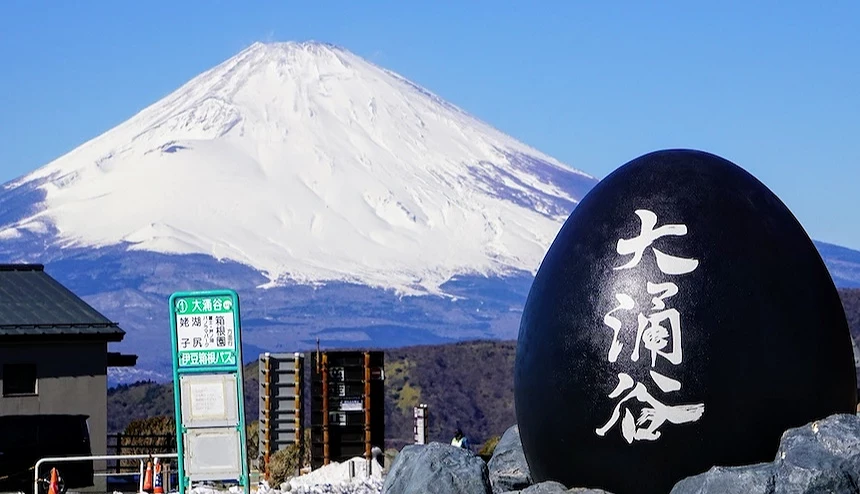
As the Hakone Ropeway slowly climbs toward Owakudani, you can look down over the volcanic terrain where white steam continuously rises from the ground and experience the spectacular scenery created by ongoing volcanic activity. On clear days, Mount Fuji can also be seen in the distance, creating a unique landscape with billowing sulfurous steam on one side and majestic mountain scenery on the other. This is one of the reasons Owakudani has become one of Hakone’s most iconic scenic spots.
Eat a “Black Egg” Said to Extend Your Life by Seven Years

When visiting Owakudani, almost everyone carries a bag of the famous local “black eggs.” These eggs are cooked using Owakudani’s hot spring water and geothermal heat. The shells turn black because the iron in the hot spring water reacts chemically with hydrogen sulfide. This distinctive appearance has made black eggs one of Owakudani’s most representative specialties. Local legend says that eating one black egg can extend your life by seven years, adding a fun element to the trip.
Stand Above a Volcano at the “Valley of the Earth”
The “Valley of the Earth” is a new observation facility that opened after renovations at Owakudani Station were completed in April 2025. It allows visitors to admire the volcanic terrain from different angles. The most eye-catching feature is an observation platform with a glass floor. Standing on the transparent surface, you can look directly down at the volcanic steam vents below, where white smoke rises continuously. The dramatic visual effect makes this one of the most popular photo spots in Owakudani.
Owakudani Transportation Guide
Starting from Hakone-Yumoto and heading uphill (the classic route)

Most visitors travel to Owakudani starting from Hakone-Yumoto Station, taking the Hakone Tozan Railway, cable car, and ropeway along the classic “Hakone Golden Route.” From Hakone-Yumoto Station, the journey takes around one hour including transfer and waiting times. During peak seasons, it is recommended to allow approximately 1.5 hours. Travelers who prefer to avoid multiple transfers can also take an Izu Hakone Bus directly to Owakudani, with a journey time of approximately 35 to 50 minutes. However, the Hakone Freepass is not valid on this bus route, so it is recommended to check official schedules and fares before departure.
| interval | Transportation | Approximate time |
|---|---|---|
| Hakone Yumoto → Gora | Hakone Tozan Railway | Approximately 40 minutes |
| Gora → Sounzan | Cable car | Approximately 9 minutes |
| Sounzan → Owakudani | Hakone Ropeway | Approximately 10 minutes |
Owakudani Ropeway Fares and Operating Conditions: What to Do During Suspensions and How to Check Live Updates
The main transportation to Owakudani is the Hakone Ropeway. The full route has four stations: Sounzan, Owakudani, Ubako, and Togendai. Whether you board from Sounzan or from Togendai beside Lake Ashi, the ropeway stops at Owakudani, so you can choose the direction that best suits your itinerary. If you want to explore Lake Ashi first and visit Owakudani afterward, you can board the ropeway at Togendai Station and travel uphill.
Opening Hours and Fares
The Hakone Ropeway operates frequently, with cabins departing approximately every minute and carrying up to 18 passengers at a time. Thanks to the high departure frequency, even when there is a queue, the line usually moves quickly and passengers rarely need to wait very long.
【Opening Hours】
| period | Business Hours | |
|---|---|---|
| Normal period | February to November | Approximately 9:00 to 17:00 |
| During winter | December to January | Approximately 9:00 to 16:15 |
【Fares】
| grown ups | child | |
|---|---|---|
| One Way | 2,000 yen | 700 yen |
| back and forth | 3,000 yen | 1,000 yen |
Check operating conditions before departure and what to do if service is suspended
The Hakone Ropeway may be temporarily suspended due to strong winds, thunderstorms, approaching typhoons, or unusual volcanic activity. It is recommended to check the operating status on the day of your visit. If service is suspended, you can follow official guidance and use alternative transportation such as Hakone Tozan Bus or Izu Hakone Bus. During winter, when certain sections undergo scheduled maintenance, corresponding replacement transportation will also be announced separately.
Hakone Ropeway
Address: 1251-1 Sengokuhara, Hakone, Ashigarashimo District, Kanagawa Prefecture
Opening hours: February–November approximately 9:00–17:00, December–January approximately 9:00–16:15
Three Ways to See the Volcano at Owakudani
Visitors are currently prohibited from freely entering the steaming volcanic area of Owakudani, but there are still several ways to enjoy the volcanic landscape up close. In addition to viewing it from above on the Hakone Ropeway, visitors can go to the “Valley of the Earth” observation platforms or reserve a guided tour that enters the steaming volcanic zone. All three viewing options are concentrated around Owakudani Station and can be reached easily on foot.
View from the Ropeway: An Aerial Perspective Flying Over the Steaming Volcanic Zone

When riding the Hakone Ropeway, the section between Sounzan and Owakudani offers the most distinctive scenery along the route. During the approximately 10-minute ride, the ropeway crosses a valley around 130 meters deep, with the steaming volcanic zone directly below. From above, you can admire the dramatic volcanic terrain as white steam continuously rises from the ground. On clear days, there is also a chance to see Mount Fuji in the distance, creating the classic view of volcanic steam and Mount Fuji in the same frame. If you visit from late October to mid-November, the leaves along the route gradually turn color, allowing you to enjoy layers of autumn scenery from the ropeway.
Valley of the Earth (ちきゅうの谷) Observation Area

The “Valley of the Earth” is a newly opened experiential observation area that began operation in April 2025 after renovations at Owakudani Station. It can be reached immediately after getting off the Hakone Ropeway. The observation area is designed around the themes of “black, geology, and wind,” combining the volcanic terrain and natural characteristics of Owakudani. It features three distinctive observation platforms, allowing visitors to view the steaming volcanic area and surrounding scenery from different perspectives.
Ibuki Deck (息吹のデッキ)

The Ibuki Deck offers the most immersive experience of the three observation platforms. The deck extends toward the steaming volcanic area and features a transparent glass floor. Standing on it, visitors can look directly down at the volcanic terrain below, where white steam rises continuously. The Hakone Ropeway also slowly passes right in front of the platform, making it a highly distinctive location for both enjoying the volcanic scenery and taking photos.
Kaze no Wa Terrace (風の輪テラス)

Kaze no Wa Terrace is a circular observation platform approximately 18 meters in diameter. Standing on the platform, visitors can feel the mountain winds blowing through the valley from all directions, creating a unique immersive experience. Looking back toward the distance, Mount Fuji may also be visible on clear days, allowing visitors to enjoy both the volcanic landscape and majestic mountain scenery at the same time.
Ozora no Hotori (大空のほとり)

Ozora no Hotori offers the most expansive view of the three observation platforms. Visitors can look across Hakone’s scenery where forested mountains meet the open sky. From the platform, you can also watch Hakone Ropeway cabins glide slowly past at very close range, blending beautifully with the surrounding mountains and blue sky. It is a popular location for both sightseeing and photographing the ropeway.
Nature Research Trail
The only way to enter the steaming volcanic zone (reservation required)

The Owakudani Nature Research Trail is currently the main way to enter the steaming volcanic area and observe the landscape from close range. This approximately 700-meter trail loops around the volcanic zone and allows visitors to observe steam vents, emergency shelters, and the hot spring steaming area where black eggs are made. Due to safety concerns associated with volcanic activity, entry is currently allowed only under an “escorted admission system,” with groups led by monitoring staff. Advance reservations are required.
Reservation method and fees
The Owakudani Nature Research Trail can be reserved online. Since spaces are limited, early booking is recommended. The guided tour is conducted entirely in Japanese, so visitors who do not understand Japanese should consider this before joining. Participants must be elementary school age or older and physically capable of running to evacuate in an emergency. Visitors with respiratory or heart conditions are not allowed to participate. On the day of the tour, participants must check in at the Owakudani Information Center on the first floor of Kurotamago-kan and arrive 20 minutes in advance. Officials will also confirm approximately 30 minutes before departure whether the tour will proceed. The tour may be canceled at short notice if volcanic gas concentrations exceed safe levels, or in the event of rain, strong winds, or dense fog.
Hakone Ropeway
Sessions: 4 tours daily at 10:00, 11:30, 13:00, and 14:30 (approximately 40 minutes each)
Capacity: Maximum 30 participants per session
Fee: JPY 800 per person, cashless payment only (cash not accepted)
Introduction to Owakudani Black Eggs
Enmei Jizo is believed to be the origin of the Owakudani black egg legend that says “eating one egg extends your life by seven years.” According to tradition, during the Heian period, Kobo Daishi passed through the area and saw the desolate, hell-like landscape of Owakudani. He carved a Jizo Bodhisattva statue to pray for the salvation of people, and later generations worshipped it as the “Jizo of Longevity and Child-Raising.” Black eggs are said to have inherited this blessing, eventually giving rise to the legend that they can extend life by seven years. Enmei Jizo is located near the entrance to the Nature Research Trail and can be reached on foot from Owakudani Station. The statue sits slightly higher up, and Mount Fuji can also be seen from the area on clear days.
Why Are Black Eggs Black?

Black eggs (黒たまご) are boiled eggs cooked in hot spring water and are Owakudani’s most famous specialty. During preparation, raw eggs are first boiled for approximately 60 minutes in hot spring water at around 80°C. Iron in the hot spring water adheres to the eggshell and reacts with hydrogen sulfide to form iron sulfide, turning the shell black. The eggs are then steamed for approximately 15 minutes using steam at around 100°C. Since they are freshly made and sold every day, their recommended shelf life is approximately two days from the date of purchase. For the best texture and flavor, eating them on-site is recommended.
Owakudani Kurotamago-kan: Black Egg-Themed Complex
Owakudani Kurotamago-kan is the main sightseeing facility in Owakudani and can be reached on foot after getting off at Owakudani Ropeway Station. The building includes a direct-sales counter for black eggs, the souvenir shop “Kurotama SHOP,” which sells many Sanrio collaboration products, and a café restaurant. The first floor also houses the Hakone GeoMuseum, which introduces the geological history and formation of the Hakone volcano. The black egg sculpture in front of the building is a popular photo spot, and on clear days, visitors can take pictures with Mount Fuji in the background.

Address: 1251 Sengokuhara, Hakone, Ashigarashimo District, Kanagawa Prefecture
Opening hours: 9:00–16:00
Transportation: Approximately a 2-minute walk from Owakudani Ropeway Station
Must-Buy Souvenirs at Owakudani
Among Owakudani’s must-buy souvenirs, the most distinctive are the various “black-themed” products. Kurotama SHOP offers a wide range of Owakudani-exclusive items inspired by the famous black eggs. Popular products include black egg manju and black egg cookies, making them ideal souvenirs from the trip. Actual products and prices may vary, so refer to official announcements for the latest information.
Black Egg Manju (黒たまごまんじゅう)
A pack of four Black Egg Manju costs JPY 740, making it an affordable souvenir. Their appearance closely resembles Owakudani’s famous black eggs. The black outer coating is made with chocolate, while the soft honey cake dough surrounds a filling made from Mishima sweet potatoes. The eye-catching appearance and rich sweet potato aroma make this one of the most popular souvenirs at Kurotama SHOP.
Black Egg Chocolate (黒たまごしょこら)
Owakudani Black Egg Chocolate is inspired by the area’s famous black eggs and closely recreates their appearance, although it is actually a rich baked chocolate. The texture is firm with a slightly bittersweet flavor that is not overly sugary. Its distinctive appearance also makes it an excellent souvenir or gift.
Black Egg Cookies (黒たまごクッキー)
Black Egg Cookies are designed to resemble cracked black eggs. The cookies combine original and cocoa flavors in two colors, giving them a cute and creative appearance. They are sold in multi-piece packages, making them convenient for sharing with friends and family, and are another popular Owakudani souvenir.
Must-Try Food at Owakudani
Most of Owakudani’s food is based around the theme of “volcanic black.” In addition to the famous black eggs, visitors can try black curry bread, black hot dogs, egg-flavored soft-serve ice cream, and other distinctive dishes. Each shop has its own signature specialty. Enjoying limited-edition food while admiring the steaming volcanic landscape is one of the highlights of visiting Owakudani.
OWAKUDANI KITCHEN(Former Owakudani Station Restaurant)
Owakudani Station Restaurant features counter seats by large windows overlooking the steaming volcanic area, allowing diners to enjoy volcanic scenery while eating. Its signature “Special Owakudani Curry” is inspired by the steaming volcanic zone. The rich dark brown curry is made with Japanese-style dashi stock and domestically produced minced pork and was awarded the Grand Prize at the 73rd Japan Food Selection. In addition to the signature curry, the restaurant also serves udon, soba, and other dishes.

Address: 2F, Owakudani Station, 1251 Sengokuhara, Hakone, Ashigarashimo District, Kanagawa Prefecture
Opening hours: 10:30–16:00 (LO15:30)
Transportation: Located directly at Owakudani Ropeway Station
Gokuraku Chaya
Gokuraku Chaya is located beside the Owakudani parking lot and combines dining with souvenir shopping. Its signature “Akaike Jigoku Black Ramen” is inspired by volcanic steam and features a red soup base paired with black noodles. The soup is made from a light tonkotsu broth seasoned with spices, and diners can choose between regular or extremely spicy versions. In addition to black ramen, the shop also offers volcanic black-themed desserts such as black soft-serve ice cream.
Address: 1251-2 Sengokuhara, Hakone, Ashigarashimo District, Kanagawa Prefecture
Opening hours: 9:00–17:00
Transportation: Approximately a 2-minute walk from Owakudani Ropeway Station
Yu〜Land: Signature Egg Soft-Serve Ice Cream

Yu〜Land is located beside the entrance to the Owakudani Nature Research Trail and sells snacks and desserts that are easy to enjoy while walking around. Its most popular item is the “Egg Soft-Serve Ice Cream,” known for its bright yellow color and rich egg aroma. The texture is smooth, with a sweet custard-like flavor. The shop also sells yakisoba bread, takoyaki, and other snacks, making it a convenient place to recharge while exploring Owakudani.
Address: 1251-2 Sengokuhara, Hakone, Ashigarashimo District, Kanagawa Prefecture
Opening hours: 9:00〜16:00
Transportation: Approximately a 3-minute walk from Owakudani Ropeway Station
Owakudani Kurotamago-kan Wakuwaku Kitchen&CAFÉ: Black-Themed Snacks
Owakudani Kurotamago-kan Wakuwaku Kitchen&CAFÉ is located inside Kurotamago-kan and features large panoramic windows overlooking the steaming volcanic landscape. The café specializes in a variety of “black-themed” foods. Popular items include black curry bread made with bamboo charcoal in the outer dough and filled with black curry, as well as rich black chocolate soft-serve ice cream. It is a great place to take a break and enjoy distinctive local food while exploring Owakudani.
Address: 1251-1251 Sengokuhara, Hakone, Ashigarashimo District, Kanagawa Prefecture
Opening hours: 9:00〜16:00
Transportation: Approximately a 2-minute walk from Owakudani Ropeway Station
Attractions Near Owakudani

Nearby attractions around Owakudani can be combined with Lake Ashi and the Hakone Pirate Ship. After taking the Hakone Ropeway downhill from Owakudani toward Togendai, you can transfer directly beside the station to the Hakone Pirate Ship and cruise across Lake Ashi. From there, continue to Hakone Shrine to visit its famous torii gate standing in the lake. Travelers interested in shopping can also head to Gotemba to purchase souvenirs, creating a complete one-day Hakone itinerary.
For those who want to explore the Hakone area in greater depth, transportation information, sightseeing highlights, and recommended routes for Lake Ashi, Hakone Shrine, Gotemba, and other nearby destinations can be combined to plan a complete Hakone trip.
Whether you ride the ropeway to admire the dramatic volcanic steam from above, taste Owakudani’s famous black eggs, or connect your visit with nearby attractions such as Lake Ashi and Hakone Shrine, Owakudani is an essential stop on any Hakone itinerary. Before departure, use the transportation, sightseeing, and food information in this guide to plan a smooth and fulfilling Hakone trip.
Frequently Asked Questions About Visiting Owakudani
1.Does Owakudani Require an Admission Ticket?
Owakudani itself does not require an admission ticket. Entry to Owakudani Park, viewing the steaming volcanic area, visiting the Valley of the Earth observation platforms, and taking photos with the black egg sculpture are all free. Additional fees apply for the Hakone Ropeway and the guided Nature Research Trail.
2.How Long Should You Spend at Owakudani? What Should You Wear, and What About Luggage?
If you only want to view the steaming volcanic area and take photos, approximately one hour is enough. If you also plan to visit the Valley of the Earth observation platforms, enjoy food, and shop for souvenirs, allow around 1.5 to 2 hours. If you participate in the Nature Research Trail guided tour, plan for approximately 2 to 3 hours. Since Owakudani is located at an elevation of around 1,044 meters, temperatures are lower and mountain winds can be strong, so bringing an extra jacket is recommended. During winter, be mindful of snowfall and slippery roads. If you are carrying large luggage, coin lockers are available at Hakone Ropeway stations, including Owakudani Station.
3.Is the Sulfur Smell at Owakudani Harmful? Who Should Take Extra Care?
For most visitors, short-term exposure to the sulfur smell at Owakudani usually does not require excessive concern. However, anyone who feels unwell should leave the area immediately and follow on-site instructions. The park continuously monitors volcanic gas concentrations and may suspend operations or implement evacuation measures if levels exceed safety standards. Officials advise that people with asthma, bronchial or lung diseases, heart conditions, or implanted pacemakers should avoid riding the ropeway section between Sounzan and Ubako that passes through the steaming volcanic area. Pregnant women, infants, young children, elderly visitors, and other sensitive groups are also advised to carefully assess the situation before visiting.
4.Can You Drive to Owakudani? Is Parking Convenient?
Yes, you can drive directly to Owakudani, and a large parking lot is available at the site. Parking is generally easier on weekdays, but on weekends and public holidays, vehicles may need to queue before entering. During peak seasons, visitors who want to avoid traffic congestion can consider parking at Sounzan or another ropeway station and taking the Hakone Ropeway uphill instead. Parking lot opening hours and fees are subject to official announcements.