
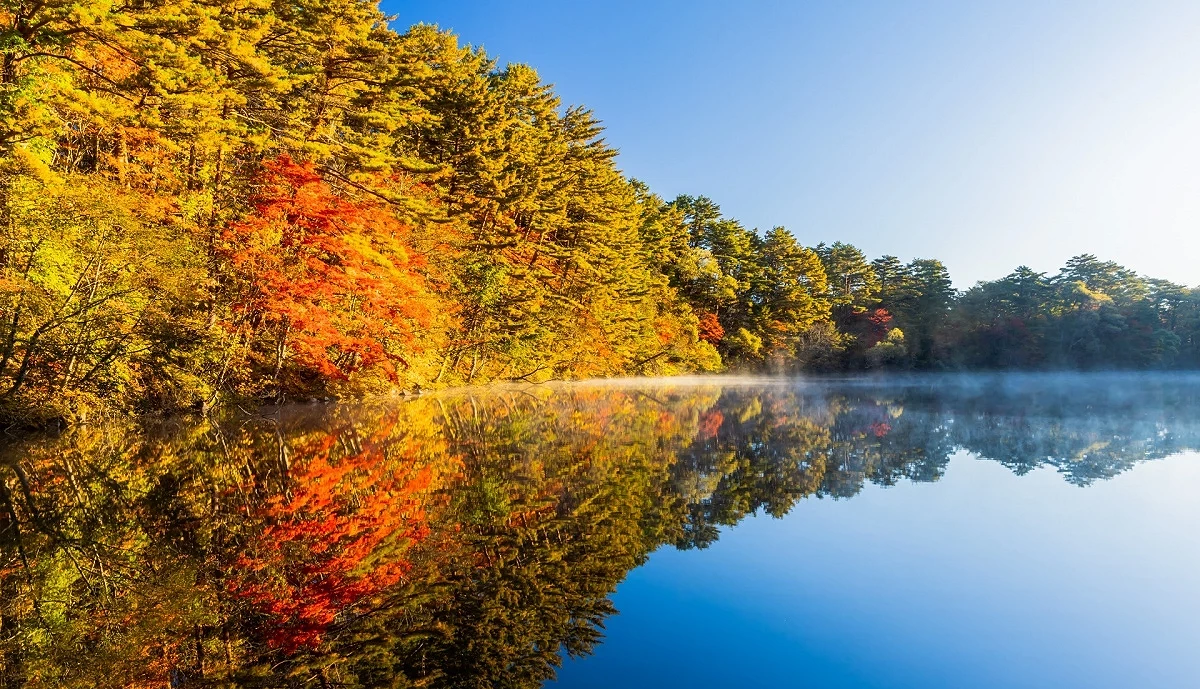
Hidden in Urabandai, Fukushima Prefecture, is the mysterious group of lakes and ponds known as “Goshikinuma.” Influenced by volcanic activity and minerals in the water, the surfaces of the ponds display ever-changing shades such as cobalt blue and emerald green, as if you had stepped into a natural color palette. Goshikinuma received one star in the Michelin Green Guide in 2016 and is one of the most iconic natural scenic spots in Japan’s Tohoku region. This guide from “Let’s Go! Japan” provides a complete introduction to how Goshikinuma was formed, the features and order of its eight major ponds, transportation options, and the seasonal beauty created by fresh spring greenery, autumn foliage, and winter snow.
Why the Water at Goshikinuma Changes Color
Located in the scenic Urabandai area of Fukushima Prefecture, Goshikinuma does not refer to a single lake. Instead, it consists of eight differently colored ponds—Bishamon-numa, Aka-numa, Midoro-numa, Ryu-numa, Benten-numa, Ruri-numa, Ao-numa, and Yanagi-numa—along with many other ponds and lakes of various sizes. Because of differences in minerals, light, and viewing angles, the ponds display dreamy shades such as cobalt blue and emerald green, making Goshikinuma one of Fukushima’s most representative natural wonders.

The fact that every pond has a different color is exactly what makes Goshikinuma so fascinating. Acidic substances released after the eruption of Mount Bandai seeped into the groundwater and reacted with minerals in the water, forming fine particles of an aluminum silicate mineral known as allophane. These particles reflect specific wavelengths of light. Differences in composition, concentration, and water depth among the ponds, together with seasonal scenery and viewing angles, create subtle changes in the color of the water.
After enjoying the dreamlike colors of Goshikinuma, consider adding nearby attractions to your itinerary as well. From spectacular natural scenery and historic landmarks to local cuisine, you can plan a complete and exciting independent trip around Fukushima.
Location and Transportation Guide to Goshikinuma

Goshikinuma is located in the Urabandai area of Fukushima Prefecture, near Mount Bandai and Lake Hibara. When traveling by public transportation, the nearest railway station is Inawashiro Station on the JR Ban-etsu West Line. From there, transfer to an Aizu Bus and get off at either Goshikinuma Iriguchi or Urabandai Kogen Station.
| Transportation | Departure Point | Route | Travel Time |
|---|---|---|---|
| Bus | JR Inawashiro Station | Aizu Bus “Kyukamura / Bandai Kogen-bound” | Approx. 31 minutes (Get off at Goshikinuma Iriguchi) |
| JR + Bus | JR Aizu-Wakamatsu Station | JR Aizu-Wakamatsu Station → JR Inawashiro Station → Aizu Bus “Kyukamura / Bandai Kogen-bound” | Approx. 60–70 minutes |
| Driving | Ban-etsu Expressway | Inawashiro Bandai Kogen IC | Approx. 20–25 minutes |
Complete Guide to the Goshikinuma Nature Trail
The Nature Trail has two entrances. The eastern Goshikinuma Entrance is beside the Urabandai Visitor Center and close to Bishamon-numa, while the western Urabandai Kogen Station Entrance is beside the Urabandai Bussankan and close to Yanagi-numa. It is recommended to enter from one end, walk to the other end, and then take a bus back, saving your energy for the next part of your itinerary.

| Item | Details |
|---|---|
| Total Length | Approx. 3.6–4 km |
| Required Time | Approx. 70–90 minutes (one way, excluding photo stops and breaks) |
| Difficulty | Beginner (elevation difference is only about 40 meters; suitable for seniors and children) |
| Admission Fee | Free |
| Parking | Free parking lots are available at both entrances |
| Restrooms | Available only at the two entrances (there are no restrooms along the trail, so use them before setting out) |
Bear warning: The Urabandai area is habitat for Asian black bears. It is recommended to carry a bear bell, which can be rented from the tourist information centers at both entrances. Wear comfortable athletic shoes as well, and take extra care with your footing because the trail can become muddy after rain.
Order and Features of the 8 Ponds
Walking from the eastern Goshikinuma Entrance to the western Urabandai Kogen Station, you will pass eight distinctive ponds in the following order:
| Order | Pond | Time from Previous Stop | Features |
|---|---|---|---|
| 1 | Bishamon-numa | 10-minute walk from the entrance | Largest pond in Goshikinuma Cobalt blue-green Only pond where rowboats are available |
| 2 | Aka-numa | 25 minutes | Rich in iron Reddish brown to brown in color |
| 3 | Midoro-numa | 3 minutes | Sediment on the pond bottom creates distinctive colors |
| 4 | Ryu-numa | 5 minutes | A small pond along the trail |
| 5 | Benten-numa | 17 minutes | Second-largest pond in Goshikinuma Clear turquoise blue Observation deck available Views of Mount Bandai |
| 6 | Ruri-numa | 4 minutes | Deep lapis lazuli color (deep blue-purple) |
| 7 | Ao-numa | 3 minutes | Known as “the bluest pond in Goshikinuma” Reflections of trees and sky on the water |
| 8 | Yanagi-numa | 10 minutes | Close to the western entrance Nearly neutral water quality Fish can be seen |
Recommended Photo Highlights:
・Bishamon-numa: The cobalt blue-green water with Mount Bandai in the background creates a classic postcard view
・Ao-numa: The mirror-like surface reflects the sky and forest and is especially beautiful in backlight
・Benten-numa Observation Deck: Capture both the pond and the Azuma mountain range in one view
Hiking Route Options: One-Way vs. Round Trip
From the eastern Goshikinuma Entrance to the Bishamon-numa observation area is about 400 meters, or roughly a 5-minute walk. From the western Urabandai Kogen Station Entrance to the larger Benten-numa is about 1.5 km, or roughly a 20-minute walk. Local buses connect both ends, but there are only about four to five services per day, so be sure to check the timetable in advance to avoid disrupting your itinerary!
| Option | Route | Required Time | Best For |
|---|---|---|---|
| Complete One-Way Route | Goshikinuma Entrance → Hike the Nature Trail past all 8 ponds → Urabandai Kogen Station → Return by bus → Goshikinuma Entrance | Approx. 2 hours | Visitors who want to see all 8 ponds |
| Short Round Trip | Urabandai Kogen Station Entrance → Yanagi-numa, Ao-numa, Ruri-numa → Benten-numa Observation Deck → Return to Urabandai Kogen Station Entrance | Approx. 1 hour | Visitors with limited time Visitors who only want to see the representative ponds |
Goshikinuma Through the Four Seasons
The Goshikinuma pond group is located in the Urabandai area of northern Fukushima Prefecture, on the northern side of Mount Bandai near Lake Hibara. With an average elevation of around 800 meters, the area is beautiful throughout the year. Its highland climate keeps summers relatively cool, brings autumn colors earlier than lower elevations, and covers the landscape in snow during winter, creating completely different scenery in each season.
| Period | Highlights | |
|---|---|---|
| Spring (Lingering Snow + Fresh Greenery) | April–June | Snow may remain until mid-April Fresh greenery appears rapidly after Golden Week Clear water and ideal conditions for birdwatching |
| Summer | July–August | Daytime temperatures around 30°C Mornings and evenings are pleasantly cool at around 20°C The best season for hiking |
| Autumn (Autumn Foliage) | Mid-October–early November | Surrounding forests turn red and yellow The colors combine with the ponds to create spectacular scenery |
| Winter (Snow Scenery) | December–mid-April | Snow covers the entire Nature Trail Snowshoes are required to enter |
Autumn Foliage: Best Time to See the Colors

The best time to see autumn foliage at Goshikinuma is generally from mid-October to early November. The surrounding forests change from green to red and yellow, contrasting beautifully with the emerald and cobalt blue colors of the ponds to create spectacular scenery. Autumn foliage season is also the busiest time for visitors, so weekdays are recommended to avoid weekend and holiday crowds.
In addition to Goshikinuma, Fukushima is home to many valleys, lakes, and mountains famous for autumn foliage. To find the best viewing periods, transportation options, and recommended spots, check the complete Fukushima autumn foliage guide prepared by “Let’s Go! Japan.”
Winter Snow Scenery and Seasonal Access Notes

In winter, Goshikinuma offers beautiful, tranquil scenery created by the combination of snowy forests and frozen landscapes. Although the Nature Trail is not completely closed, from around December to mid-April the boardwalks and trail signs are almost entirely buried under snow. Visitors should wear snowshoes when hiking in winter, and joining a local guided tour is recommended for greater safety.
Helpful Tips:
Rowboat service at Bishamon-numa is suspended during winter
First-time visitors or those without snowshoe experience are advised to join a local winter snowshoe tour (equipment can be rented, so there is no need to bring your own)
If you prefer to hike independently, snowshoes can be rented separately, but you must bring your own cold-weather clothing
In winter, snow can cover the existing trail markers. Be sure to join a guided tour or travel only if you are familiar with the route to avoid the risk of getting lost
Recommended Accommodation Near Goshikinuma
Urabandai Lake Resort Goshiki no Mori

Urabandai Lake Resort is extremely close to the western entrance of the Nature Trail. The hotel features an open-air hot spring bath with free-flowing natural spring water and views of Lake Hibara and Mount Bandai. Dinner is served buffet-style using seasonal ingredients from Fukushima. With its natural hot spring, Mount Bandai-view rooms, and buffet dining, it is a convenient base for early-morning hikes or winter snowshoe experiences.
Address: 1171-1 Yudairayama, Hibara, Kitashiobara Village, Yama District, Fukushima Prefecture
Transportation: Approximately a 4-minute walk from the western side of the Goshikinuma Nature Trail (Yanagi-numa side)
Urabandai Lake Resort Geihinkan Nekoma Rikyu

Another building at Urabandai Lake Resort, Nekoma Rikyu, offers a more upscale hotel experience with larger guest rooms. It also features natural hot springs and an excellent location with lake and mountain views, making it suitable for travelers with a larger budget or those looking for a more luxurious stay.
Address: 1171-1 Yudairayama, Hibara, Kitashiobara Village, Yama District, Fukushima Prefecture
Transportation: Approximately a 4-minute walk from the western side of the Goshikinuma Nature Trail (Yanagi-numa side)
Urabandai Kogen Hotel

Also located on the western side of the Nature Trail, Urabandai Kogen Hotel is a long-established and consistently well-reviewed resort hotel in the Urabandai area, with magnificent views of Mount Bandai. The hotel offers extensive facilities and spacious interiors, while dinner features a generous buffet incorporating traditional Aizu cuisine. It is suitable for everyone from families with children to three-generation trips and is a convenient option for staying near Goshikinuma.
Address: 1171 Yudairayama, Hibara, Kitashiobara Village, Yama District, Fukushima Prefecture
Transportation: Approximately a 5-minute walk from the western side of the Goshikinuma Nature Trail (Yanagi-numa side)
Located in Fukushima Prefecture in Japan’s Tohoku region, Goshikinuma displays completely different natural beauty in every season, from fresh greenery in spring and summer to autumn foliage and winter snow. Hike the beginner-friendly Nature Trail to enjoy the ever-changing colors of the ponds and surrounding forests. Whether you plan a day trip or a two-day, one-night stay to explore Urabandai in depth, you can fully immerse yourself in the restorative beauty of nature. On your next trip to Japan’s Tohoku region, consider visiting Goshikinuma to see this dreamlike landscape that changes color with the seasons.
Frequently Asked Questions About Visiting Goshikinuma
1. Is Goshikinuma Suitable for a Day Trip?
Yes. The Goshikinuma Nature Trail is about 4 km long and takes approximately 1 hour 10 minutes to 1 hour 30 minutes to walk one way. Including time for photos, breaks, and waiting for the bus, it is best to allow around 2 to 3 hours. If you combine the visit with one of the nearby accommodations mentioned in this article and stay for two days and one night, you can also enjoy different experiences in the early morning and evening.
2. Is Goshikinuma Closed in Winter? Can You Still Visit?
Although Goshikinuma does not completely close in winter like Kamikochi or Mount Fuji, the area is covered by heavy snow, so snowshoes, winter outdoor clothing, and appropriate equipment are required. Winter visitors are advised to join a local guided tour, where equipment can be rented and a guide will lead the way. Rowboat service at Bishamon-numa is also suspended during winter.
3. Which Month Is the Most Beautiful at Goshikinuma? Is Fresh Greenery or Autumn Foliage Better?
Fresh greenery and autumn foliage each have their own appeal. Summer generally offers more stable weather, transportation, and trail conditions, and visitor numbers are usually lower than during the peak autumn foliage season. The blue-green pond water against the layered green forest is also beautiful. In autumn and early winter, the ponds combined with colorful foliage create the classic Goshikinuma scenery. Check the latest foliage viewing period again before your visit.
4. Is Transportation to Goshikinuma Convenient? Can You Visit Without Driving?
Yes, you can visit without a car. The usual route is to take JR to Inawashiro Station and transfer to an Aizu Bus, getting off at either Goshikinuma Iriguchi or Urabandai Kogen Station (approximately 20–25 minutes). There are bus stops at both ends of the Goshikinuma Nature Trail (about 7 minutes away), so you can walk from one end to the other and then leave by bus.
5. Is the Goshikinuma Hiking Trail Suitable for Seniors, Children, and Strollers?
The Goshikinuma Nature Trail has an elevation difference of only about 40 meters, so healthy seniors and school-age children who can walk several kilometers independently should have no problem. However, visitors should wear suitable clothing and allow plenty of time for breaks. The trail includes exposed rocks, tree roots, dirt surfaces, and areas that become muddy after rain, so it is not suitable for standard baby strollers, wheelchairs, or people with limited mobility for the full route.