
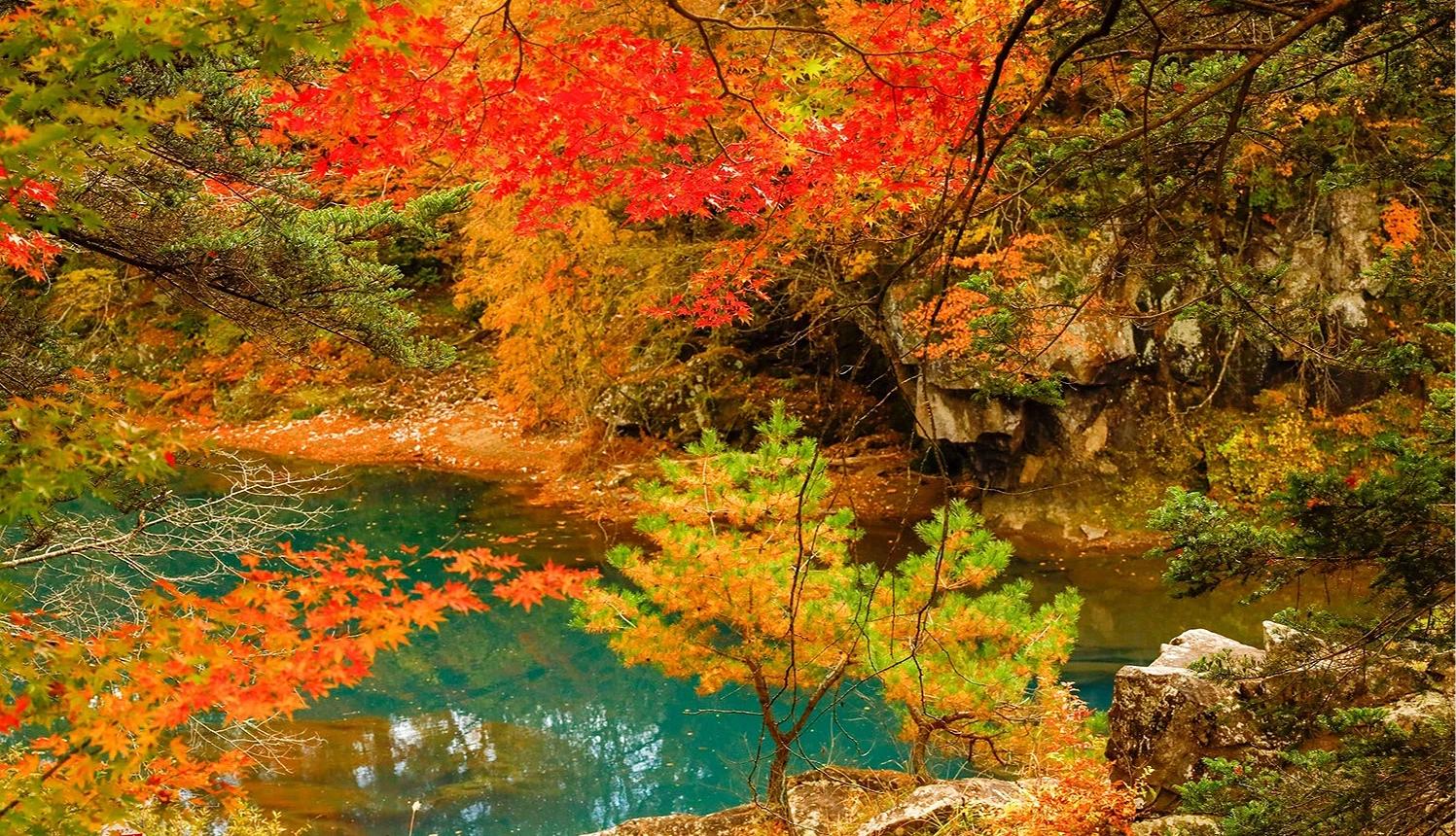
Genbikei Gorge in Ichinoseki, Iwate Prefecture, is one of the Tohoku region's representative gorge attractions, known for its unusual rock formations, emerald-green water, and beautiful scenery in every season. It is especially popular for autumn foliage and is also famous for the must-try “Flying Dango” from Kakkoya. This guide covers how to get to Genbikei, how to buy the Flying Dango, recommended walking routes, seasonal highlights, and nearby attractions, making it easy to explore several of Iwate's top destinations in one trip!
Introduction to Genbikei Gorge

Genbikei Gorge is located in Ichinoseki, Iwate Prefecture, and stretches for about 2 kilometers. It was formed over many years by the Iwai River, which originates at Mount Kurikoma. Along the gorge, visitors can see unusual rock formations, huge boulders, potholes, waterfalls, and deep pools, while the water itself has a clear emerald-green color. The scenery changes with each season, with autumn attracting the largest number of visitors. Genbikei was designated a National Place of Scenic Beauty and Natural Monument in 1927. According to tradition, Date Masamune, the feudal lord of the Sendai Domain, praised the gorge and regarded it together with Matsushima as one of the two greatest scenic spots in his territory. It has long been one of Tohoku's best-known travel destinations.
Difference Between Geibikei Gorge and Genbikei Gorge

Geibikei Gorge and Genbikei Gorge are both located in Ichinoseki, Iwate Prefecture. If you are driving, it is easy to visit both on the same day, as they are about 30 minutes apart by car. If you are using public transportation, bus services—especially those to Geibikei—are very limited, so be sure to check schedules carefully before departure.
| Genbikei Gorge | Geibikei Gorge | |
|---|---|---|
| Highlights | Unusual rock formations Kakko Dango (Flying Dango) | Sightseeing boat ride Boatman's song Lucky ball throwing |
| Type of Experience | Walking along the trails (Free) | Boat ride (Paid) |
| Recommended Time | About 30–70 minutes | About 90 minutes |
Geibikei Gorge and Genbikei Gorge are about 30 minutes apart by car, making them ideal to visit on the same day if you are driving. Geibikei is explored by boat, offering a completely different experience from walking through Genbikei. For the must-see highlights of Geibikei Gorge, check the guide below!
Genbikei Gorge Transportation Guide
Getting to Genbikei Gorge by Bus
After leaving JR Ichinoseki Station, you can take a bus to Genbikei Gorge. The Genbikei Line, Mizuyama Line, and Sukawa Onsen Line all stop at Genbikei, but the key point is that service is only about once per hour. If you plan to travel by bus, check the timetable in advance and coordinate your itinerary with your JR train schedule. Buses to Genbikei are more frequent than those to Geibikei, but services gradually decrease in the afternoon and the last return bus leaves relatively early, so it is best to depart and return as early as possible. Local buses operated by Iwateken Kotsu accept IC cards such as Suica and PASMO. Contactless credit cards are not currently supported, but cash is also accepted.
| Route | Ichinoseki Station Bus Stop No. 9 → Genbikei Bus Stop About a 1-minute walk after getting off |
|---|---|
| Travel Time | About 20 minutes |
| Fare | ¥520 |
Driving to Genbikei Gorge
| Route | Ichinoseki IC → National Route 342 |
|---|---|
| Travel Time | About 8–10 minutes |
If you rent a car and drive to Genbikei Gorge, you can easily add Geibikei Gorge to the same itinerary, making it a recommended one-day route for visiting both attractions. There are two free parking areas near Genbikei, including the roadside station “Michi-no-Eki Genbikei.” If they are full on weekends or public holidays, paid parking is also available nearby.
Genbikei Gorge Weather and Seasonal Highlights
| Spring (March–May) | March can still be chilly, but temperatures gradually rise from April, while fresh greenery is at its best in May. Because mornings and evenings can be much cooler, bringing a light jacket is recommended. |
|---|---|
| Summer (June–August) | The weather is relatively dry, although daytime temperatures can be hot. The gorge is surrounded by lush greenery, so bring sun protection and drinking water when walking. |
| Autumn (September–November) | One of the most popular seasons at Genbikei Gorge, when the trees along both sides of the gorge display beautiful autumn colors. Late October to early November is usually the best time for foliage viewing. |
| Winter (December–February) | Temperatures are cold, and when snow accumulates, visitors can enjoy the gorge covered in winter scenery. Roads and paths may be icy, so wear non-slip shoes and pay attention to bus schedules. |
Genbikei Gorge in Spring: Cherry Blossoms

From late April to early May each year, Genbikei enters one of its softest and most beautiful seasons. Around 200 Somei Yoshino and Edo Higan cherry trees bloom along the gorge, contrasting with the unusual rock formations and emerald-green water. The most representative blossoms are known as “Teizan-zakura.” According to tradition, these old Edo Higan cherry trees have close ties to Date Masamune, lord of the Sendai Domain, and their name comes from his posthumous title, “Teizan.”
Genbikei Gorge in Summer: Refreshing Greenery

From June to August, Genbikei Gorge is surrounded by dense greenery, with the cliffs and trees on both sides turning deep green as water rushes between the unusual rock formations. Although summer days can still be hot, walking along the trail beside the stream and beneath the shade makes this a refreshing place to cool off and enjoy nature.
Genbikei Gorge in Autumn: Fall Foliage

Late October to early November is the most popular autumn foliage season at Genbikei Gorge. The trees along both sides of the gorge turn red, yellow, and orange, creating a richly layered landscape together with the gray-white rock formations and emerald-green water. From the bridges or walking trails, visitors can enjoy panoramic views combining the stream, cliffs, and colorful foliage.
Autumn in Japan's Tohoku region is colder than in many other parts of Honshu, and the area's abundant natural scenery makes the fall colors especially vivid and spectacular. Take a look at the must-visit autumn foliage spots across Tohoku!
Genbikei Gorge in Winter: Snow Scenery

Genbikei Gorge is especially quiet in winter, with fewer visitors and snow covering both sides of the valley. The already dramatic rock walls take on the solemn beauty of an ink-wash painting, making it possible to enjoy the snow-covered scenery and flowing stream at a slower pace. However, paths may be snowy or icy, so non-slip footwear is recommended. Note that Genbikei's famous “Flying Dango” from Kakkoya is usually unavailable from December to early March, so check the latest opening information before your visit.
Must-Try at Genbikei Gorge: Kakkoya Flying Dango

No visit to Genbikei is complete without Kakkoya's famous “Flying Dango.” This long-established shop was founded in 1907, during the Meiji era, and is located across the gorge. Visitors stand at the pavilion on the riverbank, strike a wooden board, and place their payment into a hanging basket. The basket then travels across the gorge along a cable to the shop. Soon afterward, another basket containing dango and hot tea “flies” back across the valley. The three-skewer dango set includes black sesame, red bean, and soy sauce flavors, together with hot tea. Enjoying them while admiring the scenery of Genbikei is one of the gorge's classic experiences.
How to Buy Genbikei's Flying Dango
Walk to the pavilion beside the gorge
↓
Place the payment in the hanging basket and use the wooden mallet to strike the board and signal the shop
↓
The basket travels along the cable across the gorge to the shop on the opposite side
↓
The shop places the dango, tea, and change in the basket and sends it back across by cable
Kakkoya
Opening Hours: 9:30–15:00 (until sold out)
Closed: Irregular holidays (closed from December to early March and may close on rainy days)
Recommended Menu: Three-Skewer Dango Set ¥600
How Long to Spend at Genbikei and Walking Routes Upstream and Downstream
Lower Genbikei: Easy Walking Route (About 30 Minutes)

For first-time visitors, families, or travelers with limited time, a walk around Tenkobashi Bridge and the lower gorge is a good starting point. Compared with the stronger currents upstream, the lower section is quieter and the paths are easier to walk, allowing visitors to slowly enjoy the emerald-green water and unusual rock formations.
Upper Genbikei: In-Depth Exploration (About 70 Minutes)

If you have more time, it is recommended to walk farther upstream into Genbikei Gorge. The current is stronger here, and the combination of unusual rock formations and waterfalls of different sizes creates a more dramatic landscape. This area also features Genbikei's distinctive potholes, circular holes formed over many years as stones and gravel were rotated by the current and gradually eroded the bedrock. You can also enjoy the Flying Dango at Kakkoya before starting the walk.
Important note when visiting Genbikei: the suspension bridge “Goranba Bridge” had been closed for a long period due to aging, but repair work was completed on October 3, 2025, and the bridge has reopened, allowing visitors to once again enjoy views of the gorge from above.
Attractions Near Genbikei Gorge
Geibikei Gorge

Also located in Ichinoseki, Geibikei Gorge is about a 30-minute drive from Genbikei. Unlike Genbikei, which is explored on foot, the main attraction at Geibikei is a traditional wooden boat ride through the spectacular gorge formed by towering cliffs on both sides. The boatman steers with a long pole and sings the traditional boat song “Geibi Oiwake” along the way. At the end of the gorge, visitors can try throwing an “undama” lucky stone while making a wish. In winter, heated kotatsu boats are available, making Geibikei worth visiting in every season.
Recommended Reading:Geibikei Gorge Guide: Winter Boat Rides, Transportation, and Must-Try Local Food
Hiraizumi: Chusonji Temple

Chusonji Temple is a sacred site of Heian culture built by the Oshu Fujiwara clan and was inscribed as part of the Hiraizumi World Heritage Site in 2011. Visitors can slowly walk along Tsukimizaka, an approach lined with old cedar trees, and experience the solemn atmosphere of the forest. The National Treasure Konjikido, decorated inside and out with gold leaf and exquisite craftsmanship, symbolizes the prosperity of Oshu Fujiwara culture.
Iwate Prefecture in the Tohoku region also offers many beautiful natural landscapes, must-visit attractions, and local foods. The guide below covers transportation, food, accommodation, and itinerary planning for Iwate, so save it before your trip!
Genbikei Gorge is more than just a place to admire valley scenery. It combines distinctive natural formations, local specialty food, and beautiful landscapes in every season, making it ideal for a relaxed visit with plenty of time for photography. If this is your first trip to Ichinoseki, consider adding Genbikei to your itinerary along with a boat ride at Geibikei and a visit to Chusonji Temple.
Genbikei Gorge FAQ
1. How Long Should You Spend at Genbikei Gorge?
If you only walk around the lower gorge and try the Kakko Dango, about 1–1.5 hours is enough. If you want to explore farther upstream at a relaxed pace, allow around 2 hours. If you are combining Genbikei with Geibikei Gorge and Chusonji Temple, it is recommended to set aside a full day.
2. Can You Visit Genbikei Gorge in Winter or Bad Weather?
Genbikei Gorge is open year-round, and its winter snow scenery is also a major highlight. However, rocks along the gorge can become slippery on rainy days, so wear non-slip shoes and walk carefully. In winter, usually from December to early March, the famous Flying Dango from Kakkoya is unavailable, so visitors can mainly enjoy the snow scenery.
3. Do You Need to Queue for Genbikei's Kakko Dango?
Queues may form during peak seasons and long holidays, so arriving early is recommended. The dango is sold only while supplies last, so late arrivals may miss out. If you do not want to queue at the pavilion, you can buy it directly from the shop on the opposite side, although you will miss the cable-basket experience.
4. Are There Hot Spring Hotels Near Genbikei Gorge? Where Is the Best Place to Stay?
The Genbikei area is part of Ichinoseki Onsenkyo and has hot spring ryokan with views over the gorge. It is suitable for a two-day itinerary combining Genbikei with Geibikei Gorge or Chusonji Temple. If convenience is your priority, staying in central Ichinoseki is recommended.
5. Are There Bears Around Genbikei Gorge? What Should Visitors Know?
Iwate Prefecture has one of the highest numbers of bear sightings in Japan, and reported sightings reached a record high in fiscal 2025. Autumn, from September to November, is when bears are especially active as they forage before hibernation, so extra caution is necessary. The main walking trails are relatively safe, but because Genbikei is an outdoor area close to forests and mountains, be sure to check the latest official bear-sighting information from Iwate Prefecture before departure.
6. Is There Luggage Storage at Genbikei Gorge?
There are no coin lockers within the Genbikei sightseeing area. It is recommended to leave your luggage in the paid coin lockers at Ichinoseki Station or at the Ichinoseki Tourist Information Center before heading to the gorge.