
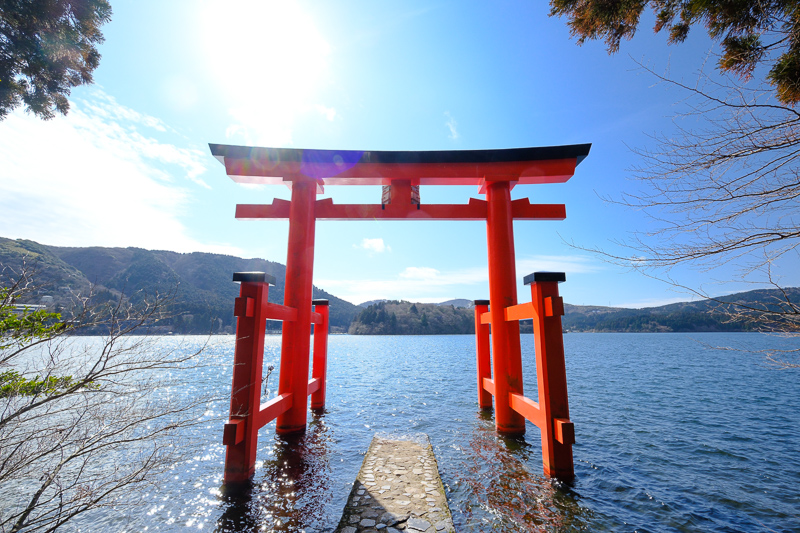
Hakone Shrine is famous for its Peace Torii standing over the water, a photogenic landmark that has taken over Instagram feeds. The shrine enshrines the Hakone Okami deities and is one of the most popular power spots on a Hakone day trip.
The grounds are also home to Kuzuryu Shrine, which is especially popular for prayers related to love and relationships. After visiting both shrines, don’t forget to check out the Hakone Shrine omamori charms, with different designs for all kinds of wishes and protection. Hakone Shrine is about a 15-minute walk from Moto-Hakone Port. After your visit, nearby attractions such as the Lake Ashi Pirate Ship and Owakudani are also highly recommended. Read on for the full guide.
Location: Hakone Shrine
Address: 80-1 Moto-Hakone, Hakone-machi, Ashigarashimo-gun, Kanagawa Prefecture (Map)
Opening Hours: 08:15–17:00 (Monday to Sunday)
Official Website: https://hakonejinja.or.jp/
History of Hakone Shrine

Hakone Shrine was founded in 757 during the reign of Empress Koken in the Nara period, by the Buddhist monk Mangan Shonin, who practiced ascetic training deep in the mountains of Hakone. The shrine has a history of more than 1,200 years.

The shrine enshrines three deities—Ninigi-no-Mikoto, Konohanasakuya-hime-no-Mikoto, and Hikohohodemi-no-Mikoto—collectively known as “Hakone Okami.” They are believed to bring good fortune, ward off misfortune, fulfill wishes, protect travelers, and grant success and victory. In the past, the shrine was deeply revered by many famous warriors, including Minamoto no Yoritomo and Tokugawa Ieyasu, and today it remains widely worshipped by visitors.
Let’s explore the shrine step by step with the Hakone Shrine map.
Highlights of Hakone Shrine
Peace Torii

The first stop is Hakone Shrine’s famous Peace Torii, which was built in 1952 to commemorate the investiture of Japan’s Crown Prince and the signing of the peace treaty by Japan.
Because the torii stands in the water, it is also known as Hakone Shrine’s floating torii. Visitors can walk along the path to take photos up close, making it especially popular among tourists. Thanks to its stunning photogenic effect, it has become a major Instagram attraction, and on holidays the waiting time can easily reach 30 minutes to one hour.
The plaque on the torii actually bears the characters for “Peace,” but since it faces the lake, it can only be clearly seen while riding the Lake Ashi Pirate Ship, so keep an eye out for it.
I recommend visiting on a weekday morning. We arrived at 9:30 and waited less than 15 minutes for our turn. The later it gets, the more crowded it becomes. The sense of standing alone against the lake and mountains is simply beautiful and unforgettable.
There are usually plenty of people waiting whether it is sunny or rainy, so it is a good idea to plan your photo composition in advance. That way, when your turn comes, you can take several photos quickly.
Fourth Torii&Purification Fountain

Afterward, walk in the other direction toward the main shrine buildings. Along the way, you will see the fourth torii and the purification fountain. Remember to cleanse your hands and refresh your mind here before continuing to worship.
Main Approach

After passing through the torii, you will be surrounded by countless giant cedar trees. Some of these sacred old cedars are more than 600 years old and are filled with a mysterious spiritual atmosphere. Even in summer, the heat seems to fade away as soon as you enter this shaded path.
The main approach has 90 steps, which are said to help drive away bad luck once you complete the climb. If you are traveling with elderly visitors or children, however, keep their physical condition in mind. An accessible sloped path is also available on the other side.
Main Shrine

What do people pray for at Hakone Shrine? The main shrine enshrines three deities collectively known as “Hakone Okami,” who are believed to bring good fortune, ward off misfortune, fulfill wishes, and protect travelers. With a history of more than 1,200 years, the shrine is considered especially spiritually powerful.
Writing your wishes on an ema wooden plaque is another important part of the visit. Most people pray for wealth, health, or relationships. May everyone keep a kind heart, live freely and peacefully, and welcome plenty of good luck!
Hakone Shrine Omamori Charms

Hakone Shrine’s omamori charms are extremely popular. There are charms for happiness in love, good health, academic success, financial prosperity, safe childbirth, traffic safety, disaster prevention, and many other wishes. Among them, the matching pair of half-moon-shaped charms is especially popular, symbolizing a deep and lasting relationship.
Kuzuryu Shrine

The grounds of Hakone Shrine are also home to the new sanctuary of Kuzuryu Shrine. According to legend, a nine-headed evil dragon once caused trouble in Lake Ashi before being subdued and appointed to protect the local people. Visiting both shrines together is said to bring even greater blessings.
The water flowing from the nine dragon mouths is known as “Ryujinsui,” or Dragon God Water. It is said to purify negative energy and improve one’s fortune. You can bring your own bottle to collect and drink the water, or purchase an empty bottle at the amulet counter.
The dragon painted on the ceiling is incredibly impressive. Visitors can pray here for love, career and financial success, health, and longevity. It is one of Hakone’s most famous power spots and highly recommended.
Safe Childbirth Cedar

This cedar tree is more than 1,000 years old. According to legend, it is the sacred tree associated with the marriage of Ninigi-no-Mikoto and Konohanasakuya-hime-no-Mikoto, who safely gave birth to Hikohohodemi-no-Mikoto. Shogun Minamoto no Yoritomo is also said to have prayed here for Hojo Masako to have a safe delivery.
It is also said that this sacred tree may bless those who pray sincerely with pregnancy. There are many online testimonials from people who say their wishes came true after praying here, including women approaching 40 after trying for a year and couples who had struggled to conceive for six years. May everyone’s wishes come true.
Other Small Shrines

As you begin making your way toward the exit, you will also find many smaller shrines within the grounds of Hakone Shrine, including Ebisu Shrine, Soga Shrine, Benzaiten Shrine, and Dairoku Tenjin Shrine. Many of these enshrine deities believed to bring prosperity in business, good fortune, and blessings.
First Torii

After leaving the shrine, you will find Hakone Shrine’s first torii beside Moto-Hakone Port. It was rebuilt in 1993 to celebrate the Crown Prince’s marriage. The enormous structure is well worth seeing.
If you visit between July 31 and August 6, don’t miss one of Hakone’s signature festivals, the “Lake Ashi Summer Festival Week.” Centered around the annual Hakone Shrine Grand Festival on August 1, the week-long celebration includes religious ceremonies held at various shrines around Lake Ashi.
In addition, except on the 6th, fireworks displays are held on different evenings at four ports around Lake Ashi (Moto-Hakone Port, Hakone Port, Hakone-en Port, and Kojiri Port).
Food at Hakone Shrine

When it comes to food at Hakone Shrine, “Gongen Karamemochi,” located inside the shrine grounds near the Treasure Hall, is very highly rated.
Its famous “Five-Color Mochi” is freshly prepared every morning starting at 3:00 using sacred water and carefully selected glutinous rice from local farmers. Flavors include red bean paste, soybean powder, and seaweed. The mochi is wonderfully soft and chewy.
Another must-try is the udon, which won third place in a national udon competition and is served with homemade mild chili oil and a kelp-and-bonito broth. The shrine’s original “Ginger Ale” is also worth trying.
✅Five-Color Mochi Gongen Karamemochi
Location: Inside Hakone Shrine
Opening Hours: 10:00–16:00, Map
Transportation to Hakone Shrine

How do you get to Hakone Shrine? The main options are as follows:
Public Transportation: Take the Hakone Pirate Ship or Hakone Tozan Bus and get off at “Moto-Hakone Port,” then walk for about 20 minutes.
By Car: Hakone Shrine has a free parking lot with space for approximately 220 vehicles.