
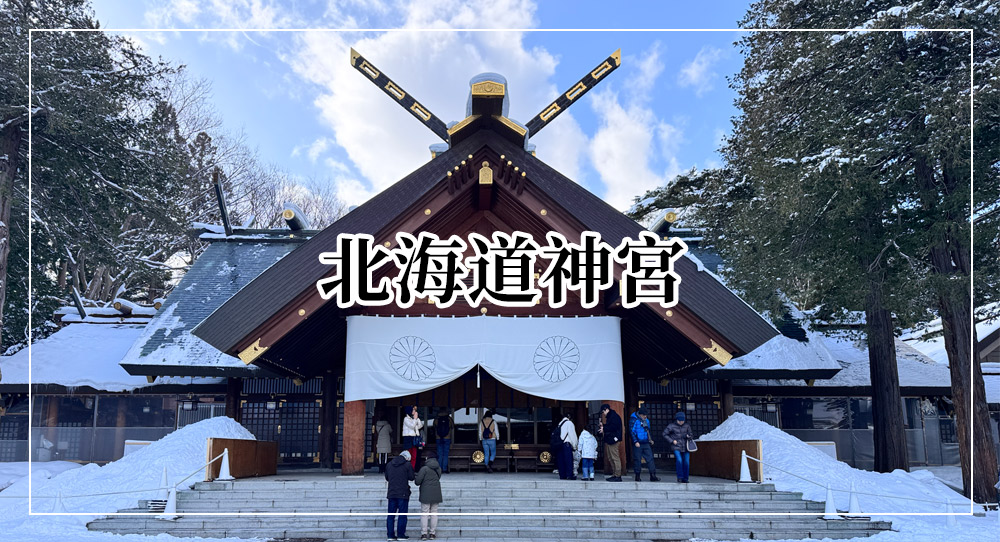
Hokkaido Jingu is the largest shrine in Hokkaido. If you are planning a trip to Hokkaido to see cherry blossoms or autumn foliage, Hokkaido Jingu and the neighboring Maruyama Park are both must-visit stops on a Sapporo itinerary.
This article covers everything you need to know about wearing a kimono at Hokkaido Jingu, the main sights, transportation, and recommended food. It will help you explore this destination, where nature and culture come together, with ease. Let’s continue reading!
Hokkaido Jingu
Address: (Google Map)
Opening Hours: Vary slightly by month; summer 6.00 am – 5.00 pm, winter 7.00 am – 4.00 pm
Admission: Free
Hokkaido Jingu Map

The map marks the main attractions within Hokkaido Jingu, including the main sanctuary, smaller shrines, torii gates, and food spots. In addition to worshipping at the main sanctuary, visitors can also enjoy excellent walking and photo spots in Maruyama Park.
How long should you spend at Hokkaido Jingu? If you only want to worship and take a few photos, around 1 to 1.5 hours is enough. To stroll leisurely through the park, enjoy the cherry blossoms or autumn foliage, and learn about the shrine’s history and culture, allow at least two hours for a more complete visit.
Hokkaido Jingu Opening Hours
| Period | Opening Hours |
|---|---|
| Special New Year Opening Hours | |
| New Year’s Eve | 7.00 am – 6.00 pm |
| New Year’s Day | 12.00 am – 7.00 pm |
| January 2–January 3 | 6.00 am – 6.00 pm |
| January 4–January 7 | 6.00 am – 4.00 pm |
| January 8–January 31 | 7.00 am – 4.00 pm |
| Regular Opening Hours | |
| February | 7.00 am – 4.00 pm |
| March | 7.00 am – 5.00 pm |
| April 1–October 31 | 6.00 am – 5.00 pm |
| November 1–December 30 | 7.00 am – 4.00 pm |
Top Attractions at Hokkaido Jingu
Torii Gates

There are four photogenic torii gates within the grounds, each with its own characteristics and prayer-related meaning. The Park Entrance Torii is the entrance closest to the subway station. From there, an uphill path of around ten minutes leads to the main sanctuary.
Reminder: Roads and paths can become icy and slippery in winter, so walk slowly and pay attention to safety.
In addition to the Park Entrance Torii, there is the Second Torii, which is believed to help cut ties with illness, misfortune, or unhealthy relationships. The Third Torii is said to attract financial luck, so visitors wishing for prosperity should not miss it. The Reiwa Torii is located in front of Rokkatei.
Kaitaku Shrine

Before reaching the main sanctuary, you will pass three auxiliary shrines within the grounds. It is worth stopping by each one.
Kaitaku Shrine was built in 1938 and enshrines pioneers who made major contributions to the development of Hokkaido. It is said to be especially effective for improving career luck and success in competition, so many business owners make a special trip here to worship.
Hotaki Shrine

Hotaki Shrine enshrines deceased employees of the former Hokkaido Takushoku Bank who contributed to the foundations of Hokkaido’s economy. It is a suitable place to pray for financial prosperity. The two bronze komainu guardian statues at the entrance are very different from the stone statues commonly seen at Japanese shrines and are especially eye-catching.
Sapporo Kōreisha Shrine

Sapporo Kōreisha Shrine commemorates miners who lost their lives while working in Hokkaido’s development and mining industries. Today, visitors mainly worship here to pray for personal safety and safe journeys.
These quiet, compact shrines are hidden among the trees and can easily be overlooked, but each carries many stories. When passing through the area, take a moment to stop and experience its historical depth.
Temizuya Purification Fountain

Before worshipping at the shrine, remember to purify your hands and mouth at the temizuya. This is an important step before entering the sacred grounds.

To help everyone perform the ritual correctly, a sign at the site explains the six steps. Follow the instructions carefully. The ritual not only shows respect to the deities but also helps calm and focus the mind.
Wash your left hand first: Hold the ladle in your right hand, scoop up water, and rinse your left hand.
Wash your right hand: Transfer the ladle to your left hand, scoop up water, and rinse your right hand.
Rinse your mouth: Hold the ladle in your right hand again, pour water into your left palm, and rinse your mouth. Do not drink directly from the ladle, as this is unhygienic.
Wash your left hand again: Rinse your left hand once more.
Rinse the ladle handle: Hold the ladle upright so the remaining water runs down the handle.
Finally, return the ladle to its original position.
How to Worship at Hokkaido Jingu

Next, proceed to the main sanctuary to worship. A shimenawa sacred rope hangs at the entrance, marking the boundary between the sacred area and the outside world at Japanese shrines.
After passing through the entrance and arriving in front of the main sanctuary, you will reach the most important part of the visit. The worship steps are listed below for reference.
Place your offering in the saisen box.
Ring the bell and bow twice.
Clap your hands twice.
Place your hands together, sincerely tell the deity your name and address, and state your wish or gratitude.
Bow once more to complete the worship ritual.
How much should you offer? I recommend a 5-yen coin because its Japanese pronunciation, go-en, sounds like the word for a fortunate connection, symbolizing a bond with the deity. Avoid offering a 10-yen coin, as its pronunciation can sound like tō-en, suggesting that your connection with the deity is becoming more distant.
Hokkaido Jingu Omamori, Ema, and Omikuji

After worshipping, visit the nearby shrine office to browse the wide selection of Hokkaido Jingu omamori charms and ema plaques. Options include charms for traffic safety, academic success, financial luck, business prosperity, health, and many other wishes.
There is also a place nearby where you can draw an omikuji fortune. A favorable fortune can be taken home as a keepsake, but what should you do with an unfavorable one? Tie it to the designated omikuji rack, leaving the bad luck at the shrine instead of taking it home. The knot symbolizes forming a connection with the deity and asking for help in avoiding misfortune and attracting good luck.
Many visitors also write their wishes sincerely on ema plaques and hang them on the rack, conveying their hopes to the deities and wishing for them to come true.
A goshuin is essentially a record of your shrine visit. To collect the Hokkaido Jingu goshuin, visit the prayer reception office to the right of the main sanctuary, where you can purchase a goshuin book and receive the seal.
Which Season Is Most Beautiful at Hokkaido Jingu?
Hokkaido Jingu has a different appeal in every season. Summer brings tall, lush green trees; autumn covers Maruyama Park in layers of colorful foliage; and spring fills both sides of the main approach with cherry blossoms. Winter may appear less colorful, but the deep snow creates a pure and tranquil silver-white landscape.
Recommended Kimono Experience at Hokkaido Jingu

It would be a shame to visit Hokkaido without wearing a kimono for beautiful photos. Mizuki Sakura Kimono Shop on Tanukikoji Shopping Street is recommended. Simply arrive at the shop, and a professional stylist will help you dress and arrange your hair. Once ready, take the subway directly to Hokkaido Jingu. Walking along the shrine approach in a kimono creates beautiful photos from every angle.
Sapporo Mizuki Sakura Kimono Experience
Food at Hokkaido Jingu
Food Stalls

After completing your visit to Hokkaido Jingu, you will find lively food stalls on both sides outside the main sanctuary. Choices include Hiroshima-style okonomiyaki, freshly grilled seafood, chicken skewers, and many other snacks.
Rokkatei Shop

Rokkatei’s highly popular Hangan Mochi is a must-try at Hokkaido Jingu. There may be a crowd, but the line moves fairly quickly. After paying, the staff will also provide a paper cup.
Hangan Mochi is prepared and sold fresh. It is very hot when first served and has a pleasantly chewy, mochi-like texture.
The shop also sells Rokkatei’s famous Hitotsu Nabe dessert, which is an excellent souvenir to take home.
After shopping, head to the complimentary hot-tea area and use the paper cup provided to pour yourself a warm drink. Eating Hangan Mochi with a cup of hot tea in cold weather is truly comforting.
Jingu Chaya

Another must-visit shop is Jingu Chaya, which is full of traditional Japanese charm. I highly recommend its most popular item, freshly baked Fuku-re Mochi. The hot pastry has a wonderfully crisp exterior and is filled with plenty of sweet red bean paste, making every bite deeply satisfying.
The Fuku Kashiwa cookies are shaped like oak leaves and look extremely cute, with each piece about the size of a palm. The rich milk soft-serve ice cream is also worth trying.
What Attractions Are Near Hokkaido Jingu?
Beautiful Maruyama Park is right next door. In autumn, the park is filled with brilliant red and orange foliage, so allow some time to enjoy its relaxed atmosphere.
How to Get to Hokkaido Jingu
Hokkaido Jingu is easy to reach by subway, bus, or car.
Subway: Take the Tozai Subway Line from central Sapporo to Maruyama Koen Station. From the station, walk approximately 15 minutes to Hokkaido Jingu.
Bus: Take city bus Route Kan 20, Nishi 14, or Nishi 15, or take the Bankei Bus Maruyama Line. Get off at the Jingu-mae bus stop, which is about a one-minute walk from the shrine.
By Car: The west parking lot accommodates approximately 170 vehicles, while the east parking lot accommodates approximately 70 vehicles.
Is Hokkaido Jingu Worth Visiting?
This visit to Hokkaido Jingu left us wanting more. Walking with family along the historic approach surrounded by snow and forest, praying together for health and safety, and enjoying Rokkatei’s shrine-exclusive sweets made the experience fulfilling and joyful.
The next time you travel to Hokkaido, use this guide to explore Hokkaido Jingu and consider wearing a kimono to capture precious memories amid the scenery of each season.
Hokkaido Jingu FAQ
How Long Should You Spend at Hokkaido Jingu?
➤ Most visitors spend around 1–1.5 hours here, slowing down to experience the atmosphere of traditional Japanese culture.