
Tokyo's popular love shrine, Imado Shrine, is famous for its lucky cats and prayers for good relationships. In recent years, it has become a widely discussed spiritual spot in Tokyo. Located near Asakusa, it is also easy to combine with nearby attractions as part of a walking itinerary. This guide covers important information about Imado Shrine, including its omamori charms, distinctive goshuin seals, transportation, and key points for worship, making it easy even for first-time visitors.

Imado Shrine is located north of Asakusa in Tokyo, near the Sumida River. Although it does not attract crowds as large as those at Sensoji Temple, it has gained increasing attention among international travelers on social media in recent years because of its reputation as a “love shrine” and one of the “birthplaces of the maneki-neko lucky cat.” The shrine's history dates back to 1063, when it was originally known as “Imado Hachimangu.” After merging with Hakusan Shrine in 1937, it was renamed “Imado Shrine.” Its name is sometimes mistakenly written as “Kinto Shrine,” but the correct name is “Imado Shrine.” Because the shrine enshrines a married pair of deities from Japanese mythology and also hosts matchmaking events, it has gradually become one of Tokyo's most representative shrines for prayers related to love and relationships.
Deities Enshrined at Imado Shrine

Imado Shrine is best known for enshrining Izanagi-no-Mikoto and Izanami-no-Mikoto, who are regarded in Japanese mythology as the first divine married couple and the creators of the Japanese islands. The shrine also enshrines Emperor Ojin, the 15th Emperor of Japan, who made significant contributions to Japanese culture and history, as well as Fukurokuju, one of the Seven Lucky Gods of Asakusa. Visitors can therefore pay their respects to all four deities in a single visit.
There are nine shrines and temples in the Asakusa area that enshrine the seven different Lucky Gods, and Imado Shrine is one of them. If you are planning a walking tour of Asakusa, it is also a great opportunity to include the Seven Lucky Gods pilgrimage.
Blessings of Imado Shrine

Because Imado Shrine enshrines a married pair of deities from Japanese mythology, it is famous for prayers for good relationships, the fulfillment of romantic wishes, and harmony between married couples. Many couples and people preparing for marriage visit specifically to pray here. The lucky cat motifs throughout the grounds symbolize prosperity, good fortune, and harmonious relationships, while Fukurokuju, also worshipped at the shrine, represents longevity, wealth, and good luck. Since the shrine is associated with a wide range of blessings, it attracts not only couples seeking protection for their relationships, but also families praying for general good fortune. The shrine grounds are relatively compact, and about 30 minutes to 1 hour is usually enough for a visit.
Three Must-See Highlights at Imado Shrine

The grounds of Imado Shrine are not very large, and most of the popular photo spots are concentrated around the worship hall, so first-time visitors are unlikely to get lost. A smooth route is to first pray at the worship hall while viewing the giant lucky cats, then touch the nearby married-cat stroking stones. After completing your prayers, visit the shrine office to purchase a round ema plaque, write your wish on it, and hang it on the ema wall. Exploring in this order makes the visit especially convenient.
Imado Shrine Lucky Cats
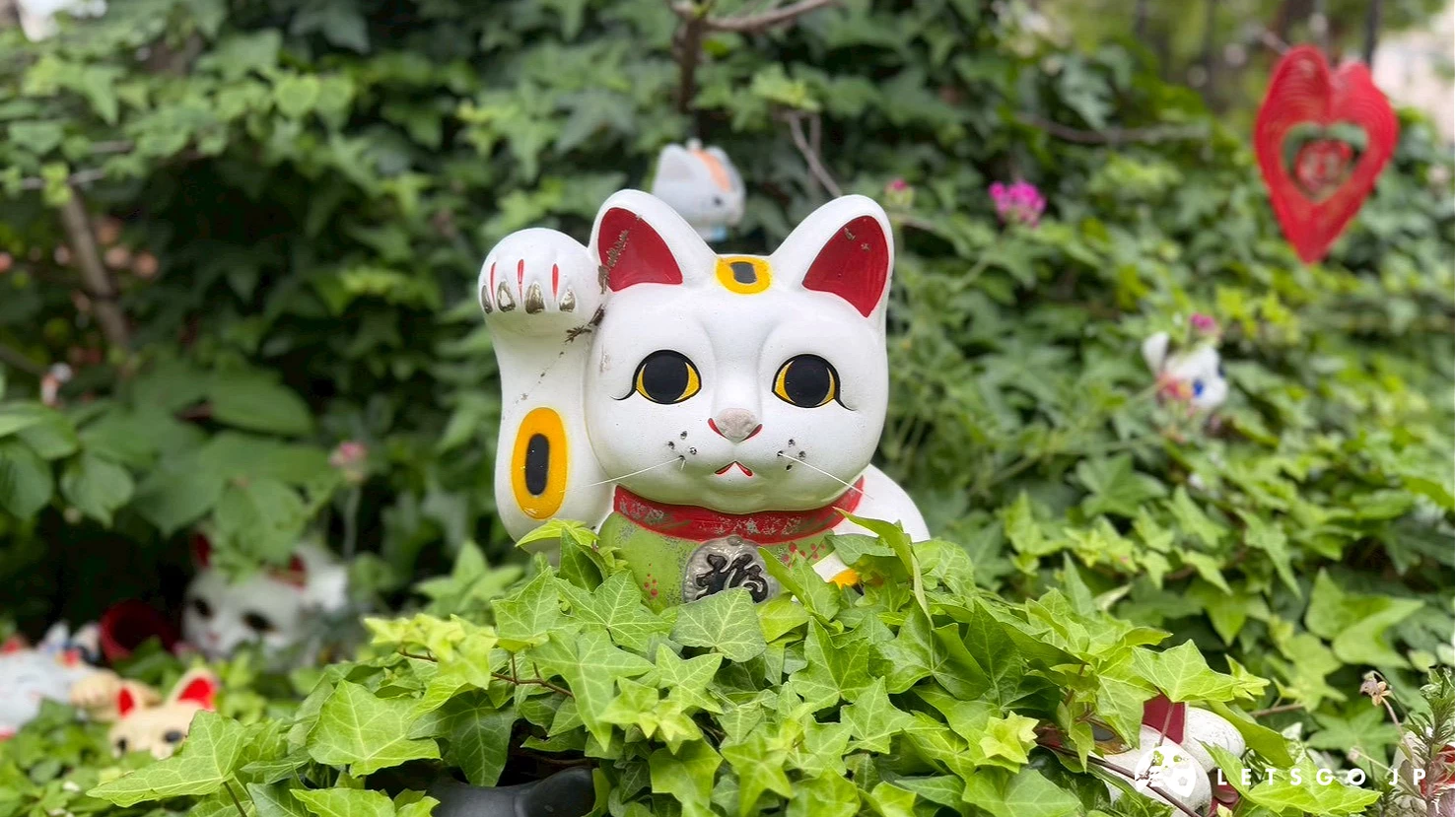
The most distinctive feature of Imado Shrine is the large number of maneki-neko lucky cat decorations found inside and outside the worship hall. Together with Gotokuji Temple in Setagaya, Tokyo, Imado is regarded as one of the places associated with the origin of the maneki-neko. According to tradition, Imado-yaki pottery once produced in the Imado area included lucky cat figures, which gradually became linked with Japanese good-luck culture. Inside the worship hall, you can see white lucky cats of various sizes, all raising their right paw—a gesture that symbolizes “inviting good fortune” and “bringing luck” in Japanese culture.
How to Buy Imado-yaki Lucky Cats and Their Prices

When talking about the lucky cats of Imado Shrine, it is essential to know about “Imado-yaki.” Imado-yaki is a traditional craft that has been passed down in the Imado area of Asakusa and is known for handmade unglazed pottery. Lucky cat figures are considered among its most representative works. Because production is still largely carried out by artisans by hand, quantities are very limited, and Imado-yaki lucky cats are no longer sold inside the shrine. If you would like to purchase one, look for Japanese craft shops around Asakusa. Stores such as Tokyo Kitsch occasionally carry related pieces, and prices vary depending on size, painted details, and the artisan.
In addition to Imado Shrine in Asakusa, Gotokuji Temple in Tokyo's Setagaya Ward is another famous place to see maneki-neko lucky cats. The temple is filled with lucky cat figures of all sizes, creating an impressive scene for photos. If you would like to plan a special lucky-cat pilgrimage in Tokyo, see this Gotokuji guide for a more detailed introduction to the temple.
Stone Stroking Cats

Beside the worship hall are the “Stone Stroking Cats,” stone statues of the married cat couple Nagi and Nami. It is said that gently stroking the stone cats and then praying for love, a good match, or a smooth relationship may bring good luck. As a result, many worshippers stop after praying to touch the stone cats and take commemorative photos. Up close, the statues are smaller than you might expect and are positioned right beside the worship path. Their adorable appearance draws a steady stream of visitors stopping to take pictures.
Round Ema Wall

Another iconic sight at Imado Shrine is the wall covered with round ema prayer plaques. In autumn, when the ginkgo leaves turn yellow, the golden trees combined with the wall of circular ema create one of the shrine's most famous photo scenes. The shrine uses an uncommon type of perfectly round ema, with the circular shape symbolizing completeness, harmonious relationships, and the hope of finding a good match—fitting for a shrine famous for love and matchmaking. The ema mainly feature a married pair of lucky cats and cost ¥500 each. They can be purchased at the shrine office.
Imado Shrine Omamori Prices and How to Buy
Imado Shrine offers a wide variety of omamori charms, most of which are designed around the themes of lucky cats and good relationships. Choices range from love charms and good-luck charms to maneki-neko charms in different colors. Their cute and distinctive designs make them popular not only for personal use, but also as Tokyo souvenirs for friends and family. The most popular are the maneki-neko charms, priced at approximately ¥800–¥1,000, with different colors representing different wishes. Love-fulfillment charms, good-relationship charms, and general good-luck charms are also very popular.

Meaning of Each Maneki-neko Omamori Color
| Color | Prayer / Blessing |
|---|---|
| Pink | Love and good relationships |
| Red | Good luck and fortune |
| Yellow | Wealth and improved financial luck |
| White | Overall good fortune and safety |
| Blue | Success in work and studies |
| Green | Health and safety |
Omamori Counter (Shrine Office)
Hours: 9:00–16:00
Note: Prices and hours may change. Please refer to official announcements for the latest information.
Imado Shrine Goshuin

Goshuin were originally issued as proof of worship after visiting a shrine or temple, and in recent years they have also become popular souvenirs for travelers collecting memories of their trips to Japan. Imado Shrine currently offers several goshuin designs, with the most popular being its intricate paper-cut goshuin. Delicate pale-pink paper is combined with detailed cut-paper craftsmanship, featuring layered hearts, traditional asanoha hemp-leaf patterns, and a married pair of lucky cats. The design is highly refined, and its three-dimensional appearance when held up to the light is even more beautiful than in photographs, attracting many dedicated goshuin collectors.
Goshuin and Goshuincho Counter
Hours: 9:00–16:00
Goshuin Price: Approximately ¥500–¥1,500
Goshuincho Price: Approximately ¥2,000–¥3,000
Note: Prices and hours may change. Please refer to official announcements for the latest information.
Imado Shrine White Cat Miko Fortune and Other Omikuji

One of Imado Shrine's most popular omikuji is the “White Cat Miko Fortune,” shaped like a white maneki-neko. The small white cat contains a fortune slip inside and can be taken home as a decoration after drawing your fortune, making it especially popular with tourists. In addition to the White Cat Miko Fortune, various other omikuji are available near the shrine office, including love fortunes and good-luck fortunes. Besides an overall fortune, they often include separate guidance on love, relationships, work, and health.
Imado Shrine's omikuji not only use traditional rankings such as “Great Blessing,” “Blessing,” and “Small Blessing” to indicate overall fortune, but also feature a single kanji character as the central theme of the fortune. Characters such as “Victory” or “Life” symbolize the direction the deity wishes to convey at that moment, and this distinctive feature attracts many visitors to draw fortunes. The lower part of the fortune slip is then divided into categories such as wishes, work, love, health, money, and travel, offering more detailed guidance on what to pay attention to in the near future. If you cannot read Japanese, you can simply take a photo of the fortune and upload it to an AI tool for quick translation.
Seasonal Scenery at Imado Shrine
Cherry Blossoms at Imado Shrine
During cherry blossom season from around late March to early April, blossoms gradually appear throughout the Imado Shrine grounds and surrounding streets. Because the area is less crowded with tourists than Ueno or the Meguro River, it is actually better suited to leisurely walks and photography. When the white lucky cats, red worship hall, and pink cherry blossoms appear together, the scene has a charming retro Tokyo atmosphere.
Ginkgo Trees at Imado Shrine

From late November to early December, the ginkgo trees on the shrine grounds gradually turn golden. Paired with the round ema wall and white lucky cats, this creates one of Imado Shrine's most atmospheric autumn photo scenes. Compared with spring, the shrine feels quieter in autumn, making it a pleasant stop during a walking tour of Asakusa.
Imado Shrine Transportation Guide
Imado Shrine is located in the Imado area north of Asakusa. There is no train station immediately beside the shrine, and the nearest major station is Asakusa Station, served by several lines. It takes about 15–20 minutes to walk from Sensoji Temple or Asakusa Station, passing through quieter residential streets and areas near the Sumida River, making it suitable for an Asakusa walking route. You can also take a Toei Bus toward Minami-Senju from around Tobu Asakusa Station or the Asakusa Kaminarimon area. If you want to reduce the walking distance, choose a route that stops at Riverside Sports Center, or take the Taito City loop bus.
Bus Route from Sensoji Temple to Imado Shrine
| Route | Stop | Travel Time | Fare |
|---|---|---|---|
| Toei Bus Higashi 42-Otsu | Riverside Sports Center (Riverside Sports Center-mae) | About 5 minutes | ¥210 |
| Taito City Loop Bus Kita Megurin | About 10 minutes | ¥100 |
If you are planning to visit Imado Shrine, it is also highly recommended to include Sensoji Temple, Kaminarimon Gate, and Nakamise Shopping Street in the same walking route. This allows you to experience both the lively shopping streets and the quieter shrine side of Asakusa, adding more variety to your trip.
If you have already visited classic Tokyo attractions such as Sensoji Temple and Kaminarimon Gate, consider setting aside an extra half day next time to explore Imado Shrine. From lucky cats and love omamori to seasonal goshuin, there is plenty worth seeing, and the shrine's relaxed atmosphere makes it an excellent stop on an Asakusa walking itinerary.
Frequently Asked Q&A
1. Which Deities Are Worshipped at Imado Shrine, and What Blessings Is It Known For?
Imado Shrine primarily enshrines Izanagi and Izanami, the married deities of Japanese mythology. They are regarded as Japan's earliest divine couple, so the shrine is especially famous for prayers related to love and finding a good relationship. Many visitors pray for success in romance, marriage, marital harmony, interpersonal relationships, and general good fortune, making it one of Tokyo's best-known love shrines.
2. Did the Maneki-neko Lucky Cat Originate at Imado Shrine?
The Imado area is regarded as one of the possible birthplaces of Japan's maneki-neko lucky cat. According to legend, during the Edo period an elderly woman living in poverty sold her beloved cat. She later dreamed that the cat appeared to her and instructed her to make a figure in its likeness. She did so, and the lucky cat figures became very popular and gradually spread. Although several places across Japan claim to be the birthplace of the maneki-neko, Imado Shrine has deep historical ties to Imado-yaki lucky cats and has therefore become one of Tokyo's most representative lucky-cat destinations.
3. How Should You Touch the Married Lucky Cat Stroking Stones?
Imado Shrine has a popular pair of “Stone Stroking Cats.” Visitors generally pray at the worship hall first, then gently touch the lucky cats while silently repeating their wish. Many people specifically touch the face, head, or the area where the two cats are close together, hoping to improve their luck in love and relationships. It is also said that taking a photo and setting it as your phone wallpaper can symbolize good fortune and improved luck.
4. Which Omamori Are Recommended at Imado Shrine?
The most popular charms at Imado Shrine are the maneki-neko-shaped omamori and good-relationship charms. The paired “Married Cat Omamori” are also very popular and are especially suitable for couples or anyone wishing to improve their romantic luck. In addition to omamori, many visitors also specifically collect the white-cat omikuji and limited-edition goshuin.
5. Is Imado Shrine Suitable for Couples?
Yes. Imado Shrine has long been famous for love and good relationships, and the grounds feature many lucky cats, heart motifs, and married deities, creating a warm and romantic atmosphere. Many couples visit together to pray, draw love fortunes, and purchase matching charms. It is also easy to include in a general sightseeing walk around Asakusa.
6. How Can You Buy Omikuji and Ema at Imado Shrine?
Omikuji, ema, and omamori can all be purchased directly at the shrine office. Imado Shrine's round ema are decorated with adorable maneki-neko designs and are especially popular. In addition to standard fortune slips, the most popular omikuji is the White Cat Miko Fortune, a small lucky-cat figure containing a fortune slip that can be taken home afterward as a decoration.