
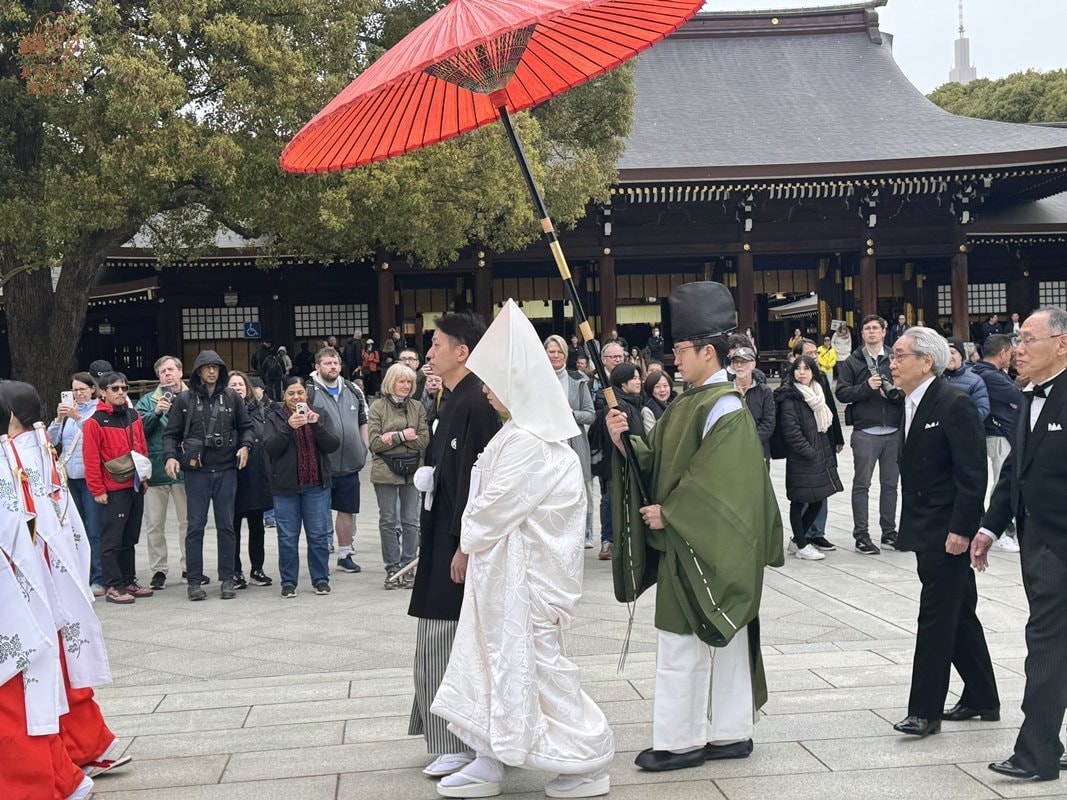
Meiji Jingu Shrine in Tokyo (English: Meiji Jingu) is one of Japan’s three great shrines and a must-visit destination for a Tokyo free trip. I find the environment here very elegant and comfortable, and my mindset feels different when I come here. Also, Meiji Jingu does not require an admission fee. Even though I have already visited Meiji Jingu many times, whenever I travel to Tokyo I still occasionally want to come here for a walk. The omikuji at Meiji Jingu is different from those at other Japanese shrines, and I think it is very accurate.
The nearby Harajuku shopping district and Takeshita Street are also great for shopping. In autumn, the ginkgo trees at Meiji Jingu Gaien are super beautiful, and the Meiji Jingu torii gate is also very worth photographing. There are many famous foods nearby, such as Shake Shack and Bills, which I’m sharing for reference. You can also take the train or walk to Shibuya for a stroll. This article helps organize transportation to Meiji Jingu, the worship route, Meiji Jingu omamori and goshuin, and recommended nearby food spots. If you want to boost your energy, don’t forget to visit Meiji Jingu for a day trip when you are in Tokyo. If the weather is good, you can enjoy Meiji Jingu for as long as you like.
Recommended reading:[2026 Tokyo Independent Travel]The Ultimate Tokyo Itinerary Planner: Attractions, Transport, Accommodation, Costs & Tips to Avoid Pitfalls
Introduction to Meiji Jingu Shrine in Tokyo, Japan

Japan has many shrines, but not every shrine can be called a Jingu. To be called a Jingu, it must be related to the imperial family and enshrine an emperor. Many people may wonder what Meiji Jingu worships. Meiji Jingu is a shrine dedicated to Emperor Meiji and Empress Shoken. Because of its beautiful environment and abundant positive energy, it has become a very popular shrine in Japan. It is also one of the shrines Japanese people especially visit for Hatsumode, the first shrine visit of the New Year. In autumn, combined with the ginkgo grove at Meiji Jingu Gaien, the scenery is truly beautiful. Meiji Jingu omamori and omikuji are also very popular, and there is no need to pay admission.
How to Get to Meiji Jingu Shrine in Tokyo

There are many stations near Meiji Jingu Shrine in Tokyo, so transportation is very convenient.
Which Station Should You Get Off at for Meiji Jingu?

The Meiji Jingu grounds are divided into Meiji Jingu Inner Garden and Meiji Jingu Outer Garden. Meiji Jingu Outer Garden is a famous place in Tokyo for viewing ginkgo trees, and the most well-known spot is the Meiji Jingu Gaien ginkgo avenue. The main shrine hall is in the Inner Garden. Meiji Jingu has three entrances: Harajuku Gate, Yoyogi Gate, and Sangubashi Entrance. Since the main hall is in the center, no matter which entrance you use, it takes about 10 minutes to walk to the main shrine hall.
Yoyogi Gate: JR Yamanote Line, JR Sobu Line, Toei Oedo Line, about a 5-minute walk. Or take the Tokyo Metro Fukutoshin Line and get off at Kita-Sando Station, then walk about 5 minutes.
Sangubashi Station Entrance: Odakyu Line, about a 3-minute walk
Harajuku Gate: JR Yamanote Line, Tokyo Metro Chiyoda Line, Fukutoshin Line, about a 1-minute walk
Meiji Jingu Map and Worship Route

There is actually more than one entrance to Meiji Jingu. If it is your first time visiting, it is recommended to exit JR Harajuku Station West Exit, pass through the Jingu Bridge, and enter Meiji Jingu from the First Torii gate. You will first see the South Approach (Minami-Sando). After walking along the South Approach, you will see the Second Torii gate on the left. After entering through the Second Torii, you will see the main shrine hall. This is the most common route for worship at Meiji Jingu, for reference. (Walk upward from position 18 on the Meiji Jingu map above.)
How Long to Spend at Meiji Jingu in Tokyo? Recommended Stay Time

Although Harajuku Station is not far from the torii gate entrance to Meiji Jingu, the grounds are quite large. If you want to walk all the way to the main hall, it is a fair distance. If you want to explore properly, I think a stay of about 1–2 hours is reasonable. If you want to really feel the energy here, I recommend leaving some time for Meiji Jingu, and you can draw an omikuji or choose an omamori.
Meiji Jingu Opening Hours
Meiji Jingu opening hours are related to sunrise and sunset: it opens at sunrise and closes at sunset. Therefore, the opening hours differ between summer and winter, and the hours vary slightly each month. It is recommended to check the official Meiji Jingu website before you go to confirm the opening hours (please refer to the official Meiji Jingu website for details).
Featured Spots at Meiji Jingu in Tokyo
Meiji Jingu South Approach

When you enter Meiji Jingu from Harajuku Station, you will first see a torii gate. After passing through it, there is a gravel path called the “South Approach.” I don’t know why, but the sound made by stepping on the gravel makes people calm down. By the way, when walking along the approach, do not walk in the middle! It is said that the center is reserved for the gods. One reminder: because Meiji Jingu is very large, even after walking up the South Approach, there is still some distance to the main hall. So if you are going to Meiji Jingu, wear comfortable walking shoes. If you have a stroller or luggage, you really need to think carefully.
Meiji Jingu Sake Barrel Wall (Sake Barrel Wall, Western Liquor Barrel Wall)

As you stroll along the South Approach, you will see rows of sake barrels on both sides. These are mainly offered as tribute to the gods. There are as many as 216 sake barrels displayed along the South Approach of Meiji Jingu, which is quite spectacular, and each barrel is unique. What is more special is that there are also barrels of Western liquor here. It is said that because Emperor Meiji actively promoted Westernization and also loved Western liquor, liquor merchants and believers donated Western liquor as offerings as well. This is one of Meiji Jingu’s distinctive features.
Meiji Jingu Museum

Inside Meiji Jingu there is a museum that only opened relatively recently on October 26, 2019. It was designed by the famous Japanese architect Kengo Kuma in a traditional Japanese house style, blending wood into the Meiji Jingu forest. The Meiji Jingu Museum has two floors: the first floor is an exhibition area related to Meiji Jingu, and the second floor displays carriages used by Emperor Meiji and Empress Shoken, as well as other items they used. Admission to the museum requires a separate ticket.
Opening hours: 10:00–16:30, closed every Thursday
Admission fee: General: 1,000 yen; High school students and below: 900 yen
Meiji Jingu Grand Torii

Between the South Approach and the North Approach, before reaching the main hall, you will see a large torii gate. It is 12 meters high, 17.1 meters wide, and the pillars are 1.2 meters in diameter, making it the largest torii gate in Japan. What is special is that this is actually the second generation of the torii. The first torii was made from sacred cedar from Alishan, Taiwan, but unfortunately it was struck by lightning. The current torii was rebuilt in 975. The wood used came from Danda Mountain in Taiwan and is more than 1,500 years old. If you look closely, you can see the chrysanthemum crest, symbolizing the imperial family and noble elegance.
Meiji Jingu Inner Garden

After entering through the Second Torii gate, you can see the Meiji Jingu Inner Garden nearby, a beautifully designed Japanese-style garden. This area also requires a separate admission ticket. In autumn, this is a famous maple-viewing spot in Tokyo. The Kakuuntei pavilion, once used by the imperial family for tea, is a beautiful little Japanese-style pavilion paired with red maple leaves, making it a well-known photo spot in the garden.
Meiji Jingu Main Hall

The main hall of Meiji Jingu is actually quite simple. In front of it is a large open plaza. Meiji Jingu mainly enshrines Emperor Meiji, the 122nd emperor, and Empress Shoken. Because Emperor Meiji’s position in the hearts of Japanese people was very special due to Westernization and the Meiji Restoration, Meiji Jingu was built to enshrine him after his death.
Meiji Jingu Married Couple Camphor Trees

On the left side of the main hall are two large trees, another famous spot at Meiji Jingu, called the “Meoto Kusunoki” or married couple camphor trees. These two camphor trees were donated when Meiji Jingu was founded and symbolize the harmonious relationship between Emperor Meiji and his wife. They are also a place to pray for love and a harmonious marriage. There is an offertory box between the trees, and you can offer a 5-yen coin to make a wish.
How to Worship at Meiji Jingu in Tokyo

When visiting Meiji Jingu in Tokyo, don’t forget to pray properly and seek blessings. The worship steps below are compiled from the official Meiji Jingu website for your reference:
Put yen into the offertory box, 5 yen is enough; if you do not have 5 yen, 50 yen is also acceptable
Ring the bell
Bow twice, then clap twice in succession
After clapping, place both hands together at the center of your body and make a wish
Then bow once more, and the worship is complete.
Meiji Jingu Ema

After worshiping, you can buy an ema at Meiji Jingu. Write your wish on it and hang it up to help make your wish come true more easily.
Meiji Jingu Omikuji

Meiji Jingu omikuji is very different from those at other shrines because it does not tell you good or bad fortune. Instead, it gives you a recommended poem fortune, called Omigokoro (おおみごころ), which is Meiji Jingu’s unique divine message. The content is selected from 93,032 poems and waka composed by Emperor Meiji and 27,825 waka by Empress Shoken. The omikuji even includes an English translation, which is very considerate.
What Omamori Should You Buy at Meiji Jingu?

After visiting Meiji Jingu, don’t forget to buy an omamori to take home and strengthen your luck. Omamori can be purchased at the “Nagaden” and “Kaguraden” at the main hall of Meiji Jingu. The types of omamori include blessings for safety, children’s health, warding off disasters and bringing good fortune, academic success, good relationships, traffic safety, good luck, safe childbirth, and more. One of the most special is the “KAIUN wooden bell KODAMA,” which is said to be made from sacred wood from Meiji Jingu itself. Since there are so many trees within the shrine grounds, each omamori is unique.
Meiji Jingu Shinto Wedding Ceremony

Have you heard of a Shinto wedding ceremony? As a shrine dedicated to Emperor Meiji and Empress Shoken, Meiji Jingu has a very high status, so it is no surprise that it has become a very popular venue for “shinzenshiki” weddings. This kind of wedding is different from the Western-style weddings or banquet-style weddings we are familiar with. It is not witnessed by friends and family, but by the gods and shrine priests, who witness the couple becoming husband and wife. The whole atmosphere is solemn and sacred.
If you are lucky enough to see a Shinto wedding ceremony at Meiji Jingu in 2025, it is a tradition that became popular during the Meiji era imperial court. You may see the bride in pure white shiromuku and the groom in black montsuki walking slowly along the gravel approach. The surroundings are completely silent, as if the messengers of the gods are stepping into the next stage of life. If you visit Meiji Jingu, you might also be fortunate enough to encounter such a ceremony. Please remember to stay quiet and admire it from a distance.
Nearby Food Around Meiji Jingu
AFURI Ramen

AFURI yuzu ramen is a must-eat Tokyo delicacy for many people. Because of its uniquely refreshing yuzu flavor, even AFURI instant noodles are very popular and often sold out in Japanese convenience stores. I had long wanted to try this Tokyo delicacy when traveling in Tokyo, especially the AFURI Harajuku branch, but every time I went there were so many people in line that I gave up. Fortunately, AFURI yuzu ramen later opened many branches in Tokyo, which helped spread out the queues. The first sip of the yuzu shio ramen broth really surprised me—the yuzu aroma is incredibly distinct. But don’t worry, it does not taste sour; it is just a very refreshing broth that is perfect for summer. The noodles stay chewy even after finishing the whole bowl, and the portion is quite large. For me, finishing it alone was quite a challenge. Thankfully, I did not order rice. The chashu pork is about half fat and half lean, so it is not too greasy.
Opening hours: 11:00–23:00
Address: 1F, Grande Foresta, 3-63-1 Sendagaya, Shibuya-ku, Tokyo
Bills Pancake Shop

The legendary “world’s best breakfast shop,” Bills, is very famous among Tokyo food spots and is also a must-recommend restaurant among many travel bloggers and friends visiting Japan. I once ate there when I was working holiday in Japan. Back then I went to the Odaiba location at night and took advantage of the fewer crowds before closing, but since it was at night, I could only order Bills pancakes separately and unfortunately did not get to try the world’s best breakfast. Later, when I went to Japan for New Year’s, I suddenly remembered that I should probably try the world’s best breakfast. After eating it, I thought the breakfast was indeed quite good, but personally I still recommend the pancakes more. If you want to eat Bills pancakes, there is a Harajuku branch near Meiji Jingu.
Address: 7F, Tokyu Plaza Omotesando Harajuku, 4-30-3 Jingumae, Shibuya-ku, Tokyo
Transportation: About a 4-minute walk from JR Yamanote Line “Harajuku Station”
Luke’s Lobster Omotesando Cat Street Branch

One place I always want to eat when I go to Harajuku is Luke’s Lobster Omotesando Cat Street Branch. This lobster roll specialty shop from New York quickly became a popular food destination after opening in Harajuku. Their signature lobster roll uses fresh lobster meat with herbs and butter, sandwiched in a crispy bun. Every bite lets you taste the sweetness of the lobster—so delicious! In addition to the must-try lobster roll, Luke’s Lobster Omotesando Cat Street Branch also sells crab rolls and shrimp rolls, making it suitable for all kinds of seafood lovers. Since Luke’s Lobster opened its first Japan branch in Omotesando in 2015, it has remained very popular. In 2021, the store relocated to Cat Street in Omotesando and was newly renovated. The shop has a wooden terrace, making it a relaxing place to enjoy a lobster burger!
Address: 1F, BARCA Building, 5 Chome-25-4 Jingumae, Shibuya City, Tokyo 150-0001, Japan
Opening hours: Mon–Fri 11:00–20:00 / Sat–Sun 10:00–20:00
NUMBER SUGAR Handmade Caramel Shop

One of the hottest Tokyo souvenirs recently is definitely NUMBER SUGAR handmade number caramel candies. The packaging is very stylish, and there are many flavors. If you give it as a gift, it looks really impressive when opened. If you are looking for souvenirs to bring back from Tokyo, NUMBER SUGAR handmade candy is absolutely a must-buy choice. Right now, there is a branch near Harajuku Omotesando and Meiji Jingu.
As for the price of NUMBER SUGAR Tokyo souvenirs, it depends on the box package and how many pieces you want. The most popular is the 12-piece box, and the price for one 12-piece box is 1,490 yen. The packaging is a neat square box, and the ribbon color is the only difference; the contents are the same. If it is your first time buying, I recommend the 12-piece box, since you can try one of each flavor in number order. If you cannot finish that many, or if you are buying souvenirs as gifts, or if you have bought and eaten them before and only want to choose your favorite flavors, NUMBER SUGAR also allows you to buy individual pieces. As the name suggests, the caramel flavors are identified by numbers. Each piece is a moderate size, and can be eaten in two bites by one person.
Address: 1F, 5-11-11 Jingumae, Shibuya-ku, Tokyo
Opening hours: 11:00–19:00 (Monday to Sunday)
In addition to being a great place to walk around and explore, Meiji Jingu Outer Garden is also very worth visiting. The most famous facility in Meiji Jingu Outer Garden is perhaps Jingu Stadium. Besides sports facilities, there is also a children’s park and the Meiji Jingu Gaien Art Museum. But the most beautiful season is definitely the ginkgo season. The ginkgo avenue of Meiji Jingu Gaien usually refers to the 300-meter-long avenue between Aoyama-dori and the Meiji Memorial Picture Gallery, and in autumn it turns into a stunning golden-yellow corridor. There are many food options near Meiji Jingu as well, including the ramen mentioned above, and famous spots like Shake Shack and Bills. Around Christmas, there is sometimes also a Christmas market to enjoy.