
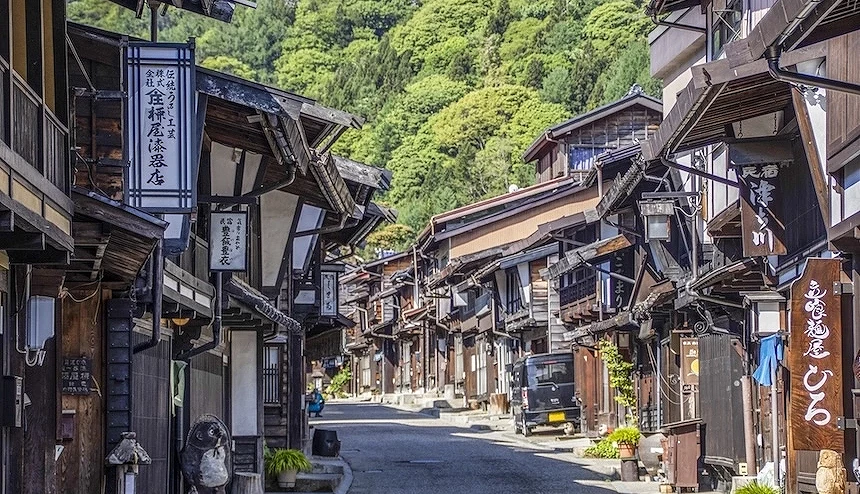
When traveling independently in Nagano, Japan’s longest post town is an absolute must-visit! This guide covers everything you need to know about traveling to Narai-juku from Nagoya and Tokyo, the old town’s must-see attractions and must-try foods, and the best souvenirs to buy, helping you easily plan a Nakasendo day trip filled with Edo-period history and charm.
Located at an elevation of about 940 meters in Shiojiri City, Nagano Prefecture, Narai-juku is Japan’s longest post town. During the Edo period, it was the 34th post town on the Nakasendo, the main highway linking Edo (present-day Tokyo) and Kyoto, and one of the eleven post towns along the Kisoji route. Its old street, lined with traditional senbon-goshi latticework and stretching for about one kilometer, is known as the longest post-town streetscape in Japan. Once bustling with travelers, it flourished as the busiest station on the Kisoji and became known as “Narai of a Thousand Houses.” The street is lined with historic wooden homes featuring lattice windows, and its distinctive architectural streetscape has been designated a National Important Preservation District for Groups of Traditional Buildings.

Would you like to learn more about the history of the Five Routes of the Edo period and the other distinctive post towns along the Nakasendo? We have prepared a complete Nakasendo guide that introduces the appeal of these historic stations at a glance. Use it as a reference when planning your itinerary to add greater depth to your travels in Japan.
Narai-juku Transportation Guide
Traveling from Nagoya, Matsumoto, or Tokyo
When traveling to Narai-juku, note that only local trains stop at Narai Station; limited express trains do not stop there. After arriving, it takes only about one to three minutes on foot to reach the old town. Local services on the JR Chuo Main Line run only about once every one to two hours, so be sure to check the timetable before departure. In addition, the section of the Chuo Main Line between Shiojiri and Nakatsugawa, including Narai Station, is outside the IC card service area. Suica, ICOCA, and other transit IC cards cannot be used to enter or exit the station, so you must purchase a paper ticket.
Route Comparison from Major Stations to Narai Station
| Departure point | route | Time required |
|---|---|---|
| Nagoya | JR Limited Express Shinano → Transfer to local train at Kiso-Fukushima | Approximately 2 hours |
| Matsumoto | JR train → Shiojiri Station, transfer to a local train | Approximately 1 hour |
| Tokyo (Shinjuku) | JR Limited Express Azusa → Transfer to a local train at Shiojiri Station | Approximately 3.5 hours (including transfer time) |
Because Narai-juku is located in the northern part of the Kisoji and is very close to Matsumoto, it is ideal to combine it with a visit to Matsumoto, home to the National Treasure Matsumoto Castle, the Matsumoto City Museum of Art featuring Yayoi Kusama, and nearby Kamikochi. A two-day, one-night in-depth Nagano trip is highly recommended for experiencing a peaceful atmosphere far removed from Japan’s major cities.
Narai-juku Driving and Parking Guide
By car, Narai-juku can be reached from central Nagoya in about two hours via the Chuo Expressway. Several parking lots are available around Narai-juku. Parking at the Narai Kiso Ohashi Roadside Station and beside National Route 19 is free, while the lots near Narai Station and Gonbei Bridge charge JPY 500 per day. Drivers can choose the most convenient parking location based on their itinerary.
Must-See Attractions in Narai-juku
Narai-juku extends for about one kilometer, with its main attractions, historic sites, and shops concentrated along and around the old street. A leisurely walk along the main road lets you visit the essential sights one by one while enjoying the feeling of stepping back in time.
Kiso Ohashi Bridge

Kiso Ohashi Bridge is located beside Narai Station and next to the Narai Kiso Ohashi Roadside Station, spanning the beautiful Narai River. Completed in 1991, the bridge was built from Kiso cypress trees more than 300 years old. It is one of Japan’s largest wooden bridges constructed without supporting piers.
Address: Narai, Shiojiri City, Nagano Prefecture
Opening Hours: Open 24 hours
Access: About a 5-minute walk from Narai Station.
Nakamura Residence in Narai-juku

The Nakamura Residence was the home of a wealthy Edo-period merchant who operated a wholesale wooden-comb business. It is now designated a National Important Cultural Property. The interior preserves the typical machiya townhouse layout of the Kiso region, allowing visitors to observe the daily life of Edo-period merchants and intricate traditional architectural features such as shitomi-style shutters and senbon-goshi latticework.
Address: 311 Narai, Shiojiri City, Nagano Prefecture
Opening Hours: April to November, 9:00–17:00; December to March, closes at 16:00. Closed on Mondays and the day after national holidays.
Admission: Adults JPY 300 / Junior high school students and younger: Free
Access: About a 10-minute walk from Narai Station.
Kamidonya Museum of Historical Materials

During the Edo period, a tonya was responsible for arranging horses and porters at a post town. Designated a National Important Cultural Property, the Kamidonya Museum of Historical Materials displays approximately 300 historic documents, ceramics, lacquerware pieces, and everyday household items, offering visitors a glimpse into how the post town operated and prospered in its heyday.
Address: 379 Narai, Shiojiri City, Nagano Prefecture
Opening Hours: April to October, 10:00–17:00; March and November, closes at 16:00. Closed from December through February; irregular closures may apply at other times.
Admission: Adults JPY 400 / Children JPY 200
Access: About a 12-minute walk from Narai Station.
Chinjusha Shrine in Narai-juku

Chinjusha Shrine stands at the far end of Narai-juku’s old street on the Kamimachi side. According to tradition, the deity Futsunushi-no-Mikoto was invited from Katori Jingu Shrine and enshrined here to bring an epidemic that once spread through the post town under control. The shrine marks the end of a walk through the old town, and its tranquil atmosphere contrasts beautifully with the lively rows of historic buildings, making it a perfect conclusion to the stroll.
Address: 68 Narai, Shiojiri City, Nagano Prefecture
Opening Hours: Sunrise to sunset
Shrine Office Hours: 9:00–16:00
Access: About a 15-minute walk from Narai Station.
Narai Station and the Surrounding Area

The retro Narai Station is an attractive photo spot in its own right, with a platform and wooden station building filled with nostalgic charm. A C12 199 steam locomotive that once operated on the JR Chuo Main Line is also displayed near the station. Railway enthusiasts can take a look while waiting for their train.
Address: Narai, Shiojiri City, Nagano Prefecture
Access: Directly accessible via the JR Chuo Main Line.
Must-Try Food in Narai-juku
Recommended Gohei-mochi and Soba Restaurants
When visiting Narai-juku in the mountainous Kiso region, be sure to try local specialties such as gohei-mochi and Shinshu soba. In Kiso, gohei-mochi is commonly coated with a fragrant sauce made from miso, sugar, and sesame. Soba can also be enjoyed in two distinctive local styles: toji soba, dipped into a hot broth, and sunki soba, served with traditional fermented turnip greens.
Popular Restaurant KOKORONE

KOKORONE is a popular restaurant highly recommended by the Narai-juku Tourism Association. Lines are common during meal times, and the walls are covered with autographs from visiting celebrities. Its soba is made with unpolished buckwheat from the Kaida Plateau, and the menu includes gohei-mochi, handmade desserts, and Kiso’s signature toji soba.
Address: 368 Narai, Shiojiri City, Nagano Prefecture
Opening Hours: 11:00–14:30 (closed Wednesdays)
Access: About a 10-minute walk from Narai Station.
Handmade Soba Yamanaka

Yamanaka is a handmade soba restaurant in Narai-juku’s Kamimachi district near Gonbei Bridge. It uses 100% locally produced buckwheat flour and is well known in Narai-juku for serving toji soba. In spring, guests can enjoy soba with wild-vegetable tempura, while winter brings the seasonal Kiso specialty sunki soba.
Address: 289 Narai, Shiojiri City, Nagano Prefecture
Opening Hours: 11:00–17:00 (irregular closures)
Access: About a 15-minute walk from Narai Station.
Tokuriya Folk Museum

Tokuriya is a restaurant converted from an Edo-period hatago inn. The building is more than a century old and still preserves its traditional earthen-floored entrance and sunken hearth. Its signature gohei-mochi set meal includes both gohei-mochi and handmade soba, with sesame, miso, walnut, and other flavors available for the rice cakes.
Address: 516 Narai, Shiojiri City, Nagano Prefecture
Opening Hours: 11:00–16:00 (irregular closures)
Access: About a 12-minute walk from Narai Station.
Must-Buy Souvenirs in Narai-juku
Kiso Lacquerware

The Narai-juku area has long used Kiso’s abundant forest resources to develop a thriving lacquerware tradition, now recognized as a nationally designated traditional craft. Kiso lacquerware is known for its strength, durability, and finely applied coatings, becoming more beautiful with continued use. Kiso Hirasawa, directly next to Narai-juku, is a renowned lacquerware town and is highly recommended for an additional visit and shopping stop.
Traditional Oroku-gushi Wooden Combs

Oroku-gushi are traditional wooden combs that have been made in the Kiso region for hundreds of years. Each comb is shaped by hand from dense, durable local wood. With very fine teeth, excellent usability, and lasting quality, these combs combine practicality with a rich historical story and make an excellent souvenir for either gifting or personal use.
Narai-juku Illumination Festival
The Winter-Only Ice Candle Festival
The Narai-juku Ice Candle Festival is the area’s largest winter celebration and is held every year on February 3, the day of Setsubun. During the event, approximately 2,000 handmade ice candles are lit along the old street. Their warm amber glow illuminates the snow-covered historic buildings, creating an unforgettable, dreamlike scene.
Narai-juku Ice Candle Festival
Address: Throughout Narai-juku, Narai, Shiojiri City, Nagano Prefecture
Event Date: February 3 every year
Recommended Accommodation in Narai-juku
After nightfall, the day-trippers leave, and the atmosphere becomes exceptionally peaceful, especially during the winter illumination festival or along the empty lattice-lined street in the early morning. Staying overnight is highly recommended. However, accommodation options and room numbers within the post town are limited, so early booking is advisable. Rooms sell out even faster during festivals and the autumn foliage season, making advance planning essential.
Historic Townhouse Inn BYAKU Narai

BYAKU Narai is a multi-building accommodation complex created by restoring a group of historic homes in Narai-juku. Four heritage buildings, including the Suginomori Brewery founded in 1793, have been beautifully converted into 16 modern guest rooms. The property also includes a refined restaurant, bar, gallery, and other facilities, offering a premium lodging experience.
Address: 551 Narai, Shiojiri City, Nagano Prefecture
Access: About a 12-minute walk from Narai Station.
Narai-juku IKARIYA Machida Guesthouse

This traditional guesthouse on Narai-juku’s old street has a simple and welcoming atmosphere. It offers a one-night stay with two meals, featuring delicious home-style dishes prepared with seasonal local ingredients. It is an excellent option for travelers seeking affordable accommodation and a closer experience of local life in Narai-juku.
Address: 573-1 Narai, Shiojiri City, Nagano Prefecture
Access: About a 10-minute walk from Narai Station.
Narai-juku Weather
Average Seasonal Temperatures and Recommended Clothing
Narai-juku is the highest-elevation post town among the eleven stations of the Kisoji, and temperatures are noticeably lower than in lowland cities such as Nagoya and Tokyo. There is a large difference between daytime and nighttime temperatures, and winters are extremely cold, so dressing in layers is recommended. The old street also has many stone-paved and gravel surfaces, so comfortable, slip-resistant footwear is advisable.
| season | average temperature | Recommended Clothing |
|---|---|---|
| Spring (April to May) | Approximately 7-17℃ | Long-sleeved top + jacket: It's cooler in the mornings and evenings, so it's recommended to bring an extra cardigan. |
| Summer (July to August) | Approximately 19-27℃ | Short sleeves are fine, but you can bring a thin long-sleeved shirt with you in the evening. |
| Autumn (October to November) | Approximately 5-16℃ | Long sleeves + jacket: During the autumn foliage season, it can be chilly in the mornings and evenings, so it's recommended to add a scarf and a light down vest. |
| Winter (December to February) | Approximately -5 to 5℃ | At night, temperatures often drop below -10 degrees Celsius. Wear a thick coat, thermal underwear, a warm hat, cold-proof gloves, and non-slip shoes. |
Recommended Self-Drive Narai-juku Day-Trip Itinerary
Narai-juku’s attractions are concentrated along the old street and can be explored in about two to three hours. For a relaxed and flexible trip, renting a car is the best option. It offers greater mobility and makes it easy to add Matsumoto or the nearby lacquerware town of Kiso Hirasawa to your itinerary.
Sample Self-Drive Narai-juku Day-Trip Itinerary
Morning: Depart from central Nagoya
↓
Drive for about two hours to Narai-juku
↓
Visit Kiso Ohashi Bridge
↓
Stroll along the lattice-lined old street and visit historic sites
↓
Noon: Enjoy soba and gohei-mochi
↓
Chinjusha Shrine
↓
Afternoon: Shop for souvenirs
↓
Continue to Kiso Hirasawa or central Matsumoto
↓
Return to Nagoya
Narai-juku Day-Trip Itinerary
Recommended Transportation: Rent a car and drive from Nagoya
Recommended Duration: About 8–9 hours, including the round-trip drive and approximately 2–3 hours in Narai-juku
Highlights: Kiso Ohashi Bridge, a walk along the lattice-lined old street, soba and gohei-mochi, and lacquerware shopping in Kiso Hirasawa
With its beautifully preserved Edo-period buildings and tranquil atmosphere, Narai-juku is one of Nagano Prefecture’s most unforgettable destinations. The next time you plan an independent trip through central Japan, consider adding a journey along the Nakasendo and visiting Japan’s longest post town in person to experience the romance of stepping back in time and the distinctive charm of the Kisoji.
Narai-juku FAQ
1.Where is Narai-juku, how do you get there, and how long does it take to explore the old town?
Narai-juku is located in Shiojiri City, Nagano Prefecture, and is a post town on the Kisoji section of the Nakasendo. Only local trains stop at Narai Station, so travelers generally take a limited express train to Kiso-Fukushima Station or Shiojiri Station and transfer to a local train. The journey from Nagoya takes about two hours. Because local trains are infrequent, driving or renting a car offers greater flexibility. The main attractions are concentrated along an old street approximately one kilometer long. Two to three hours is enough for a walk, shopping, and visits to the historic sites; allow half a day for a more leisurely meal and a closer look at each attraction.
2.How is Narai-juku different from Tsumago-juku and Magome-juku, and which one should you choose?
All three are post towns on the Kisoji section of the Nakasendo. Narai-juku is Japan’s longest post town, extending for about one kilometer, and has the highest elevation and largest preserved streetscape. Tsumago-juku has flatter terrain and a rustic, peaceful atmosphere, while Magome-juku features a stone-paved slope lined with numerous shops and snack stalls. Narai lies farthest north and is close to Matsumoto, making it easy to combine with a Matsumoto itinerary. Magome and Tsumago are in the south, about eight kilometers apart, and are connected by a popular hiking trail. For travelers with limited time who want the most complete long-street scenery, Narai-juku is the top recommendation.
3.Is luggage storage available at Narai-juku?
Narai Station is small and has only a limited number of coin lockers, so traveling light is strongly recommended. Travelers with large luggage should consider storing it at a major station such as Matsumoto or Nagoya, or using a luggage delivery service to send it to their accommodation, making the old-town walk much easier.
4.Can you use credit cards or electronic payments in Narai-juku?
Some shops and facilities accept credit cards or electronic payments, but many small businesses still accept cash only, so it is advisable to carry some Japanese yen. Also note that Suica and other transit IC cards cannot be used on the section of the Chuo Main Line between Shiojiri and Nakatsugawa.
5.Are there bears around Narai-juku, and what precautions should you take?
Narai-juku is surrounded by mountains, and bears are occasionally reported in nearby forested areas such as Torii Pass. However, visitors generally do not need to worry while walking within the old town. Those planning to hike mountain routes such as Torii Pass should carry a bear bell, avoid entering the forest alone at dawn or dusk, and check the latest local sighting information in advance.
6.What seasonal events are held in Narai-juku, and when is the best time to visit?
The Narai-juku Ice Candle Festival is held every year on February 3, the day of Setsubun. Approximately 2,000 handmade ice candles illuminate the old street, accompanied by the lighting of the Two Hundred Jizo statues and a fireworks display. It is a magical winter-only sight, but winter nights are extremely cold, so proper cold-weather clothing is essential. Overall, spring’s fresh greenery and autumn’s colorful foliage are the most highly recommended seasons, offering pleasant weather and beautiful mountain scenery. Regardless of the season, Narai-juku’s elevation of about 940 meters creates a significant difference between daytime and nighttime temperatures, so dressing in layers is advisable.