
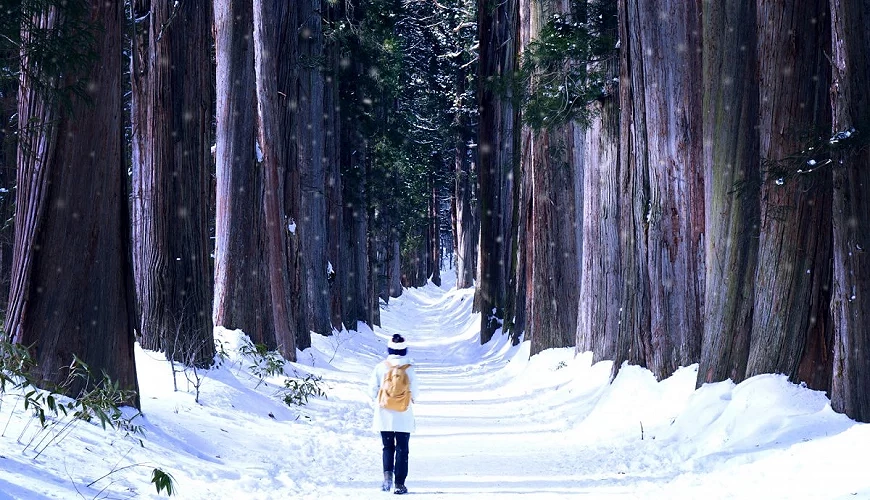
Togakushi Shrine in Nagano Prefecture is an ancient shrine with a history of more than 2,000 years and appears in the famous “Amano-Iwato” myth. It is known for its unique “Five-Shrine Pilgrimage,” in which visitors worship at all five shrines within the sacred grounds, as well as the spectacular cedar-lined approach leading to Okusha, one of the most famous views in Japan. In addition to basic information about Togakushi Shrine, this guide covers transportation, worship routes, a one-day itinerary, goshuin stamps, and important tips for winter visits, helping you plan a smoother journey through this sacred area of Nagano.
Getting to Know Togakushi Shrine
What Kind of Place Is Togakushi Shrine Located In?

Togakushi Shrine (とがくしじんじゃ/Togakushi Jinja) lies at the foot of sacred Mount Togakushi in northern Nagano City, Nagano Prefecture, and has a history of more than 2,000 years. Since ancient times, Mount Togakushi has been regarded as a sacred place for mountain worship and Shugendo ascetic practice. Together with its mysterious cedar-lined approaches and abundant natural scenery, the area has become one of Nagano Prefecture’s most representative spiritual power spots.
The “Amano-Iwato Myth” and the Origins of the Five Shrines

Togakushi Shrine has deep ties to the Japanese myth of Amano-Iwato. According to legend, when the sun goddess Amaterasu Omikami hid inside the heavenly rock cave known as Amano-Iwato, the world was plunged into darkness. Ame-no-Tajikarao-no-Mikoto eventually forced open the cave and brought the goddess back, while the rock door he cast away is said to have become present-day Mount Togakushi.
The five shrines of Togakushi—Okusha, Chusha, Hokosha, Kuzuryusha, and Hinomikosha—each enshrine deities who appear in the myth. Visiting all five in one trip, known as the “Five-Shrine Pilgrimage (Gosha Meguri),” is the classic way to experience Togakushi Shrine.
Togakushi Shrine Opening Hours
In principle, all five Togakushi shrines are freely accessible for worship. The shrine offices where visitors can receive goshuin stamps or purchase omamori charms generally operate from around 9:00 to 17:00, while the Okusha office changes to approximately 9:00 to 16:00 in winter. Note that Okusha and Kuzuryusha are generally closed from early January to mid-April, while Hokosha closes from around mid- to late December; during these closure periods, the main shrine buildings cannot be visited. For the latest opening hours and any related fees, refer to the official shrine website.
Transportation to Togakushi Shrine
Togakushi Shrine is located in the mountainous area north of Nagano City. Most travelers first take the Shinkansen or a highway bus to Nagano Station, then transfer to a local bus for the Togakushi area. Below is a simple overview of transportation from central Tokyo and from Nagano Station to Togakushi.
From Tokyo

To reach Togakushi from Tokyo, first travel to Nagano Station by Hokuriku Shinkansen or highway bus. The Shinkansen takes about 80–100 minutes and is the fastest option. Travelers looking to save money and who have more time can take a highway bus from Shinjuku or Ikebukuro, which takes around four hours. After arriving in Nagano, continue to Mount Togakushi by local bus or rental car.
| Transportation | Route | Travel Time |
|---|---|---|
| Shinkansen | Tokyo Station → Hokuriku Shinkansen → Nagano Station | About 90 minutes |
| Highway Bus | Shinjuku / Ikebukuro → Highway Bus → Nagano Station | About 4–4.5 hours |
From Nagano Station (Bus)

Public transportation from Nagano Station to Togakushi is operated by Alpico Kotsu, with two choices: the sightseeing express bus and the regular Route 70 Togakushi Line. The journey from Nagano Station to the Togakushi Shrine area takes about 60–70 minutes. Once in the Togakushi mountain area, travelers can get off at Togakushi Hokosha, Togakushi Chusha, or the Togakushi Okusha Entrance to begin sightseeing. Because the regular route bus only runs as far as Chusha, most travelers are advised to use the Sightseeing Express Togakushi Line unless they have a specific reason not to or have missed the reservation window.
| Item | Sightseeing Express Togakushi Line | Route 70 Togakushi Line (Regular Route Bus) |
|---|---|---|
| Features | Introduced in 2025 Sightseeing coach With luggage compartment | Travels via the “Loop Bridge” Regular route bus Infrequent service; only goes as far as Chusha |
| Reservation | Reservation required Same-day boarding is possible if seats are available (*Maximum 40 passengers per departure; standing is not permitted, Reservations accepted until 20 minutes before departure | No reservation required Board directly |
| Payment | Cash or contactless VISA credit card IC cards such as Suica are not accepted | Pay when getting off Only JPY 1,000 banknotes can be exchanged onboard |
| Best For | ・Travelers with large luggage ・Travelers who want to guarantee a seat | ・Early risers traveling spontaneously |
※Bus schedules, fares, and timetables are subject to change. Please refer to the official Alpico Kotsu website for the latest information.
※A separate sightseeing shuttle bus also operates between Togakushi Chusha and Okusha.
By Car
If driving to Togakushi, exit the Joshin-Etsu Expressway at Nagano IC and drive for about 50 minutes (approximately 26.5 km) to reach Hokosha. All five Togakushi shrines have dedicated parking areas: Chusha has space for about 100 cars, the area around the Okusha entrance has around 200 spaces, Hokosha has about 20 spaces, and Hinomikosha has approximately three. Parking lots often fill up during peak seasons and long holidays, so drivers are strongly advised to leave early or use public transportation for part of the route to avoid congestion.
Introduction to the Five Shrines of Togakushi
Each of the five Togakushi shrines enshrines deities from the Amano-Iwato myth, and each has its own blessings and distinctive architecture. Here is a closer look at the unique appeal of all five shrines!
| Shrine | Main Deity | Blessings |
|---|---|---|
| Okusha | Ame-no-Tajikarao-no-Mikoto | Good fortune Fulfillment of wishes Abundant harvests |
| Chusha | Ame-no-Yagokoro-Omoikane-no-Mikoto | Wisdom and learning |
| Hokosha | Ame-no-Uwaharu-no-Mikoto (Deity of women and children) | Pioneering and new beginnings Learning and the arts Sewing Safe childbirth |
| Kuzuryusha | Kuzuryu Okami (Water deity) | Fulfillment of wishes Good relationships and matchmaking |
| Hinomikosha | Ame-no-Uzume-no-Mikoto | Dance and performing arts Good relationships and matchmaking Protection from fire |
Hokosha

When traveling from central Nagano City to the five shrines of Togakushi, the first stop is Hokosha, considered the gateway to Togakushi. Its biggest highlights are more than 270 stone steps lined with old cedar trees and the dignified shrine building at the top. Built during the Edo period, Hokosha has the oldest surviving shrine building among the five, with exquisite carvings of dragons, kirin, and Chinese guardian lions created by master craftsmen. Travelers who find the steep stone steps difficult can instead use the gentler “Onna-zaka” slope beside them.
Hinomikosha

Hinomikosha is the smallest and most tranquil of the five shrines. Its principal goddess, Ame-no-Uzume-no-Mikoto, is said to have danced before Amano-Iwato, and is therefore worshipped as the deity of dance and performing arts as well as matchmaking. The grounds include the “Married Couple Cedars,” which are over 500 years old, and the “Saigyo Cherry Tree,” associated with the Heian-period poet and monk Saigyo. Hinomikosha does not have a shrine office, so visitors wishing to receive goshuin stamps or purchase omamori charms need to visit Chusha or Hokosha.
Chusha

Chusha stands at the center of the five shrines and is also home to Togakushi Shrine’s main administrative office, making it the liveliest hub among them. One of its greatest highlights is the “Dragon Ceiling Painting,” originally created by the renowned Kano-school artist Kawanabe Kyosai. (The current work is a restoration completed in 2003.) Also not to be missed are the “Three Cedars,” roughly 800 years old and arranged in an equilateral triangle around the grand torii gate, as well as a sacred tree more than 700 years old. The area around Chusha is also home to numerous Togakushi soba restaurants and souvenir shops, making it the best place to eat and rest during a Togakushi Shrine visit.
Kuzuryusha

Kuzuryusha sits quietly beside Okusha at the deepest point of the cedar-lined approach. It enshrines Kuzuryu Okami, the local guardian deity of Togakushi. Its history is said to be even older than that of Okusha, and since ancient times it has been especially revered for the fulfillment of wishes, matchmaking, and worship of the water deity.
Okusha

Okusha is the principal sanctuary of Togakushi Shrine, located deep in the mountain forest. Towering, magnificent cedar trees line both sides of the approach leading to the shrine, creating the most iconic scenery in the Togakushi area. In winter, when everything is covered in deep white snow, the landscape becomes especially breathtaking.
Okusha Approach and Cedar Avenue: Zuishinmon Gate and 400-Year-Old Cedars
The cedar-lined approach from Zuishinmon Gate to Okusha is the most iconic scene at Togakushi Shrine. This sacred ancient path, alive with greenery and overwhelming in scale, is one of the main reasons travelers from Japan and abroad make a special trip to Togakushi. If your physical condition allows, it is highly recommended to experience the raw energy of nature here.
Route from the Grand Torii to Okusha

The approach to Okusha is about 2 km long, beginning at the grand torii gate in front of the Togakushi Okusha Entrance bus stop. From the torii, the first kilometer is relatively flat and easy to walk, leading to Zuishinmon Gate. Beyond the gate, the cedar-lined path gradually becomes steeper, with natural stone steps in the latter section, before finally reaching Okusha and Kuzuryusha. Comfortable walking shoes are strongly recommended, and travelers should allow plenty of time for breaks and the return journey.
Zuishinmon Gate and the Cedar Avenue

Zuishinmon Gate, located midway along the approach to Okusha, is a red gate with a thatched roof. Built in 1710, it is the oldest surviving structure at Togakushi Shrine. Beyond the gate lies Togakushi’s famous cedar avenue. Stretching for roughly 500 meters, more than 200 massive cedar trees around 400 years old line both sides of the path. Known collectively as the “Okusha Shrine Grove,” they are designated a Natural Monument of Nagano Prefecture. Sunlight filtering through the branches and the scenery changing with the seasons make this the most popular photo spot in Togakushi.
Worship Etiquette
To protect this precious natural asset designated as a Natural Monument, the shrine explicitly prohibits visitors from entering the forest on either side of the approach. When taking photos, remain on the path at all times. Do not step into the forest, touch, climb, or lean against the cedar trees. Following these rules helps preserve the sacred ecosystem that has endured here for around 400 years.
Togakushi Shrine Five-Shrine Pilgrimage Route

Visiting all five Togakushi shrines in one trip is known as the “Five-Shrine Pilgrimage (Gosha Meguri).” The five shrines are distributed along the foot of Mount Togakushi. From lower to higher elevation, they are Hokosha, Hinomikosha, and Chusha, with Okusha and Kuzuryusha located deepest in the mountains. There is no strict required order for worship, but most visitors travel from the lower shrines upward and finish the pilgrimage at Okusha.
Three Ways to Complete the Pilgrimage
| Method | Features | Best For |
|---|---|---|
| On Foot (Togakushi Ancient Trail / Kammichi) | Walk the forested ancient trail known as “Kammichi” that connects the shrines, with atmospheric woodland and historic paths along the way (Completing all five shrines on foot takes about half a day) | ・Travelers who want the full sacred-area experience ・Travelers with good stamina |
| Bus | Take an Alpico bus and get off at the stop nearest each shrine, reducing the amount of walking and climbing | ・Travelers who want an easier visit ・Travelers with limited time |
| By Car | Each shrine has parking, offering greater flexibility; however, roads and parking lots can become congested during peak seasons and long holidays | ・Families traveling with elderly visitors or children ・Travelers visiting in the off-season |
Estimated Time for a Walking Pilgrimage
According to official information, visiting all five shrines on foot takes approximately half a day. However, if you include time for worship, photos, and meals, it is best to reserve a full day so the itinerary does not feel rushed. Also note that Hinomikosha does not have a shrine office; its goshuin stamp and omamori charms must be obtained at Chusha or Hokosha.
Suggested Walking Order for the Togakushi Shrine Pilgrimage
Hokosha
↓ (about 15 minutes via Kammichi)
Hinomikosha
↓ (about 15 minutes via Kammichi)
Chusha
↓ (about 2 km)
Entrance to the Okusha Approach
↓ (approach about 2 km; around 40 minutes on foot, depending on walking pace)
Okusha and Kuzuryusha
Pilgrimage Tips
The Togakushi area lies at an elevation of around 1,200 meters. Even in summer, mornings and evenings can be cool, so wear comfortable walking shoes and carry a light jacket for warmth. The official shrine website provides a detailed map showing the locations of all five shrines, which can be downloaded before your trip.
Togakushi Shrine Goshuin Stamps and Omamori Charms

Goshuin Stamps for All Five Shrines and the “Five-Shrine Pilgrimage Commemorative Bookmark”
Each of the five Togakushi shrines has its own goshuin stamp. Whether you collect them all on the same day or over several visits, once you have stamps from all five shrines, tell the shrine office at your final stop that you have “completed all five shrines” and you can receive a “Five-Shrine Pilgrimage Commemorative Bookmark” (not for sale). Togakushi Shrine also periodically offers limited-edition goshuin, such as intricate paper-cut designs. Travelers who enjoy collecting goshuin are advised to check the latest announcements online in advance and return at different times to collect different designs. You may also want to purchase the shrine’s original goshuin book featuring the beautiful “Dragon Ceiling Painting” motif and use it specifically for your Togakushi Shrine stamps.
Popular Omamori Charms
The five Togakushi shrines offer dozens of distinctive omamori charms with a wide variety of designs, materials, shapes, and blessings. The table below lists several of the more popular options.
| Type of Omamori | Blessing | Notes |
|---|---|---|
| Good Luck & Prosperity Charm | Improved fortune and financial prosperity | ・Features the “Dragon Ceiling Painting” motif from Chusha ・Available in black and yellow ・Available at Chusha |
| Good Fortune Dragon Crystal Charm | Good fortune | ・Crystal design ・A dragon image can be seen through the crystal |
| Omina Charm (Women’s Charm) | Protection for women’s physical and mental well-being; prayers for fertility | ・Kimono-pattern design ・Available at Hokosha |
| Performing Arts Improvement Charm | Improvement in performing arts | ・Associated with Hinomikosha |
Shrine Office Hours and Winter Notes
The shrine offices generally operate from around 9:00 to 17:00. During winter (approximately early January to late April), hours may change depending on weather conditions. Okusha and Kuzuryusha are also closed during this period, and goshuin stamps for both shrines are instead issued at Chusha. Hokosha similarly closes around mid-December, with its goshuin stamps and omamori charms also moved to Chusha.
Prices, varieties, and the actual availability of omamori charms, goshuin stamps, and shrine offices may change at any time,
so please refer to the latest announcements on the official shrine website.
Togakushi Shrine Winter Guide
Togakushi Shrine is located in a mountainous area at an elevation of around 1,200 meters, where deep snow accumulates in winter. Worship methods and route planning differ greatly from other seasons, so be sure to understand the special winter conditions before setting out.
Winter Shrine Access and Worship Conditions

Okusha and Kuzuryusha close during winter (approximately early January to late April) because of heavy snowfall. During this period, divided spirits of the deities from both shrines are enshrined together at Chusha. Travelers unable to visit the main sanctuaries can instead worship from a distance at the entrance to the Okusha approach or at the designated remote worship area. Hokosha also closes from around mid- to late December. Although worship may still be possible during its closure period, services such as goshuin stamps and omikuji fortunes are moved entirely to Chusha. In practical terms, only Chusha and Hinomikosha remain normally accessible in winter, and all shrine items must be obtained at Chusha.
Also note that during the winter closure period, visitors may walk along the Okusha approach only as far as Zuishinmon Gate. The route beyond the gate may be dangerous because of avalanches and falling ice, and entry is strictly prohibited.
Winter Transportation Tips

If driving to Togakushi in winter, renting a four-wheel-drive (4WD) vehicle equipped with studless winter tires or snow chains is strongly recommended to avoid becoming stuck or losing traction on snow-covered roads. Route buses operate on winter timetables from December through March, with some services skipping certain stops and delays possible depending on snow conditions. Shrine offices may also close earlier because of sunset times and weather, so plan conservatively and allow plenty of extra time and flexibility.
A Reminder After the Snow Scenery Went Viral
In recent years, the dreamlike snowy scenery of Togakushi’s cedar avenue has gone viral on social media, attracting large numbers of visitors. At times, stricter restrictions have been introduced because of heavy snow and avalanche risks. When visiting in winter, strictly follow all on-site restrictions and official announcements, never enter prohibited areas, and prepare thoroughly for cold weather and slippery surfaces. Always put your own safety first.
Nearby Attractions and a One-Day Togakushi Shrine Trip
Kagami-ike Pond

On windless days, the surface of Kagami-ike Pond perfectly reflects the magnificent Togakushi mountain range. Cafés and restaurants by the pond provide places to rest. The scenery is particularly beautiful during the autumn foliage season from mid- to late October through early November, making it a must-visit destination for photographers. It takes about 30 minutes to walk there from the area around Zuishinmon Gate. Even from the nearest bus stop, “Kagami-ike Entrance,” it is another 30-minute walk, and buses do not run there in winter. Visiting by car or outside the winter season is recommended.
Togakushi Soba

“Togakushi Soba” is counted among Japan’s three great soba traditions alongside Wanko Soba from Iwate Prefecture and Izumo Soba from Shimane Prefecture. Its origins are said to lie in the portable food carried by ascetic practitioners during the Heian period. Its most distinctive feature is the unique “Bocchi-mori” serving style, in which bite-sized bundles of soba are arranged in horseshoe shapes on a round bamboo tray. Typically, five bundles are served to represent the five deities of Togakushi Shrine. Numerous soba restaurants are located around the shrines and along the approaches. Popular restaurants often have long lines and close once they sell out, so visitors are advised to eat early.
Zenkoji Temple

Zenkoji Temple, located in central Nagano City near Nagano Station, is an ancient Buddhist temple with a history of around 1,400 years. It is famous for being open to people regardless of Buddhist sect, and the saying “Visit Zenkoji at least once in your lifetime” has long made it a major center of faith in Nagano. Because both Togakushi Shrine and Zenkoji can be reached from Nagano Station and lie in the same general direction, they are ideal to combine in a single day and form one of the classic itineraries for an independent trip to Nagano.
Known as the “Roof of Japan,” Nagano Prefecture is filled with restorative mountain scenery, including waterfalls, starry skies, forests, and highlands. In winter, it also boasts numerous world-class ski resorts, making it a popular getaway from Tokyo. If you want a peaceful vacation to refresh both body and mind but are unsure where to begin planning, start with this Nagano travel guide!
Togakushi Shrine is not only a thousand-year-old sacred site connected to the Amano-Iwato myth; its magnificent cedar-lined approach and delicious Togakushi soba are equally unforgettable. On your next visit to Nagano, consider taking a Five-Shrine Pilgrimage away from the crowds and experience the solemn spiritual energy of these mysterious mountains for yourself.
Frequently Asked Questions About Visiting Togakushi Shrine
1. What is the weather like at Togakushi Shrine? How can I check before leaving? Is it suitable to visit on a rainy day?
Togakushi is located in a high-altitude mountain area at around 1,200 meters, so temperatures are considerably lower than in central Nagano City and the difference between daytime and nighttime temperatures can be large. Even in summer, mornings and evenings can feel cool, while winter brings severe cold and deep snow. Check the weather forecast before departure and use live cameras provided by the tourism association to monitor road conditions. Gravel approaches and stone steps can become slippery in the rain, so wear non-slip shoes, carry rain gear, and walk carefully. In heavy rain or thunderstorms, it is strongly recommended that you reconsider continuing into mountainous areas such as Okusha.
2. Can I use credit cards or electronic payments in the Togakushi mountain area? Should I bring cash?
Many shops, shrine offices, and buses in the Togakushi mountain area still primarily accept cash, and electronic payment options are not widespread. Carrying enough cash is strongly recommended for peace of mind.
3. Is a day trip from Tokyo to Togakushi Shrine possible? Is there accommodation nearby, and where should I stay?
Because even the fastest journey from Tokyo to Nagano Station takes around 1.5 hours, followed by another bus ride of approximately one hour, a same-day round trip from Tokyo would leave very little time to explore Togakushi Shrine and is therefore not recommended. Staying at least one night near Nagano Station allows enough time to comfortably visit all five shrines and perhaps also explore Zenkoji Temple or Kagami-ike Pond. Travelers who want to experience Togakushi’s quiet morning and evening atmosphere and do not mind fewer urban conveniences can also stay overnight at a local shukubo temple lodging or guesthouse.
4. Do I have to walk all the way to Okusha? What if I cannot manage the full route? Are there toilets along the way?
There is no need to force yourself to complete the entire route to Okusha. The latter half of the approach consists of relatively steep stone steps, while Zuishinmon Gate and the spectacular cedar avenue are located around the middle of the route, so it is perfectly fine to turn back according to your physical condition. Travelers with limited stamina can instead focus their visit on the flatter Chusha area. Also, apart from the entrance, there are no toilets along the approximately 2 km Okusha approach. Toilets at the other shrines are generally located near their parking areas, so use the restroom before beginning your walk.
5. Can luggage be stored at Togakushi Shrine? Should I bring luggage up the mountain?
Togakushi is a mountainous area with frequent steps and slopes, making it difficult to walk with luggage, and luggage storage services are limited. In contrast, both the Zenkoji Exit and East Exit of Nagano Station have coin lockers large enough for suitcases, and additional luggage storage services are available around the station. If you have large luggage, leave it at Nagano Station or your accommodation and travel to Togakushi with only what you need.
6. Are there bears in the mountains? What precautions should I take?
The Togakushi mountain area is a natural habitat of Asian black bears, with sightings reported every year around Okusha and Kagami-ike Pond. Fortunately, there have been no serious recent incidents involving human injuries, so there is no need for excessive alarm; simply remain alert and take basic precautions. Carry a bear bell, make noise while walking, travel with companions, do not leave garbage behind, and avoid early morning and evening when bears are most active. If you encounter a bear, do not stare at it or attempt to approach it; remain calm and slowly back away. You can also check the Nagano Prefecture official website for the latest bear sighting information before setting out.