
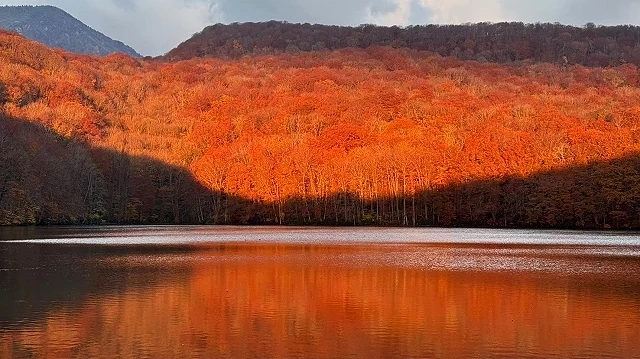
The autumn foliage season in Japan's Tohoku region spans about two months, beginning around late September in Hachimantai, Iwate, and continuing until mid-November in Matsushima, Miyagi. This guide covers 24 top autumn foliage spots across Aomori, Iwate, Akita, Yamagata, Miyagi, and Fukushima, along with the best viewing times and the 2026 foliage forecast. If you want to know which prefecture to visit and when, this guide has you covered.
Tohoku Autumn Foliage Forecast
Peak Autumn Foliage Forecast for the Six Tohoku Prefectures
| Region | 2026 Forecast Viewing Start Date | 2025 Viewing Period Start Date |
|---|---|---|
| Aomori | 11/13 | 10/24 |
| Yamagata | 11/28 | 11/1 |
| Akita | 11/18 | 11/1 |
| Fukushima | 11/23 | 10/27 |
| Iwate | 11/19 | 10/31 |
| Miyagi | 11/25 | 11/1 |
Best Viewing Periods for Tohoku Autumn Foliage Spots
| Attraction | 2026 Forecast Viewing Period | 2026 Actual Color Change Date (Updated Weekly from September) | 2025 Viewing Period Start Date |
|---|---|---|---|
| 【Aomori】 Mount Hakkoda | Mid October | - | 10/17 |
| 【Aomori】 Oirase Stream | Late October–Early November | - | 10/24 |
| 【Aomori】 Lake Towada | Late October | - | 10/24 |
| 【Aomori】 Hirosaki Park (Hirosaki Castle) | Late October–Early November | - | 10/31 |
| 【Yamagata】 Zao | Late October | - | 10/24 |
| 【Yamagata】 Ginzan Onsen | Late October–Early November | - | 10/31 |
| 【Yamagata】 Yamadera (Risshakuji Temple) | Early–Mid November | - | 11/5 |
| 【Yamagata】 Mogami Gorge (Mogami River) | Early–Mid November | - | 11/5 |
| 【Akita】 Nyuto Onsen | Late October | - | 10/23 |
| 【Akita】 Lake Tazawa | Late October | - | 10/31 |
| 【Akita】 Kakunodate | Early–Mid November | - | 11/4 |
| 【Akita】 Dakigaeri Gorge | Early November | - | 11/6 |
| 【Fukushima】 Mount Adatara | Early–Mid October | - | 10/16 |
| 【Fukushima】 Goshikinuma Ponds (Urabandai) | Mid October–Early November | - | 10/23 |
| 【Fukushima】 To-no-Hetsuri | Late October–Early November | - | 10/31 |
| 【Fukushima】 JR Tadami Line | Early–Mid November | - | 11/3 |
| 【Iwate】 Hachimantai | Early–Mid October | - | 10/15 |
| 【Iwate】 Geibikei Gorge | Late October–Early November | - | 10/31 |
| 【Iwate】 Chusonji Temple | Early–Mid November | - | 11/3 |
| 【Iwate】 Genbikei Gorge | Early–Mid November | - | 11/4 |
| 【Miyagi / Sendai】 Mount Kurikoma | Mid October | - | 10/19 |
| 【Miyagi / Sendai】 Naruko Gorge | Late October–Early November | - | 10/28 |
| 【Miyagi / Sendai】 Akiu Onsen | Early–Mid November | - | 11/6 |
| 【Miyagi / Sendai】 Entsuin Temple, Matsushima (Entsuin) | Early–Mid November | - | 11/7 |
This table is updated weekly from September each year, and the actual 2026 color-change dates for each attraction will be reflected here as they become available.
4 Best Autumn Foliage Spots in Aomori
When people think of autumn foliage in Aomori, Oirase Stream often comes to mind first. It is one of Aomori's signature fall-color destinations, where forest leaves turn yellow and red beside waterfalls and flowing streams, creating dramatic autumn scenery. The prefecture also offers volcanic mountains, lakes, historic castles, and other foliage spots, each with its own distinctive landscape. Below are four representative places to enjoy autumn colors in Aomori: Oirase Stream, Lake Towada, Mount Hakkoda, and Hirosaki Park.
Mount Hakkoda
【Early–Mid October】

Mount Hakkoda, one of Japan's 100 Famous Mountains, is one of Aomori's premier autumn foliage destinations. Located south of Aomori City, it is a volcanic mountain group centered on Mount Odake. Each autumn, the forests are covered in layers of red, orange, and yellow. From the Hakkoda Ropeway, the mountains look like a vast orange sea. Peak foliage is usually around mid-October, making Mount Hakkoda one of Tohoku's most popular fall-color spots and a common combination with Oirase Stream and Lake Towada.
Why It's Popular:
① Ride the Hakkoda Ropeway for sweeping views over mountains covered in autumn colors
② Colors shift gradually from the foot to the summit, with red, orange, and yellow blending like an autumn sea
③ Combine it with Oirase Stream and Lake Towada for a classic Tohoku autumn foliage route
Mount Hakkoda
Address: 1-12 Kansuizawa, Arakawa, Aomori City, Aomori Prefecture
Viewing Period: Mid October
Access: Take a JR bus from JR Aomori Station to Hakkoda Ropeway Station
Oirase Stream
【Late October–Early November】

Oirase Stream, often described as one of the world's most beautiful streams, is a top choice for autumn foliage in Aomori. Stretching about 14 kilometers from Nenokuchi at Lake Towada, it is surrounded by dense forest and dozens of waterfalls. Kumoi Falls, Choshi Otaki, and Ashura no Nagare are especially impressive. In autumn, the entire area is covered in brilliant fall colors, making it one of Tohoku's most famous foliage destinations and a must-see for anyone visiting the region.
Why It's Popular:
① A famously beautiful stream and spectacular waterfalls combine with autumn foliage for breathtaking scenery
② Walk along the trail and experience the beauty of nature up close
③ As Aomori is one of the earliest areas in Tohoku to see fall colors, it works well as the first stop on an autumn foliage trip
Lake Towada
【Late October】

Lake Towada lies within Towada-Hachimantai National Park. It is Japan's 12th-largest lake and the source of Oirase Stream. Formed by volcanic activity about 200,000 years ago, this crater lake has exceptionally clear water that reflects the surrounding mountains and sky like a giant mirror. In autumn, the valleys turn red and gold, and the lakeside colors reflected on the water create an especially mysterious atmosphere. The best viewing period is usually mid to late October. Sightseeing cruises and canoeing offer close-up views of the colorful shoreline, making Lake Towada, Oirase Stream, and Mount Hakkoda three of Tohoku's classic fall-color destinations.
Why It's Popular:
① Japan's 12th-largest lake, with crystal-clear water reflecting spectacular autumn colors like a mirror
② In addition to lakeside walks, enjoy the fall colors from sightseeing boats or canoes
③ Close to Oirase Stream and Mount Hakkoda, making it easy to combine them into a classic Tohoku foliage route
Hirosaki Park (Hirosaki Castle)
【Late October–Early November】

From late October to early November each autumn, around 1,000 maple trees and a giant ginkgo tree more than 400 years old fill Hirosaki Park (Hirosaki Castle) with brilliant red and gold. The colors contrast beautifully with the castle's stone walls and turret gates, creating a strong historical atmosphere. Nighttime illuminations are also held, allowing visitors to enjoy dreamlike illuminated foliage. A chrysanthemum exhibition takes place during the event period as well, showcasing carefully cultivated flowers in various displays alongside the autumn colors.
Why It's Popular:
① Around 1,000 maple trees combined with historic castle architecture create a distinctive atmosphere
② Seasonal nighttime illumination gives the foliage a different character after dark
③ Ginkgo trees, chrysanthemums, and autumn foliage create a colorful seasonal display
2026 Hirosaki Castle Chrysanthemum and Autumn Leaves Festival (Not Yet Announced)
2025 Hirosaki Castle Chrysanthemum and Autumn Leaves Festival: October 31–November 9, 2025, 9:00–20:00 (Night illumination 16:00–21:00)
Hirosaki Park
Address: 1 Shimoshiroganecho, Hirosaki, Aomori Prefecture
Viewing Period: Late October–Early November
Admission: Paid area ¥320 for adults, ¥100 for children
Access: Take the Dotemachi Loop Bus from JR Hirosaki Station, get off at Shiyakusho-mae, then walk about 5 minutes
After enjoying Tohoku's spectacular autumn foliage, extend your trip through Aomori for a more complete independent journey. Explore attractions such as Hirosaki Park and Oirase Stream, along with the Nebuta Festival, apple desserts, and other local specialties. The guide below covers transportation, accommodation, and itineraries in Aomori to help you explore the prefecture with ease.
4 Best Autumn Foliage Spots in Yamagata
Zao
【Late October】

Zao is famous for its winter snow monsters, but the hot spring area is also a major autumn foliage destination. The distinctive Zao mountain range turns into layers of red and orange in fall. Two highlights are especially recommended: first, ride the Zao Ropeway for 360-degree views over forests filled with autumn colors; second, take the Zao Chuo Ropeway from Zao Onsen and visit mysterious Dokko-numa Pond, where the lake and foliage create beautiful scenery. And while you are here, do not miss a soak in Zao Onsen.
Why It's Popular:
① Enjoy the autumn colors from lakeside paths or ropeways for a variety of perspectives
② Experience a variety of natural fall landscapes, including volcanic terrain and marshes
③ Close to Zao Onsen, making it easy to combine hot springs with autumn foliage
Zao Onsen Area
Address: Zao Onsen, Yamagata City, Yamagata Prefecture
Viewing Period: Late October
Access: From JR Yamagata Station, take a bus to Zao Onsen Bus Terminal, then transfer to the ropeway
Ginzan Onsen
【Viewing Period】Late October–Early November

Ginzan Onsen in Obanazawa, Yamagata Prefecture, became widely known for its resemblance to the bathhouse atmosphere in the Japanese animated film Spirited Away. Wooden hot spring inns with Taisho-era romantic charm line both sides of the Ginzan River. In autumn, colorful foliage covers the surrounding valley and contrasts beautifully with the retro buildings. After dark, the illuminated hot spring town becomes even more romantic, and enjoying the fall colors from an onsen is a special seasonal pleasure.
Why It's Popular:
① Autumn foliage beautifully complements the wooden hot spring town, making it ideal for photography
② Evening illumination gives the hot spring town and fall colors a romantic, dreamlike atmosphere
③ Soaking in hot springs while enjoying the foliage is one of autumn's great pleasures
Yamadera (Risshakuji Temple)
【Early–Mid November】

Yamadera in Yamagata, formally known as Hojusan Risshakuji Temple, is an ancient temple with a history of about 1,200 years. It is also known as a spiritual site for cutting bad ties and forming good ones. The temple grounds are extensive; visitors pay an admission fee at the mountain gate, and reaching the upper area requires climbing 1,015 stone steps. Historic structures include Konpon Chudo, Nokyodo, Kaisando, and Godaido. In autumn, vivid foliage surrounding the old temple buildings looks like a colorful watercolor painting, and limited seasonal nighttime illuminations are another highlight.
Why It's Popular:
① Climb the stone steps while enjoying autumn foliage along the mountain route
② Historic temple buildings framed by red foliage create a solemn and peaceful atmosphere
③ From the upper area, enjoy sweeping views over Yamagata and the surrounding mountains covered in fall colors
2026 Hojusan Night Illumination (Not Yet Announced)
2025 Hojusan Night Illumination: October 26–November 9, 2025, 17:00–21:00
Mogami Gorge (Mogami River)
【Early–Mid November】

Known as the “Mother of Yamagata,” the Mogami River runs north to south through the prefecture and is one of Japan's three fastest-flowing rivers. Around Mogami Gorge, peak foliage is generally from late October to early November, when both banks turn vivid red. One of the best ways to enjoy the scenery is aboard the Mogami River cruise operated by the Mogami Gorge Basho Line, where passengers can admire the landscape while listening to the boatman sing traditional river songs.
Why It's Popular:
① Cruise downstream while leisurely enjoying mountains covered in autumn foliage on both banks
② The autumn gorge reflected on the river creates calm, picturesque scenery
③ Hear the boatman sing traditional Mogami River boat songs for an unforgettable experience
Mogami Gorge Basho Line Sightseeing Co., Ltd.
Address: 86-1 Furukuchi, Tozawa, Mogami District, Yamagata Prefecture
Operating Hours:
【April–November】8:20–17:10
【December–March】9:00–16:30
※ Boat schedules may change. Please check the official website directly.
Boat Fare: Adults (high school age and above) ¥2,800 one way, ¥4,400 round trip / Children (elementary school) ¥1,400 one way, ¥2,200 round trip
Viewing Period: Early–Mid November
Access: About a 5-minute walk from JR Furukuchi Station on the Rikuu West Line
4 Best Autumn Foliage Spots in Akita
When it comes to autumn foliage in Akita, Kakunodate is one of the best-known destinations. Its preserved Edo-period streets and buildings have earned it the nickname “Little Kyoto of Michinoku.” Akita also offers Lake Tazawa, Japan's deepest lake, as well as gorge suspension bridges and secluded hot springs surrounded by fall colors. Below are details on Lake Tazawa, Kakunodate, Dakigaeri Gorge, and Nyuto Onsen.
Nyuto Onsen
【Late October】

Nyuto Onsen, with a history of more than 300 years, is hidden deep in a mountain forest and is regarded as one of Japan's most secluded hot spring destinations. The area has seven distinctive ryokan located fairly close to one another, connected by shuttle bus and natural walking trails. Although the area is known for rare mixed-gender baths, some inns also offer women-only times. In autumn, the valley fills with layers of colorful foliage, and the thatched roofs and wooden inns look especially atmospheric. Soaking in an open-air bath surrounded by mist and autumn colors creates the feeling of becoming part of nature.
Why It's Popular:
① One of Japan's celebrated secluded destinations, with seven distinctive hot spring inns
② Autumn foliage surrounding thatched roofs and wooden inns creates dreamlike scenery
③ Enjoy the luxury of soaking in an open-air bath while admiring the fall colors
Lake Tazawa
【Late October】

Lake Tazawa, Kakunodate, and Dakigaeri Gorge are three major autumn foliage destinations in Semboku, Akita, each about a 30-minute drive from the others. At 423.4 meters deep, Lake Tazawa is the deepest lake in Japan. The clear water reflects the broad forests of autumn colors on the opposite shore, creating magnificent scenery. Another famous feature is the golden Statue of Tatsuko by the lakeside. According to legend, a woman named Tatsuko wished to preserve her beauty forever, transformed into a dragon, and entered the lake, becoming its guardian deity. Visitors can enjoy views of the statue together with the lake.
Why It's Popular:
① Japan's deepest lake, with blue water reflecting the colorful mountains like a mirror
② Enjoy the autumn scenery from lakeside paths, sightseeing boats, and different viewpoints
③ Combine the visit with nearby hot spring areas for both bathing and foliage viewing
Kakunodate
【Early–Mid November】

Kakunodate, known as the “Little Kyoto of Michinoku,” is located in southern Akita Prefecture. During the Edo period it was home to many samurai, and numerous samurai residences remain today. The area's black wooden walls contrast beautifully with bright red autumn foliage, making it especially recommended for travelers who enjoy historic streets and traditional architecture.
Why It's Popular:
① Autumn foliage frames historic buildings, creating a strong historical atmosphere, and visitors can also tour by rickshaw
② Black wooden walls of samurai residences contrast vividly with bright red maple leaves
③ Beyond the samurai houses, traditional buildings have been converted into restaurants, shops, and cafes
2026 Samurai Residence Street Night Illumination (Not Yet Announced)
2025 Samurai Residence Street Night Illumination: October 11–November 24, 2025, 16:30–22:00
Kakunodate
Address: 394-2 Kamisugazawa, Kakunodatemachi, Semboku, Akita Prefecture (Kakunodate Tourism Association)
Opening Hours:
【Aoyagi House / Kakunodate Historical Village】9:00–17:00 (November–March: 9:00–16:00)
【Ishiguro House】9:00–17:00 (December–March: 9:00–16:00)
Historical Village Admission: Adults ¥500, junior/senior high school students ¥300, children ¥200
Viewing Period: Early–Mid November
Access: Get off at Kakunodate Station on the Akita Shinkansen
Dakigaeri Gorge
【Early November】

From Kakunodate, take a special autumn-foliage shuttle or taxi to Dakigaeri Gorge near Lake Tazawa. The gorge is said to have received its name because, at its narrowest points, people once had to press close together almost as if embracing in order to pass one another. Along the gorge are unusual rock formations, waterfalls, and native forests that change color from summer into autumn, together creating spectacular, picturesque scenery.
Why It's Popular:
① Unusual rock formations, waterfalls, and native forest combine with autumn foliage for picturesque scenery
② A red suspension bridge surrounded by colorful foliage makes a popular photo spot
③ Combine the gorge with Kakunodate and Lake Tazawa for an autumn foliage itinerary
Dakigaeri Gorge
Address: Lake Tazawa area, Semboku, Akita Prefecture (Tazawako Dakigaeri Prefectural Natural Park)
Viewing Period: Early November
Access: From Kakunodate Station on the Akita Shinkansen, take a taxi or pre-booked Yobunoru Kakunodate shuttle for about 15–20 minutes
4 Best Autumn Foliage Spots in Fukushima
Among Fukushima's many autumn foliage attractions, Goshikinuma is especially famous. Its ponds appear in mysterious shades such as cobalt blue and turquoise depending on how sunlight refracts through the water, creating an almost otherworldly atmosphere during foliage season. Other highlights include scenic railway views, dramatic cliffs and rock formations, and hikes on one of Japan's famous mountains. Below are four major Fukushima foliage spots: the JR Tadami Line, To-no-Hetsuri, Goshikinuma, and Mount Adatara.
Mount Adatara
【Early–Mid October】

Mount Adatara, around 1,700 meters high, is one of Japan's 100 Famous Mountains and a well-known autumn foliage destination in Tohoku. From early to mid-October each year, the mountain's greenery is gradually replaced by red, orange, and yellow, making the slopes look like an autumn carpet. Visitors can take the ropeway to the 1,350-meter upper station and then hike about 1.5 hours to the summit, enjoying broad valleys and layers of colorful foliage along the way. The route is suitable for beginners and families who want to enjoy an autumn hike.
Why It's Popular:
① One of Japan's 100 Famous Mountains, with slopes transformed into a spectacular carpet of autumn colors
② Ride the ropeway for easy access and sweeping views of the foliage
③ Scenic hiking trails make it a must-visit for mountain lovers
Mount Adatara
Address: 1-16 Dake Onsen, Nihonmatsu, Fukushima Prefecture
Viewing Period: Early–Mid October
Access: Take a 45-minute bus from JR Nihonmatsu Station on the Tohoku Main Line to Okudake Tozanguchi, then walk 1 minute to the ropeway
Urabandai (Goshikinuma Ponds)
【Mid October–Early November】

Urabandai is a highland area formed after the eruption and collapse of Mount Bandai, surrounded by peaks such as Mount Bandai and Mount Adatara. Hundreds of lakes and ponds are scattered across the area. The best known are the Goshikinuma Ponds, a collective name for more than 30 bodies of water including Bishamonnuma, Akanuma, and Bentennuma. Because of differences in mineral content, the ponds appear in dreamlike shades of blue, green, and reddish tones under sunlight, earning them the nickname “mysterious lakes.” In autumn, the colorful water contrasts with the surrounding foliage, making this one of Fukushima's most popular fall destinations. Bishamonnuma can be seen after a 400-meter walk from the entrance, while the roughly 4-kilometer Goshikinuma Nature Trail offers a deeper experience and is manageable even for beginner hikers.
Why It's Popular:
① Multicolored lake water combines with autumn foliage for dreamlike scenery
② Easy hiking trails are suitable even for beginners
③ Highland lakes surrounded by mountains can be combined with Lake Hibara, Mount Bandai, and Lake Inawashiro
Urabandai / Goshikinuma Ponds
Address: 1093-1055 Kengamine, Hibara, Kitashiobara, Yama District, Fukushima Prefecture
Viewing Period: Mid October–Early November
Access: From JR Inawashiro Station on the Ban-etsu West Line, take a bus to Goshikinuma Iriguchi, then walk about 5 minutes
To-no-Hetsuri
【Late October–Early November】

To-no-Hetsuri is a famous attraction in Fukushima Prefecture. The Japanese name “Hetsuri” is a local dialect word referring to cliffs standing side by side like towers. The site was designated a National Natural Monument in 1943. It is also a popular autumn foliage spot, where pale rock formations contrast dramatically with leaves in yellow, orange, and red.
Why It's Popular:
① Dramatic cliffs and unusual rock formations combine with autumn foliage for spectacular scenery
② The suspension bridge crossing the gorge is an excellent photo spot
③ Combine it with an easy mountain walk to enjoy nature at a relaxed pace
To-no-Hetsuri
Address: Shitabata, Yagoshima, Shimogo, Fukushima Prefecture
Viewing Period: Late October–Early November
Access: About a 5-minute walk from Tono-Hetsuri Station on the Aizu Railway
JR Tadami Line
【Early–Mid November】

The JR Tadami Line in Fukushima is a must for railway fans and photographers. Its scenery is beautiful throughout the year, and it has been ranked as one of the most beautiful railway routes for autumn foliage. In fall, you can either ride the train and enjoy the colorful scenery from the windows or visit famous viewpoints to photograph railway bridges framed by autumn leaves. Because the line runs through remote areas, be sure to check train schedules carefully before visiting.
Why It's Popular:
① Often praised as one of the world's most beautiful railway lines, with trains running through mountains and valleys covered in autumn colors
② Railway bridges and reflections on the water create picturesque, dreamlike scenery
③ Relax and enjoy the autumn landscape slowly from the train window
4 Best Autumn Foliage Spots in Iwate
Chusonji Temple is one of Iwate's signature autumn foliage destinations, with the Konjikido Golden Hall its most famous attraction. Every autumn, the approach from Dainichido to Konjikido is lined with red maple leaves, creating a peaceful, historic, and sacred atmosphere. Iwate also offers highland viewpoints and gorge cruises surrounded by fall colors. Below are four major foliage spots: Chusonji Temple, Hachimantai, Geibikei Gorge, and Genbikei Gorge.
Hachimantai
【Early Month 0–Mid October】

At Hachimantai, the leaves begin changing from early October. If you drive, the route is lined with mountain slopes gradually turning red, making it hard to resist stopping for photos. Hachimantai is also a popular hiking destination. From the observation point at an elevation of 1,613 meters, visitors can admire broad views of colorful foliage and alpine ponds. Whether exploring by car or hiking on foot, it offers a memorable way to experience autumn in Iwate.
Why It's Popular:
① Drive through mountain scenery covered in autumn colors
② A popular hiking destination ideal for nature lovers
③ The observation deck offers beautiful views over colorful mountains and alpine ponds
Hachimantai
Address: Kashiwadai, Hachimantai, Iwate Prefecture
Viewing Period: Early–Mid October
Access: From Morioka Station on the Tohoku Shinkansen, take a bus to Hachimantai Sancho
Geibikei Gorge
【Late October–Early November】

Geibikei Gorge in Ichinoseki, Iwate Prefecture, stretches for about 2 kilometers, with cliffs rising 50 to 100 meters on both sides. Its dramatic landscape has earned it a place among Japan's 100 Scenic Views. In autumn, layers of red, orange, and yellow foliage cover the cliffs and reflect in the clear water. A roughly 90-minute traditional boat ride is highly recommended. The boatman guides the vessel with a long pole while singing the folk song “Geibi Oiwake,” allowing passengers to relax and enjoy the gorge filled with fall colors.
Why It's Popular:
① Colorful cliffs reflected in the stream create picturesque scenery
② Cruise through the gorge while listening to the boatman's traditional singing
③ Try throwing a lucky stone at Daigeibi-iwa Rock
Geibikei Gorge
Address: 467 Machi, Nagasaka, Higashiyamacho, Ichinoseki, Iwate Prefecture
Viewing Period: Late October–Early November
Access: About a 5-minute walk from JR Geibikei Station on the Ofunato Line
Recommended Reading:Geibikei Gorge Guide: Winter Boat Rides, Transportation, and Must-Try Local Food
Chusonji Temple
【Early–Mid November】

Chusonji Temple's mountain name is Kanzan. Tradition holds that it was founded in 850 by the monk Ennin, also known as Jikaku Daishi, of Enryakuji Temple on Mount Hiei. In the early 12th century, Kiyohira, the first leader of the Northern Fujiwara clan, carried out major construction and expansion that shaped the temple complex seen today. Its most famous building is the magnificent Konjikido Golden Hall, a masterpiece that brings together the finest craftsmanship of the late Heian period and represents the region's “golden culture.” From late October, maple trees across the grounds gradually turn red, beautifully framing the solemn historic temple buildings.
Why It's Popular:
① Autumn foliage surrounding a World Heritage Site creates a solemn atmosphere
② The gold-leaf-covered Konjikido is magnificent, and the temple holds more than 3,000 National Treasures and Important Cultural Properties
③ Beyond foliage viewing, visitors can enjoy matcha and experience zazen meditation and sutra copying
2026 Chusonji Night Illumination (Not Yet Announced):
2025 Chusonji Night Illumination: October 25–November 9, 2025, 16:30–18:30
Chusonji Temple
Address: 202 Koromonoseki, Hiraizumi, Hiraizumi Town, Nishiiwai District, Iwate Prefecture
Opening Hours:
【3/1~11/3】8:30~17:00
【November 4–End of February】8:30–16:30
Admission: Adults ¥1,000, high school students ¥700, junior high school students ¥500, elementary school students ¥300
Viewing Period: Early–Mid November
Access: From Ichinoseki Station on the Tohoku Shinkansen, take a bus to Chusonji, then walk about 10 minutes
Genbikei Gorge
【Early–Mid November】

Genbikei Gorge, sometimes called one of Japan's most beautiful streams, stretches for about 2 kilometers and was formed as the Iwai River eroded and carved through massive rocks over many years. The winding gorge is dramatic, and autumn foliage adds even more color to the scenery. Walking paths along the river offer close-up views of the stream and leaves, while the suspension bridge is a classic photo spot. Do not miss the local specialty “Flying Dango.” After placing payment in a basket, the shop sends three flavors of dango—red bean, sesame, and soy sauce—along with hot tea across the gorge by cable, making for a lively and memorable experience.
Why It's Popular:
① Dramatic rock formations and a gorge full of autumn colors at one of Japan's celebrated scenic streams
② Walk along the riverside paths for close-up views of colorful leaves reflected in the water
③ Try the famous Flying Dango for a distinctive and unforgettable local experience
Genbikei Gorge
Address: Takinoue area, Genbicho, Ichinoseki, Iwate Prefecture
Viewing Period: Early–Mid November
Access: From JR Ichinoseki Station, take an Iwateken Kotsu bus to Genbikei
Genbikei Gorge, sometimes called one of Japan's most beautiful streams, stretches for about 2 kilometers and was formed as the Iwai River eroded and carved through massive rocks over many years. The winding gorge is dramatic, and autumn foliage adds even more color to the scenery. Walking paths along the river offer close-up views of the stream and leaves, while the suspension bridge is a classic photo spot. Do not miss the local specialty “Flying Dango.” After placing payment in a basket, the shop sends three flavors of dango—red bean, sesame, and soy sauce—along with hot tea across the gorge by cable, making for a lively and memorable experience.
4 Best Autumn Foliage Spots in Miyagi and Sendai
Naruko Gorge is one of Miyagi's most representative autumn foliage spots. Each fall, dramatic rock formations on both sides of the gorge are covered in colorful leaves, creating a majestic valley landscape. Miyagi also offers historic temple gardens in one of Japan's Three Scenic Views and hot spring towns near Sendai. Below are four major foliage destinations: Naruko Gorge, Akiu Onsen, Entsuin Temple in Matsushima, and Mount Kurikoma.
Mount Kurikoma
【Mid October】

Mount Kurikoma, selected as one of Japan's 100 Famous Flower Mountains, spans Miyagi, Iwate, and Akita prefectures. Summer brings fields of flowers, while autumn covers the mountain in brilliant foliage. The summit begins turning red from early October, followed by the middle slopes and trailheads, with viewing continuing into mid-October. The scale of the scenery is difficult to capture in words, so anyone planning a mountain foliage trip should bring a camera.
Why It's Popular:
① A famous Tohoku mountain covered in fall colors like an autumn palette
② Colorful foliage lines the trails, making it a must for hikers
③ An early and relatively long foliage season offers dramatic scenery
Mount Kurikoma
Address: Koei, Numakura, Kurikoma, Kurihara, Miyagi Prefecture
Viewing Period: Mid October
Access: From Kurikoma-Kogen Station on the Tohoku Shinkansen, take a taxi for about 70 minutes, or use the seasonal Momiji-go bus for about 70 minutes to Iwakagami-daira. Click here for detailed transportation information.
Naruko Gorge
【Late October–Early November】

Naruko Gorge in Miyagi Prefecture is a dramatic canyon carved over time by the Oya River. From October to early November each year, the gorge enters foliage season, with yellow, orange, and red leaves covering cliffs that reach depths of around 100 meters. Nearby is Naruko Onsen, a hot spring area with a history of about a thousand years and a long tradition as one of Tohoku's therapeutic bathing destinations. Relaxing in the hot springs while enjoying the autumn colors is one of the area's best seasonal experiences.
Why It's Popular:
① Sheer gorge walls and mountains covered in colorful foliage create spectacular scenery
② Mountains in autumn colors with passing trains create a classic photo composition
③ Nearby Naruko Onsen has a thousand-year history and lets visitors combine hot springs with foliage viewing
Naruko Gorge
Address: Naruko Onsen, Osaki, Miyagi Prefecture
Viewing Period: Late October–Early November
Access: From JR Naruko-Onsen Station or Nakayamadaira-Onsen Station, take a taxi for about 10 minutes
Akiu Onsen
【Early–Mid November】

Akiu Onsen can be reached by bus from Sendai Station in under an hour, making it more accessible than many remote foliage destinations in Tohoku. The hot spring town is surrounded by autumn colors and is ideal for a leisurely walk. Nearby attractions such as Rairaikyo Gorge and Akiu Great Falls can easily be added to the itinerary. If possible, stay overnight at a hot spring hotel, explore the area during the day, and enjoy the foliage from the baths in the evening.
Why It's Popular:
① Enjoy autumn foliage while soaking in hot springs for a luxurious seasonal experience
② Colorful foliage around the hot spring town makes it ideal for photography
③ Nearby Akiu Great Falls and Rairaikyo Gorge make it suitable for a one-day itinerary
2026 Akiu “Forest of Light” (Not Yet Announced):
2025 Akiu “Forest of Light”: October 24–November 24, 2025
Akiu Onsen
Address: Yumoto, Akiu-machi, Taihaku Ward, Sendai, Miyagi Prefecture
Viewing Period: Early–Mid November
Access: About 30–50 minutes by city bus from JR Sendai Station
Entsuin Temple, Matsushima
【Early–Mid November】

Entsuin Temple in Matsushima, beside one of Japan's Three Scenic Views, belongs to the Myoshinji school of Rinzai Zen. It serves as the mausoleum of Mitsumune, grandson of Date Masamune. In 1647, the monk Sekkosui built Sankeiden, the oldest mausoleum structure in Miyagi Prefecture and a nationally designated Important Cultural Property. The temple grounds contain many maple trees, with early November usually offering the best colors. Based on previous years, nighttime illuminations and evening foliage concerts are held from late October through late November, transforming the garden into a vivid and dreamlike space.
Why It's Popular:
① Historic temple gardens and autumn foliage create a quiet, elegant atmosphere
② Seasonal nighttime illumination gives the foliage a different character after dark
③ Easy to combine with a one-day sightseeing trip around Matsushima
2026 Entsuin Night Illumination (Not Yet Announced):
2025 Entsuin Night Illumination: October 25–November 24, 2025, 17:30–21:00 (Last admission 20:45)
Entsuin Temple, Matsushima
Address: 67 Chonai, Matsushima, Matsushima Town, Miyagi Prefecture
Opening Hours:
【April–November】9:00–16:00
【December–March】9:00–15:30
Admission: Adults (high school age and above) ¥500, elementary and junior high school students ¥300
Viewing Period: Early–Mid November
Access: About a 5-minute walk from JR Matsushima-Kaigan Station
Japan's four seasons each have their own colors. Beyond the familiar attractions of major cities, autumn foliage is best experienced in nature, and Tohoku is filled with dramatic mountains, gorges, and streams. Consider extending your journey to Tohoku for a beautiful encounter with mountains covered in fall colors.
Tohoku Autumn Foliage FAQ
1. When Is the 2026 Autumn Foliage Season in Japan's Tohoku Region?
Japan's Tohoku region is extensive. Based on previous years, the best foliage viewing period generally runs from early October to mid-November. Hachimantai in Iwate and Mount Adatara in Fukushima are among the earliest to change color, while Entsuin Temple in Matsushima, Miyagi, and Chusonji Temple in Iwate are among the latest.
2. Where Can You See Autumn Foliage in Tohoku from September to November?
If focusing on one prefecture or city, about 2–3 days is usually enough for a satisfying trip; for multiple prefectures, plan around 5–7 days. 【Late September–Early October】Hachimantai in Iwate and Mount Adatara in Fukushima, where high-elevation mountain areas turn first. 【Mid–Late October】Mount Hakkoda in Aomori, Mount Kurikoma in Miyagi, Nyuto Onsen in Akita, Zao in Yamagata, Goshikinuma in Fukushima, Oirase Stream and Lake Towada in Aomori, and Lake Tazawa in Akita. This is the peak of the Tohoku foliage season, with attractions across all six prefectures entering their best periods. 【Early–Mid November】Yamadera in Yamagata, Kakunodate in Akita, Chusonji in Iwate, Entsuin Temple in Matsushima, Genbikei Gorge in Iwate, and Mogami Gorge in Yamagata. Lower elevations and historic temple gardens offer some of Tohoku's latest autumn colors.
3. How Many Days Are Recommended for an Independent Autumn Foliage Trip in Tohoku?
If focusing on a single prefecture or city, about 2–3 days is recommended. If you want to connect several prefectures, plan around 5–7 days. You can drive yourself or make good use of the Shinkansen and JR Pass for a more convenient and flexible itinerary.
4. Besides Autumn Foliage, What Other Activities Are Recommended in Tohoku?
Japan's Tohoku region has abundant hot springs, and the cooler autumn weather is perfect for soaking while enjoying mountains covered in fall colors. Unlike urban foliage viewing, Tohoku's autumn scenery is often paired with large-scale natural landscapes, so you can combine it with hiking, mountain climbing, sightseeing cruises, lake trips, and gorge excursions for a deeper experience of nature.