
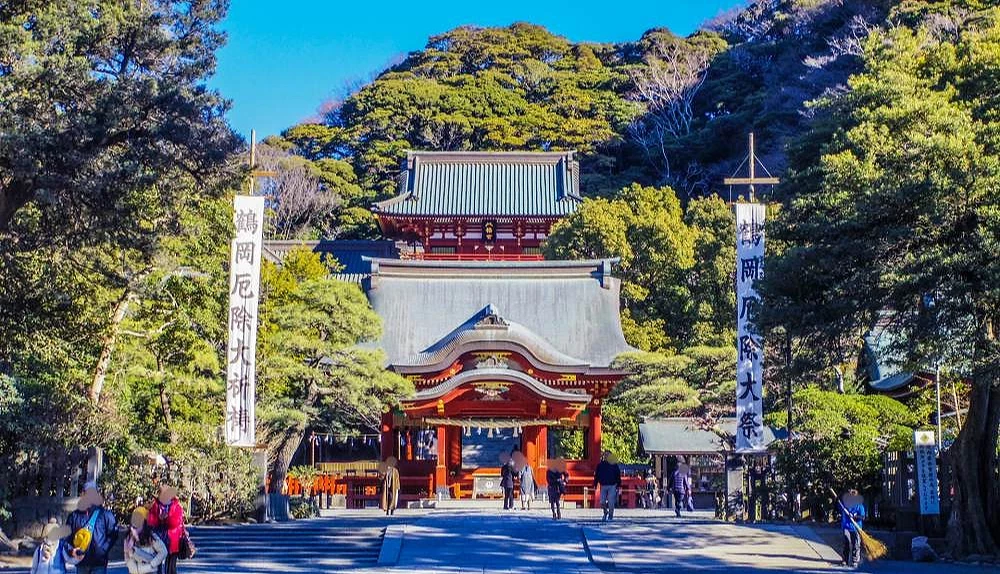
Tsurugaoka Hachimangu is the spiritual symbol of the historic city of Kamakura. Dedicated to Hachiman, the guardian deity of warriors, it is commonly regarded alongside Usa Jingu and Iwashimizu Hachimangu as one of Japan’s three great Hachiman shrines. The shrine is approximately a 10-minute walk from Kamakura Station. Its vermilion Main Shrine, the cherry blossom tunnel along Dankazura, and Genji Pond are beautiful throughout the year, while the adorable Pigeon Bell Charm is a particularly popular souvenir among Taiwanese travelers. This guide covers the shrine’s history, transportation, admission and worship hours, charms and goshuin seals, five essential highlights, and seasonal scenery, making it easy for first-time visitors to plan a Kamakura day trip.
What Is Tsurugaoka Hachimangu?
One of Japan’s Three Great Hachiman Shrines, Dedicated to Hachiman, the Deity of Victory and Warrior Fortune
Tsurugaoka Hachimangu in Kamakura is regarded alongside Usa Jingu in Oita and Iwashimizu Hachimangu in Kyoto as one of Japan’s three great Hachiman shrines. Its principal deity, Hachiman, is the deified 15th emperor, Emperor Ojin, and is also revered as a guardian deity representing victory and success in battle. This made the deity especially important to the warrior class. Japan has more than 40,000 Hachiman shrines, and Tsurugaoka Hachimangu is one of the most representative.

Founded by Minamoto no Yoritomo and Deeply Connected to the Kamakura Shogunate
The origins of Tsurugaoka Hachimangu date to 1063, when Minamoto no Yoriyoshi invited the deity to be enshrined in Kamakura. In 1180, Minamoto no Yoritomo relocated the shrine to its present site and established it as the spiritual symbol of the Kamakura shogunate and the center of warrior worship. Successive shoguns later held important ceremonies here, giving the shrine exceptional status. Pigeon motifs are frequently seen throughout the grounds because pigeons are regarded as messengers of Hachiman, and they have become one of the shrine’s most recognizable features.

How to Get to Tsurugaoka Hachimangu
The shrine is approximately a 10-minute walk from the east exit of JR or Enoden Kamakura Station. The route passes through Komachi-dori Shopping Street and along the Wakamiya Oji approach. Direct JR trains operate to Kamakura Station from both Tokyo and Shinjuku without transfers, making access highly convenient.
| Departure Point | Transportation | Travel Time | Fare (One Way) |
|---|---|---|---|
| Tokyo Station | JR Yokosuka Line (Direct to Kamakura Station) | Approximately 55 Minutes | Approximately ¥1,040 |
| Shinjuku Station | JR Shonan-Shinjuku Line (Direct to Kamakura Station) | Approximately 60 Minutes | Approximately ¥1,040 |
| Kamakura Station East Exit | On Foot | Approximately 10 Minutes | — |
Tsurugaoka Hachimangu Admission and Worship Hours
Worship Hours and Admission Fees
Entry to the shrine grounds is free, although separate admission fees apply to the Treasure Hall and special exhibitions. The grounds are open from 6:00 a.m. to 8:00 p.m. throughout the year. Worship hours are extended from January 1 to January 3. Check the official website before visiting for the latest information.
| Facility | Opening Hours | Admission | Notes |
|---|---|---|---|
| Shrine Grounds | 6:00 a.m.–8:00 p.m. | Free | Open Year-Round |
| Tsurugaoka Library | 9:00 a.m.–12:00 p.m. 1:00 p.m.–4:30 p.m. | Free | Closed: Mondays and the Year-End/New Year Period Occasional Unscheduled Closures |
| Kamakura Bunkakan Tsurugaoka Museum | 10:00 a.m.–4:30 p.m. | Admission Fee Required for the Exhibition Area (Admission Varies by Exhibition) | Closed: Mondays (or the Following Day When Monday Is a National Holiday) Exhibition Changeover Periods and the Year-End/New Year Period |
| Treasure Hall | 9:00 a.m.–4:00 p.m. | Adults: ¥200 Children: ¥100 | Closed During Exhibition Changeovers |
| Shrine Peony Garden | 9:00 a.m.–4:30 p.m. | ¥500 | Open Only During the Flowering Seasons January–February and April–May |
What Do Visitors Pray for at Tsurugaoka Hachimangu?
Tsurugaoka Hachimangu in Kamakura is primarily dedicated to Hachiman. In addition to the deity enshrined in the Main Shrine, several important subsidiary shrines within the grounds are associated with different forms of divine protection.
Victory and Success: Hachiman was the guardian deity of the Minamoto clan and later became the deity of warrior fortune for samurai throughout Japan. Today, many visitors pray here for success in examinations, favorable legal outcomes, and progress at work.
Good Fortune and Protection from Misfortune: The shrine is a well-known place to pray for improved fortune and protection from disasters and difficulties.
Love and Fertility: Behind Hataage Benzaiten Shrine on the Genpei Ponds is a pair of sacred stones known as Masako Stone, or Himeishi. According to tradition, Minamoto no Yoritomo placed them there to pray for a safe delivery for his wife, Hojo Masako. The stones are therefore associated with marital harmony, good relationships, and fertility.
Address: 2-1-31 Yukinoshita, Kamakura, Kanagawa, Japan
Transportation: Approximately a 10-minute walk from JR or Enoden Kamakura Station
Must-See Highlights at Tsurugaoka Hachimangu

Wakamiya Oji

Wakamiya Oji is Kamakura’s most representative straight ceremonial approach. Extending approximately two kilometers from the First Torii Gate to the Third Torii Gate, it was constructed on the orders of Minamoto no Yoritomo and connects Yuigahama Beach directly with Tsurugaoka Hachimangu. The approximately 500-meter raised walkway between the Second and Third Torii Gates is known as Dankazura. Yoritomo built this approach to pray for a safe delivery for his wife, Hojo Masako. Cherry trees line both sides, making it one of Kamakura’s best-known cherry blossom viewing spots.
Third Torii Gate and Maiden Lower Worship Hall

After passing through the Third Torii Gate, the building standing on the open ground directly ahead is the Maiden. According to tradition, Shizuka Gozen danced here with heartfelt devotion while longing for Minamoto no Yoshitsune, which is why the structure is also known as the Lower Worship Hall. In addition to shrine festivals and traditional ceremonies, numerous formal weddings are held here throughout the year.
Main Shrine Upper Shrine
The Vermilion Shrine Hall Above the Grand Stone Steps and Its Pigeon-Shaped Character for Eight

At the top of the 61 grand stone steps stands the Main Shrine, or Hongu. Its imposing vermilion buildings form the central place of worship and are designated Important Cultural Properties of Japan. On the Hachimangu plaque above the Romon Gate, the character for eight is formed by two pigeons facing each other, a detail worth photographing. From the stone steps, visitors can overlook the Kamakura cityscape and Wakamiya Oji, and on clear days may even see Sagami Bay in the distance.
Genpei Ponds
Lotus Flowers and a Gathering Place for Pigeons

The Genpei Ponds at Tsurugaoka Hachimangu are two gourd-shaped ponds excavated on the orders of Hojo Masako, wife of Minamoto no Yoritomo. Genji Pond lies on the right and Heike Pond on the left, and together they are known as the Genpei Ponds. Red and white lotus flowers cover the water in summer, making this one of the shrine’s finest flower-viewing areas. Tame pigeons and mandarin ducks frequently gather beside the ponds, reflecting the tradition that pigeons serve as messengers of Hachiman.
Remains of the Great Ginkgo and Wakamiya Lower Shrine
A Thousand-Year-Old Tree and an Important Cultural Property

The Great Ginkgo at Tsurugaoka Hachimangu was once one of Kamakura’s symbols. The ancient tree fell during strong winds in March 2010. New shoots that emerged from its roots have since grown at the original site as its successor, while part of the fallen trunk is preserved and displayed at the Tsurugaoka Museum Cafe & Shop, drawing visitors who come to witness the continuation of its life. Nearby, Wakamiya, or the Lower Shrine, enshrines Emperor Nintoku, son of Emperor Ojin, the principal deity of the Main Shrine, along with other deities. The building is designated an Important Cultural Property of Japan. Its quiet, solemn atmosphere makes it an essential companion visit to the Main Shrine.
Types of Charms at Tsurugaoka Hachimangu and the Popular Pigeon Bell Charm
The shrine offers a variety of charms for relationships, good fortune, victory, and other wishes. The charm office is open from 8:30 a.m. to 5:00 p.m., so allow enough time before purchasing. The most popular item is the Pigeon Bell Charm.
A Pigeon-Shaped Charm Representing the Messenger of Hachiman

Tsurugaoka Hachimangu’s most popular charm is the Hato Suzu-mamori, shaped like a pigeon, the messenger of Hachiman. The small, charming pigeon bell produces a clear sound when shaken and is a must-buy souvenir for many Taiwanese travelers. Pigeon motifs appear throughout the shrine grounds, making this charm especially appropriate to the setting.
Tsurugaoka Hachimangu Goshuin Offering Fees and Reception Hours
Standard Goshuin

The offering fee for Tsurugaoka Hachimangu’s standard goshuin is ¥500, and reception hours are from 8:30 a.m. to 4:30 p.m. Goshuin are also available at Hataage Benzaiten Shrine within the grounds, so collectors may wish to visit both.
Original Goshuin Books and New Year Limited-Edition Goshuin

The shrine offers several original goshuin books, including designs featuring Great Ginkgo leaves and shrine buildings, making them attractive travel keepsakes. During the New Year period, a limited three-shrine goshuin set is also issued for Tsurugaoka Hachimangu, Hataage Benzaiten Shrine, and Shirahata Shrine. Quantities are limited and distribution ends when supplies are exhausted, making the set particularly valuable.
Hidden Attractions Within the Shrine Grounds
Kamakura Bunkakan Tsurugaoka Museum
Modern Architecture Designed by a Disciple of Le Corbusier

Located beside Heike Pond within the Tsurugaoka Hachimangu grounds, the building originally housed Japan’s first public museum of modern art and was designed by architect Junzo Sakakura. After reopening in 2019, it became an important center for presenting Kamakura’s history, culture, and art. The museum combines modernist architecture with the surrounding natural landscape, creating a quiet and elegant atmosphere. Reflections on the pond and seasonal scenery make it a lesser-known cultural attraction that many travelers overlook.
Museum Cafe
Enjoy Japanese-Style Desserts Beside the Trunk of the Thousand-Year-Old Sacred Great Ginkgo

Hidden beside the museum, this bright and peaceful cafe offers coffee and light meals with views of Genji Pond and the surrounding greenery. The interior also displays the trunk of the thousand-year-old sacred Great Ginkgo that fell in 2010, adding a strong sense of history and narrative. Visitors may use the cafe without entering the museum, making it an easy place to experience Kamakura’s distinctive slower pace.
Museum Shop
Kamakura-Exclusive Souvenirs and Goshuin Books

The shop sells numerous limited products themed around Kamakura and Tsurugaoka Hachimangu, including creative accessories, postcards, crafts, and goshuin books decorated with Great Ginkgo motifs. The designs combine Japanese aesthetics with quality and commemorative value. Shopping is available without entering the exhibition area, making this a discreet but excellent place to select souvenirs and preserve memories of a Kamakura trip.
Cherry Blossoms and Seasonal Scenery at Tsurugaoka Hachimangu
The Cherry Blossom Tunnel Along Dankazura
The most representative feature of the spring cherry blossom season at Tsurugaoka Hachimangu is the Dankazura approach. The best viewing period is from late March to early April. When the cherry trees bloom on both sides, they form a romantic pink tunnel extending toward the Main Shrine. Around the Genpei Ponds, visitors can also see cherry blossoms reflected on the water, creating an especially historic atmosphere beside the vermilion shrine buildings.
Summer Hydrangeas and Lotus Flowers, and Autumn Foliage
Lotus flowers bloom across Genji Pond in early summer, and hydrangea flower arrangements can also be seen in the shrine’s purification basins. Travelers seeking Kamakura’s famous hydrangeas should also visit nearby Meigetsuin and Hasedera. The best period for autumn foliage is from late November to early December. Red leaves are reflected in the water beside the Genpei Ponds, while the maple trees surrounding Shirahata Shrine and the Maiden are particularly attractive. Golden ginkgo leaves cover the stone steps and approach, creating the quiet yet magnificent autumn scenery of historic Kamakura.
Attractions Near Tsurugaoka Hachimangu
Komachi-dori Shopping Street
The Most Convenient Food and Shopping Street After Visiting the Shrine

Komachi-dori Shopping Street lies between Kamakura Station and Tsurugaoka Hachimangu. The approximately 360-meter street has a distinctly historic atmosphere and is lined with Japanese sweets, cafes, traditional-style goods, and Kamakura’s signature souvenir, Hato Sable pigeon-shaped cookies. It is an ideal place for food and shopping after worshipping at the shrine.
Address: 2-10 Komachi, Kamakura, Kanagawa, Japan
Transportation: Approximately a one-minute walk from the east exit of JR or Enoden Kamakura Station
Hasedera Temple
Hydrangea Path and Ocean Viewpoint

Hasedera Temple is known for its wooden eleven-headed Kannon statue, which stands more than nine meters high, its early-summer hydrangea path, and its viewpoint overlooking the sea. The Enoden ride from Kamakura Station to Hase Station takes approximately five minutes, followed by another five-minute walk, making it a classic stop on a Kamakura day trip.
Great Buddha of Kamakura
A Visit to Kamakura Is Not Complete Without Seeing Its Famous Great Buddha

The Great Buddha of Kamakura is approximately a seven-minute walk from Hase Station and is commonly visited together with Hasedera Temple. Standing about 13 meters high and weighing approximately 121 metric tons, the statue is regarded as a National Treasure of Japan and is one of Kamakura’s essential landmarks.
Enoshima
Shonan Seaside Scenery and a Famous Slam Dunk Location

Enoshima is the Shonan area’s most representative seaside destination, known for its coastal walking paths, Enoshima Shrine, and the observation lighthouse known as the Enoshima Sea Candle. The Enoden ride from Kamakura Station to Enoshima Station takes approximately 25 minutes and passes the Kamakurakokomae railroad crossing, the iconic setting featured in the opening sequence of Slam Dunk. It is one of the most popular ways to spend the second half of a Kamakura day trip.
Kamakura Day Trip Itinerary
| Time | Itinerary | Transportation |
|---|---|---|
| 8:50 a.m.–9:53 a.m. | Shinjuku Station → Kamakura Station | Take the JR Shonan-Shinjuku Line Directly with No Transfers |
| 10:00 a.m.–11:30 a.m. | Visit Tsurugaoka Hachimangu | Walk Approximately 10 Minutes from Kamakura Station |
| 11:30 a.m.–1:30 p.m. | Have Lunch and Shop for Souvenirs on Komachi Street | Walk Approximately 5 Minutes from Tsurugaoka Hachimangu |
| 1:32 p.m.–1:36 p.m. | Kamakura Station → Hase Station | Take the Enoden Directly with No Transfers |
| 1:40 p.m.–3:30 p.m. | Explore Hasedera Temple and Visit the Great Buddha of Kamakura | Walk Approximately 7 Minutes from Hase Station |
| 3:43 p.m.–4:03 p.m. | Hase Station → Enoshima Station | Take the Enoden Directly with No Transfers |
| 4:05 p.m.–5:50 p.m. | Enjoy the Scenery and Sunset at Shonan Beach | Walk Approximately 10 Minutes from Enoshima Station |
| 5:58 p.m.–7:12 p.m. | Enoshima Station → Fujisawa Station → Shinjuku Station | Take the Enoden, Then Transfer to the JR Shonan-Shinjuku Line |
When planning a Kamakura itinerary, complete the major attractions first and then add optional stops according to your energy and interests. This creates a smoother route and reduces the need to rush. Travelers planning to explore both Kamakura and Enoshima in one trip can save money by using a suitable sightseeing pass. Refer to the article below for details.
Tsurugaoka Hachimangu is not only Kamakura’s most representative shrine but also a site deeply connected to centuries of history and samurai culture. Its distinctive appeal continues to attract visitors throughout the changing seasons, making it one of the most popular historical attractions near Tokyo.
Frequently Asked Questions About Tsurugaoka Hachimangu in Kamakura
1.How Long Does a Visit to Tsurugaoka Hachimangu Take?
Visiting only the Main Shrine takes approximately 30 minutes. Allow around 60 minutes to purchase charms, receive goshuin, and walk around the grounds.
2.What Do Visitors Pray for at Tsurugaoka Hachimangu?
The Main Shrine at Tsurugaoka Hachimangu is dedicated to Hachiman, the deity of warrior fortune. Visitors primarily pray for success in examinations, favorable legal outcomes, and progress at work. Several important subsidiary shrines within the grounds are associated with good fortune, relationships, fertility, and other wishes.
3.When Is the Shrine Less Crowded?
Crowds are smallest immediately after opening on weekday mornings, making this the best time for relaxed worship and photography. The shrine is most crowded during the New Year period from January 1 to January 3 and on weekends during cherry blossom season. Avoid these periods or arrive as early as possible.
4.Which Months Are Best for Visiting Tsurugaoka Hachimangu?
The Dankazura cherry blossom tunnel is at its best from late March to early April. Lotus flowers and hydrangeas appear in early summer, while autumn foliage is typically seen from mid-November to early December. Every season offers something worth seeing.