
If you're planning an independent trip to Hokkaido, Japan, Wakkanai in the far north is highly recommended! Here you can visit the iconic Cape Soya and the “White Path” of the Soya Hills, while also tasting rich and flavorful Wakkanai milk, large and sweet scallops, and luxurious seafood rice bowls. Below is a complete guide to the must-try food, must-visit attractions, and best ways to explore Wakkanai. If you want to experience Japan's ultimate northern journey, keep reading!
What Kind of Place Is Wakkanai? Highlights and Travel Times at a Glance!

Wakkanai is a town known for tourism, fishing, and dairy farming. The Soya region, including Wakkanai, is famous for scallop production, while its dairy industry has developed the local original brand “Wakkanai Milk.” Using a non-homogenized low-temperature pasteurization method, the milk retains its natural flavor and tastes especially rich and sweet. Although Wakkanai is located at the northernmost tip of Hokkaido, getting there is easier than many people imagine. By domestic flight, you can reach it from Tokyo Haneda Airport in under two hours. Below is an overview of the main transportation options and estimated travel times.
【By Plane】
Haneda Airport → Wakkanai Airport: About 1 hour 55 minutes
New Chitose Airport → Wakkanai Airport: About 1 hour
【By Train】
Sapporo → Wakkanai: 5 hours 30 minutes
【By Bus】
Sapporo → Wakkanai: 6 hours
Exciting Events in Wakkanai
Wakkanai Port Antarctic Festival

The Wakkanai Port Antarctic Festival is one of the city's major signature events, bringing lively energy to Wakkanai's short summer. Held over two consecutive days, the festival features energetic dance performances such as the “Northernmost Hokkai Dance” and “Antarctic Dance,” along with the warm atmosphere created by local residents joining in the celebrations. At night, around 2,500 fireworks light up the sky, filling Wakkanai's summer evening with brilliant colors. If you want to experience a unique summer festival atmosphere in Japan's northernmost city, this event is well worth adding to your itinerary.
Event Period: First Saturday and Sunday of August (scheduled)
Wakkanai Night & Light

Wakkanai Night & Light transforms the Hokkaido Heritage-designated Wakkanai Port North Breakwater Dome into a dreamlike scene completely different from its daytime appearance. At night, LED lights illuminate the exterior with colorful gradients, making the massive historic arched structure look even more romantic and striking. Inside the dome, soft lighting extends along the corridor, surrounding the entire space with an almost fantastical glow. Whether you're taking a leisurely walk, enjoying the night view, or capturing atmospheric photos, you can experience the special charm of Wakkanai after dark.
Event Period: September–October (scheduled)
Soya Fureai Park Snow Land

If you visit snowy Wakkanai in winter, don't miss the wide variety of snow activities. Soya Fureai Park Snow Land offers several outdoor experiences with a distinctly Hokkaido character each winter. These include riding in a covered sightseeing sled pulled by a snowmobile, allowing you to enjoy the northern winter scenery across a vast white landscape. You can also try cross-country skiing, snowshoe hiking, and fat-tire biking on snow, each offering a different way to enjoy moving through the winter landscape. Even if you have little experience with snow activities, you can still fully enjoy Wakkanai's unique outdoor winter charm across the expansive snowfields.
Event Period: February (scheduled)
National Wakkanai Dog Sled Race

Wakkanai, known for its connection to the film “Antarctica,” hosts one of Japan's largest dog sledding competitions every winter: the National Wakkanai Dog Sled Race. During the event, powerful sled dogs work in perfect coordination with their handlers, racing at high speed across the vast snowy landscape in thrilling and dynamic competitions. In addition to watching the dogs give their all, the tense atmosphere and enthusiastic cheers from spectators are major highlights. The combination of snow-covered terrain, racing sled dogs, and northern scenery creates a winter scene that is uniquely Wakkanai and makes this an event well worth seeing during a winter visit.
Event Period: Late February (scheduled)
Must-Try Food in Wakkanai
Scallops

The currents of the Soya Strait are strong and the seawater remains cold throughout the year, creating ideal conditions for scallops to grow. These conditions help lock in their fresh sweetness, giving the meat an especially rich flavor. Whether eaten raw or grilled, they are outstanding, and their size, sweetness, and texture rank among the very best in Hokkaido.
Seafood Rice Bowl

The Soya Strait faces both the Sea of Japan and the Sea of Okhotsk and is an exceptionally nutrient-rich marine environment. In addition to the scallops mentioned above, shrimp, king crab, hairy crab, octopus, and other seafood can be caught throughout the year. If you have trouble choosing what to eat, order a luxurious seafood rice bowl and enjoy a wide variety of fresh flavors all at once.
Octopus Shabu-Shabu

Wakkanai has the highest catch volume in Japan for giant North Pacific octopus. The octopus is not only extremely fresh but also thick, tender, and naturally sweet. A highly recommended local specialty is octopus shabu-shabu. Freshly caught octopus is frozen at peak freshness, sliced thinly, and then lightly swished through hot broth to best preserve its original flavor. The broth is made with Rishiri kombu and is served with vegetables and mushrooms, creating a healthy, nutritious, and naturally flavorful meal.
Wakkanai Milk

If you love milk, Wakkanai Milk should definitely be on your food list. The cows are raised in Wakkanai's vast landscape and cool climate, and the raw milk is processed using a non-agitated method that preserves a cream-like flavor. Its rich and full-bodied taste may completely change your impression of milk. Because production is limited and the shelf life is short, it is considered something of a rare treasure among milk products.
Must-Visit Attractions and Things to Do in Wakkanai
White Path

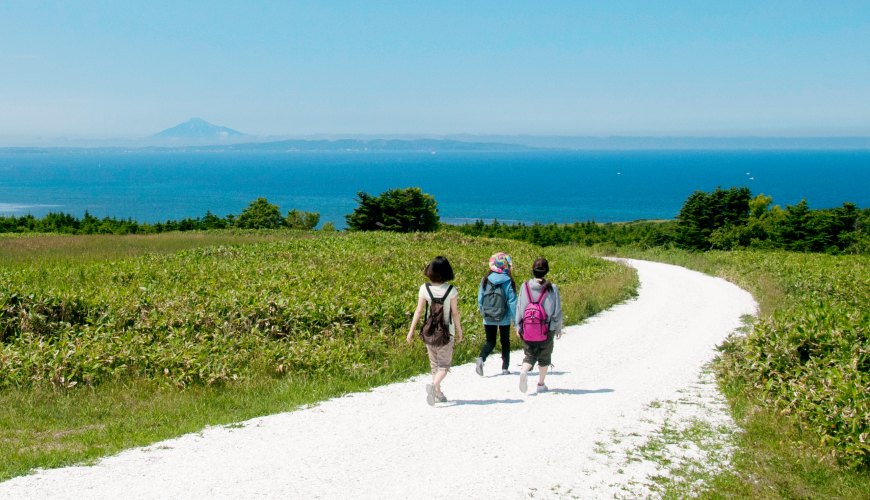
Near Cape Soya, a beautiful “White Path” winds gently through the lush green grasslands, creating stunning scenery from almost any angle and making it one of the area's most popular photo spots. The road is actually paved with crushed scallop shells. In the past, these shells could not decompose and were buried as industrial waste. After local residents searched for a better solution, they came up with the creative idea of using the shells as road decoration, transforming waste into a tourism resource. The salt contained in the shells also helps suppress weed growth, creating multiple benefits. On clear days, the view of Mount Rishiri from here is another spectacular highlight.
It takes about 15 minutes by car from Cape Soya to the White Path. Bus services between Wakkanai Station and Cape Soya are limited, so travelers relying on public transportation should check the bus timetable first and plan the rest of their itinerary accordingly.
Cape Noshappu

Cape Noshappu is only about a 10-minute drive from Wakkanai Station. With no power lines or utility poles blocking the view, it is one of the best places to enjoy sunrise and sunset at close range. Arrive about 30 minutes before sunrise or sunset to leisurely watch the sun rise above or sink below the horizon. If you're lucky, you may also see Rishiri Island, Rebun Island, and Sakhalin in the distance. Because Wakkanai lies at 45 degrees north latitude, summer visitors can even experience the unusual sight of the sky remaining bright after sunset. However, the wind here can still be cold even in summer, so remember to bring an extra warm layer.
Hokumon Shrine and Wakkanai Park

Many visitors enjoy drawing fortunes at Japanese shrines, and Hokumon Shrine, about a 10-minute walk from Wakkanai Station, offers a shrine-exclusive crab-shaped omikuji. If you enjoy visiting shrines and temples, this is worth checking out. You can also follow the path beside the shrine and walk to Wakkanai Park, where you may even encounter wild deer if you're lucky. The observation deck offers panoramic views over Wakkanai city, and the facility serves sasa bamboo ice cream (closed from November to April). After exploring, it is a relaxing place to take a break.
Cycle All the Way to Cape Soya

If you're a cycling enthusiast, the 77-kilometer round-trip route to Cape Soya is highly recommended. Riding north to conquer Japan's northernmost point is a dream route for many cyclists and motorcyclists in Japan, thanks to its beautiful natural scenery. The Wakkanai Tourism Association inside Wakkanai Station offers bicycle rentals from late April to late October, from 9:30 to 17:00. For more details, check the Wakkanai Tourism Association website. Another highly recommended route is the roughly 10-kilometer round trip along the coastline to Cape Noshappu, where you can cycle beside the blue sea and watch seagulls, creating a wonderfully relaxing experience.
Minato no Yu

Minato no Yu, a scenic hot spring overlooking Japan's northernmost harbor, opened in October 2022. Here you can relax in a covered bath while enjoying expansive sea views. The lounge also includes hammocks, massage chairs, and a manga area, making it an excellent place to fully unwind and recharge in the middle of your trip.
Address: 1-6-28 Minato, Wakkanai, Hokkaido
Admission: 680 yen (tax included)
Opening Hours: 10:00–22:00 (last admission 21:30)
Closed: Irregularly
“Outdoor Sauna” & “Canoeing Experience”

At the Onuma Birdwatching Center, visitors can easily join two activities: an outdoor sauna and a canoeing experience. The facility includes a self-service steam sauna and a dome-shaped glass relaxation space, allowing you to unwind in privacy while enjoying an authentic sauna experience surrounded by nature. The canoeing experience offers different courses for both beginners and experienced participants, letting you paddle across Onuma while observing birds, plants, and other wildlife in Wakkanai's cool climate. You can also join both activities in one visit, and everything you need is provided so you can enjoy Onuma without bringing special equipment.
Address: Koeto Wilderness, Koeto Village, Wakkanai, Hokkaido
Experience Period: Sauna: April–November and February; Canoeing: Mid-June–Late September (advance reservation required for both)
Attractions Around Wakkanai
If you have time for a longer trip, consider adding Rishiri Island and Rebun Island to your itinerary. Staying one night on each island is especially recommended so you can enjoy the brilliant night skies unique to these remote northern islands. Motorcycles and bicycles can be rented on both islands, and sightseeing buses are also available.
Rishiri Island

Many visitors to Hokkaido buy the popular souvenir Shiroi Koibito, and the scenery shown on its packaging is actually inspired by Shiroi Koibito Hill on the southern side of Rishiri Island. Here's a special tip for couples planning to spend their lives together: if you propose here and show a photo at the information counter in the Oshidomari Port Ferry Terminal, you can receive a special proposal certificate. Nearby Otatomari Pond is the largest lake on Rishiri Island and offers beautiful views of Mount Rishiri. After sightseeing, you can stop at nearby shops for delicious grilled scallops and ice cream.
If you enjoy hands-on activities, Rishiri Island also offers experiences such as sea urchin harvesting and seal feeding. In the Kutsugata area on the western side of the island, there is also a wooden building more than 130 years old called Shima-no-Eki, where visitors can enjoy local food and try pressed seaweed art. It is a great place to spend an entire leisurely day exploring the island.
Rebun Island

Rebun Island is known as the “Floating Island of Flowers.” Several walking routes across the island are ideal for leisurely exploration and offer opportunities to see a wide variety of rare alpine plants. If you want to experience the scenery at peak bloom, early June is generally the best time to visit. On clear days, you can see Sakhalin in the distance from Cape Sukoton at the northern tip of Rebun Island, and wild seals sometimes appear nearby. Cape Sukai on the west coast offers views of crystal-clear blue water and dramatic cliffs, showcasing the island's diverse coastal landscapes.
If you continue exploring the northern part of the island, you can discover a hidden “shell beach” near the Funadomari ruins. The shore is covered with shells that have natural holes left behind after being eaten by other shellfish. When local residents were children, they would collect these naturally perforated shells and turn them into accessories. While walking here, you can enjoy the expansive sea view and also pick up a favorite shell with a natural hole to take home as a souvenir of your visit to Rebun Island.
Wakkanai in Hokkaido is blessed with the gifts of nature. Whether it's Cape Soya at Japan's northernmost point, the White Path combining beautiful scenery with environmental awareness, or the idyllic islands of Rishiri and Rebun, the vast natural landscapes are sure to leave you feeling refreshed and inspired.