
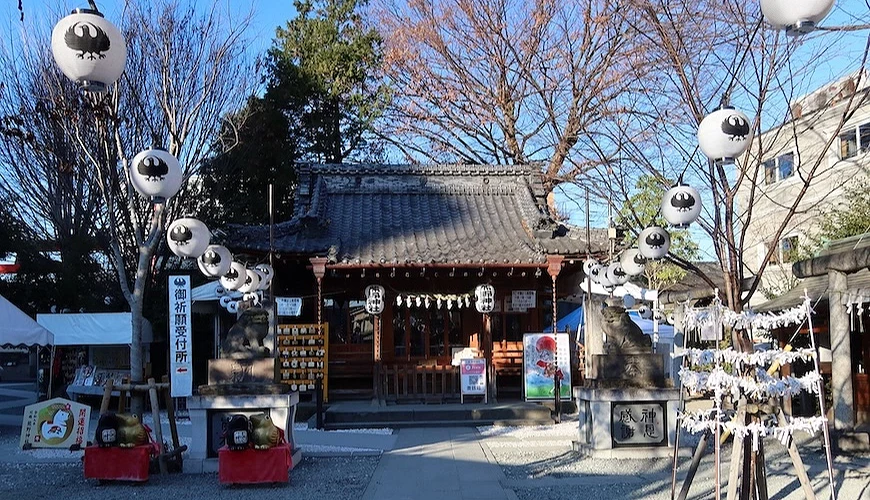
When visiting Kawagoe, besides exploring the Kurazukuri Old Town and seeing the Toki no Kane Bell Tower, don't forget to add Kawagoe Kumano Shrine to your itinerary. It is only about a 5-minute walk from Hon-Kawagoe Station and offers a spiritual atmosphere filled with many unusual and interactive ways to worship. Let's take a look at what makes Kawagoe Kumano Shrine worth visiting.

Kawagoe Kumano Shrine is located in Renjakucho, Kawagoe City, Saitama Prefecture, about a 5-minute walk from Hon-Kawagoe Station. Founded in 1590 (Tensho 18), the shrine was invited from Kumano in Kishu by the second head priest of Renkeiji Temple, Nenyu Buno, and has a history of more than 400 years. It is especially known for prayers for good luck, good relationships, and protection from misfortune. The shrine's symbol is Yatagarasu, the sacred three-legged crow. According to legend, Yatagarasu guided Emperor Jimmu and is therefore regarded as a divine bird that helps guide people through life. The shrine also offers an officially recognized “Victory Omamori” associated with the Japan Football Association.
Worship at Kawagoe Kumano Shrine

【Required Fees】
| Item | Fee |
|---|---|
| Worship | Free |
| Foot Health Path | Free |
| Money Washing at Kawagoe Zeniarai Benzaiten (Benzaiten) | Free (bamboo baskets for washing money are available on site) |
| Ring Toss Fortune Test | Please refer to the on-site notice |
| Omamori and Goshuin | Varies by item; please refer to the official website |
【Worship Hours and Recommended Visit Time】
Visitors may worship freely within the grounds of Kawagoe Kumano Shrine. If you want to try money washing, touch the white snake, play the ring toss fortune game, and receive goshuin, allow about 1 hour. A simple visit takes around 20 minutes. Goshuin handwritten directly into a goshuincho are accepted until 16:40, while prewritten paper goshuin are available until 17:00. Actual reception times may vary depending on events or the season, so it is recommended to check the latest official information before visiting.
Address: 17-1 Renjakucho, Kawagoe, Saitama Prefecture
Worship: Visitors may freely enter and worship within the grounds
Recommended Visit Time: About 20 minutes for simple worship; about 1 hour if trying money washing, touching the white snake, ring toss fortune testing, and receiving goshuin
Goshuin Reception Hours: 【Handwritten on Site】until 16:40; 【Prewritten Paper Goshuin】until 17:00
Transportation to Kawagoe Kumano Shrine
Kawagoe Kumano Shrine is located in central Kawagoe and is about a 5-minute walk from Hon-Kawagoe Station. It can also be reached by bus from Kawagoe Station and Kawagoeshi Station. If you plan to visit Kawagoe Old Town, the Toki no Kane Bell Tower, and Hikawa Shrine on the same day, it is recommended to plan your route in advance. For detailed information on stations, buses, and transportation between attractions, refer to the complete Kawagoe transportation guide.
Walking
Kawagoe Kumano Shrine is located in Renjakucho in central Kawagoe and can be reached from Hon-Kawagoe Station, Kawagoe Station, or Kawagoeshi Station. Hon-Kawagoe Station is the closest and most convenient, about a 5-minute walk away. From the East Exit of Hon-Kawagoe Station, walk straight ahead and pass the Renjakucho intersection to see signs for the shrine. The walk from Kawagoe Station is longer, so if you are short on time, taking a bus may be more convenient.
| Departure Station | Travel Time |
|---|---|
| Hon-Kawagoe Station | About 5 minutes |
| Kawagoeshi Station | About 15 minutes |
| Kawagoe Station | About 25 minutes |
By Bus
If traveling from Kawagoe Station to Kawagoe Kumano Shrine, it is recommended to take a Tobu Bus from the East Exit. Routes such as Kawagoe 01, Kawagoe 02, and Kawagoe 04 stop at “Renkeiji-mae.” The ride takes about 10 minutes, followed by a 1-minute walk to the shrine. From Hon-Kawagoe Station, the shrine is only about a 5-minute walk away, so there is no need to transfer to a bus.
Must-See Highlights at Kawagoe Kumano Shrine
Kumano Shrine Torii Gate and Worship Hall

When entering Kawagoe Kumano Shrine, first notice the stone second torii gate rebuilt in 1713. It is one of the shrine's important surviving historic structures. After passing through the gate, purify your hands and mouth at the chozuya, then follow the approach to the worship hall and experience the solemn atmosphere of this historic Kawagoe shrine known for blessings of good fortune and relationships.
Yatagarasu and the Musubi Garden

Yatagarasu is the emblem of Kawagoe Kumano Shrine and a sacred bird symbolizing guidance and hope. The shrine's “Musubi Garden” enshrines nagi and sakaki trees received from Kumano Hongu Taisha, along with a Yatagarasu relief that was blessed at Kumano Hongu. Before praying, visitors can choose either “Good Luck and Relationships” or “Gratitude for Divine Blessings,” then quietly receive a message inspired by Yatagarasu. Don't forget to take a photo with the giant Yatagarasu on the shrine grounds.
Foot Health Path

One of the must-see features of Kawagoe Kumano Shrine is the “Foot Health Path” located on both sides of the approach. Walking barefoot over the pebble-covered path stimulates pressure points on the soles, helps relieve travel fatigue, and is associated with prayers for good health. It is also recommended in official tourism guides. If you are worried about pain, you can use the flat path in the middle and experience it at your own comfort level.
Kawagoe Zeniarai Benzaiten (Benzaiten)

Itsukushima Shrine within the grounds enshrines a deity associated with performing arts and financial fortune and is also known as “Kawagoe Zeniarai Benzaiten.” At the Treasure Pond in front of the shrine, visitors can wash coins while praying for better financial luck. The washed money is not meant to be kept as a collectible; instead, it is recommended to spend it on something meaningful so that wealth continues to circulate. The third Sunday of every month is a special festival day for Zeniarai Benzaiten. Check official announcements for information about related ceremonies and lucky money distributions.
White Snake Shrine

If you want to pray for good luck and financial fortune, don't miss the White Snake Shrine. Its sacred object is a two-headed white snake, and in front of the shrine there is also a “Stroking Snake” statue that visitors can touch while making a wish. Different parts of the snake represent different blessings, such as academic success, health, wealth, or good relationships. Detailed instructions are provided on site, so simply follow them during your visit.
Ring Toss Fortune Test
In addition to traditional worship, Kawagoe Kumano Shrine offers a playful “Ring Toss Fortune Test.” It is located in front of Kayu Inari Shrine, which enshrines the Inari deity associated with food and agricultural prosperity. You throw three rings, and if at least one lands successfully, it is considered a sign of reasonably good fortune. It is a fun way to add a lighthearted fortune-testing experience to your visit.
Kawagoe Kumano Shrine Omamori
Kawagoe Kumano Shrine offers a wide variety of sacred items, with Yatagarasu and the white snake as its two most representative themes. Different omamori are available for good luck, victory, relationships, and financial fortune, with distinctive designs that make them suitable as souvenirs from your visit or gifts for friends. In addition to omamori, the shrine office also offers ema plaques, bells, and other sacred items.
Victory Omamori

Yatagarasu is also featured on the emblem of the Japan Football Association (JFA), and Kawagoe Kumano Shrine's “Victory Omamori” is officially recognized and licensed by the JFA. The charm is mainly intended for prayers for victory and comes in both a strap style that can be tied onto belongings and a pendant style that is easy to carry. It is suitable not only before sports competitions, but also for people preparing for exams, job interviews, or other important challenges.
Yatagarasu Omamori

The Yatagarasu Omamori is one of Kawagoe Kumano Shrine's most representative sacred items. The “Crystal Good Luck Yatagarasu Omamori” features a lucky Yatagarasu engraved inside crystal and is available in gold, silver, pearl, yellow, and other variations, including a necklace-style design. Other options include standard Yatagarasu omamori, good-luck charms, and relationship charms. Visitors who like Yatagarasu can take their time choosing according to their needs.
White Snake Omamori

The White Snake Shrine has also inspired several popular omamori. Those praying for good luck and financial fortune can choose the compact White Snake Pocket Omamori, while the “Two-Headed White Snake Protection” charm is inspired by the shrine's sacred two-headed white snake and symbolizes protection for the holder. Types, designs, and prices may change, so it is best to refer to the latest official information before visiting or while shopping on site.
Kawagoe Kumano Shrine Goshuin
Visitors who enjoy collecting goshuin should not miss those at Kawagoe Kumano Shrine. In addition to the standard goshuin for three shrines, there are special Yatagarasu-themed goshuin and limited designs released for seasons and festivals. Handwritten goshuin in personal goshuincho are normally accepted until 16:40. From then until 17:00, only prewritten paper versions are available. During certain periods such as the New Year season, only prewritten goshuin may be offered throughout the day, so check official announcements before visiting.
Three-Shrine Goshuin

The standard goshuin at Kawagoe Kumano Shrine are especially collectible. Visitors with a goshuincho can request handwritten entries, mainly including goshuin for Kumano Shrine, Itsukushima Shrine, and Akiba Shrine. Depending on the season or shrine festivals, additional seasonal pilgrimage stamps for spring, summer, autumn, and winter, or commemorative stamps for regular festivals, may also be added. This means repeat visitors may be able to collect different versions. Standard goshuin are ¥500, while special goshuin are ¥800, subject to the latest official announcement.
Special Yatagarasu Goshuin

For something more memorable, choose the special Yatagarasu goshuin. It is available on two different colored base sheets, and visitors can select their preferred wording from several options. Once completed, it also comes with a small protective charm corresponding to the chosen phrase. Both the goshuin and accompanying omamori feel highly personalized, making them a meaningful souvenir of a Kawagoe shrine visit.
Seasonal Limited Goshuin

Kawagoe Kumano Shrine also releases limited goshuin for different seasons. Visitors who collect all five versions—Spring Visit, Summer Visit, Autumn Visit, Winter Visit, and New Year Visit—can also receive a commemorative gift. In addition, the approximately six “Tsuchinotomi Days” each year are important dates in white snake and Benzaiten worship, and goshuin issued on these days receive a special limited stamp. If you are targeting a limited design, check the officially announced dates in advance.
Attractions Near Kawagoe Kumano Shrine
Kawagoe Kumano Shrine is located in the center of Kawagoe and can easily be included on the way from Hon-Kawagoe Station to the Kurazukuri Old Town. After worshipping, continue walking north to visit the nostalgic Taisho Roman Yume-dori Street, then head to the Kurazukuri Old Town and the Toki no Kane Bell Tower. If you have more time, you can continue farther to Kawagoe Hikawa Shrine, which is famous for matchmaking.
Taisho Roman Yume-dori Street

A short walk from Kawagoe Kumano Shrine brings you to Taisho Roman Yume-dori Street, filled with nostalgic atmosphere. The stone-paved street is lined with a mix of traditional machiya townhouses, Western-style buildings, and kurazukuri-style shops. It feels more relaxed than the busier Kurazukuri Old Town and is a popular place for visitors wearing kimono to take photos. The area also has several long-established eel restaurants, making it a great place for a distinctive Kawagoe lunch.
Kurazukuri Old Town and Toki no Kane

Walk north along Chuo-dori from Kumano Shrine for a little over 10 minutes to reach Kawagoe's most iconic Kurazukuri Old Town, “Ichibangai.” Both sides of the street retain black kurazukuri buildings in styles dating from the Edo and Meiji periods. Along the way, you can also visit Kawagoe's landmark “Toki no Kane Bell Tower,” then continue to the playful Kashiya Yokocho. It is ideal for slowing down, browsing shops, and sampling food while connecting several of Kawagoe's classic attractions in one route.
Kawagoe Hikawa Shrine

If you still have time, continue north from the Kurazukuri Old Town to Kawagoe Hikawa Shrine. The shrine is famous for prayers for good relationships and romantic success, with popular highlights such as the Ema Tunnel and Wind Chime Festival. Starting from Kumano Shrine and continuing through Taisho Roman Yume-dori Street and the Kurazukuri Old Town to Hikawa Shrine creates a convenient route linking several of central Kawagoe's most representative attractions and is an excellent choice for first-time visitors.
Although Kawagoe Kumano Shrine is not very large, it offers many distinctive highlights including Yatagarasu, Kawagoe Zeniarai Benzaiten, the White Snake Shrine, and the Foot Health Path, making the worship experience more interesting than you might expect. It is conveniently located on the way from Hon-Kawagoe Station to the Kurazukuri Old Town, so consider spending about an hour here to pray for good luck, good relationships, and financial fortune before continuing your walk through Little Edo Kawagoe.
Kawagoe Kumano Shrine FAQ
1. What Is Kawagoe Kumano Shrine Known for, and What Can You Pray For?
Kawagoe Kumano Shrine is mainly known for blessings of good luck, good relationships, and protection from misfortune, and the shrine officially describes itself as “a shrine for good fortune, matchmaking, and warding off misfortune.” In addition to general worship, the shrine office accepts formal prayers for safe childbirth, academic achievement, passing exams, victory, family safety, business prosperity, traffic safety, recovery from illness, and many other wishes. Formal prayers can usually be requested on site, though the shrine recommends advance reservations, and groups should contact the shrine beforehand.
2. There Are Many Kumano Shrines in Japan. What Makes Kawagoe Kumano Shrine Special?
There are many shrines across Japan associated with Kumano worship, but Kawagoe Kumano Shrine stands out because it offers a variety of interactive good-luck experiences in addition to worshipping at the main sanctuary. These include the “Yatagarasu Musubi Garden” symbolizing human connections and good relationships, “Kawagoe Zeniarai Benzaiten” associated with financial fortune, the touchable “Stroking Snake” for prayers, and the barefoot “Foot Health Path.” These features make the visit more interactive and enjoyable than a simple shrine visit.
3. Can You Touch the Snake at Kawagoe Kumano Shrine? What Blessings Does the Stroking Snake Offer?
Yes. The “White Snake Shrine” within Kawagoe Kumano Shrine has a Stroking Snake statue that visitors can touch while making a wish. According to the on-site instructions, touching different parts of the body corresponds to different wishes, so visitors can follow the signs during worship. This is one of Kawagoe Kumano Shrine's most distinctive experiences, and many visitors stop by the White Snake Shrine to touch the snake statue after worshipping at the main sanctuary.
4. Can You Receive a Goshuin at Kawagoe Kumano Shrine Without a Goshuincho?
Yes. Even if you do not have a goshuincho with you, you can request a prewritten paper goshuin. If you bring your own goshuincho, shrine staff can write the goshuin directly into it during the designated reception hours.
5. Does Kawagoe Kumano Shrine Have Parking? Is It Convenient to Drive There?
Kawagoe Kumano Shrine does not provide a dedicated parking lot for general worshippers. Vehicles may enter designated areas only when receiving vehicle-related prayers. If you are driving for a regular visit, use one of the nearby paid parking lots.