
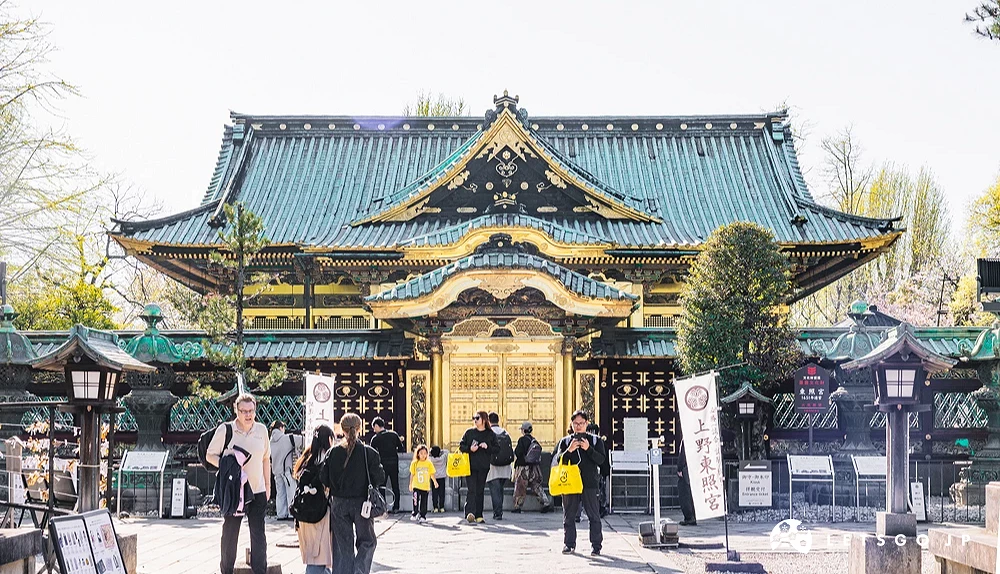
Located in Ueno Park, Ueno Toshogu Shrine is a famous shrine dedicated to Tokugawa Ieyasu and is known for its dazzling “Golden Hall” and the Rising Dragon carving on the Karamon Gate. It is within walking distance of Ueno Station, making it easy to combine with Ueno Zoo and Ameyoko Shopping Street. This guide covers visiting tips, seasonal scenery, and practical information to help you explore this Edo-period heritage site with ease!

Located inside Ueno Park, “Ueno Toshogu Shrine” was founded in 1627 by Todo Takatora within his Ueno residence. The existing shrine buildings were extensively rebuilt in 1651 by the third shogun, Tokugawa Iemitsu. The shrine buildings, Karamon Gate, and Sukibei Wall are all designated Important Cultural Properties of Japan, and they are rare examples of Edo-period gold-leaf architecture in central Tokyo that survived both war and earthquakes in remarkably good condition. Ueno Toshogu is not the same as Nikko Toshogu Shrine. Nikko Toshogu is located in Tochigi Prefecture and is a World Heritage Site, while Ueno Toshogu enshrines a divided spirit of Ieyasu and is not his burial place. It is located right in central Tokyo. Walking along the approach and viewing the stone lanterns at Ueno Toshogu are free, but if you want to enter through the Karamon Gate for a closer look at the Golden Hall, you will need to purchase a separate viewing ticket.
Beyond Ueno Toshogu Shrine, Ueno Park itself is packed with attractions worth exploring. From clouds of cherry blossoms and world-class museums to lively Ameyoko Shopping Street, there is so much to see that deciding where to start can be difficult. Check the article below for an efficient sightseeing route and transportation plan that helps you cover the highlights smoothly.
Ueno Toshogu Shrine Tickets
Entry to the grounds of Ueno Toshogu Shrine is free, including walking along the approach, viewing the bronze lanterns, and seeing the five-story pagoda. If you want to enter beyond the Karamon Gate for a close-up view of the Golden Hall or visit the Peony Garden, you need to purchase separate “Shrine Building Viewing” and “Peony Garden Admission” tickets. The shrine is open year-round, but opening hours may vary slightly by season, so it is recommended to check the official website before visiting.
Shrine Building Admission Fee (Inside the Karamon Gate)
| Category | Price |
|---|---|
| Adults | ¥700 |
| Elementary School Students | ¥300 |
| Groups of 20 or More | ¥600 |
Peony Garden Admission Fee
| Season | Adults | Elementary School Students and Younger |
|---|---|---|
| Winter Peonies (January 1–Late February) | ¥1,000 | Free |
| Spring Peony Festival (Early April–Early May) | Free | |
| Dahlias Autumn Garden (Late September–Late October) | ¥800 |
※ Peony Garden exhibition dates vary slightly each year. Please refer to the official website for the latest information.
Opening Hours
Shrine Building Viewing Reception Hours: March–September 9:30–17:00; October–February 9:30–16:00
Peony Garden Opening Hours: Winter Peonies 9:30–16:30 (last admission); Spring Peonies 9:00–17:00 (last admission); Dahlias / Autumn Garden 9:30–16:30 (last admission)
Transportation to Ueno Toshogu Shrine

Ueno Toshogu Shrine is located inside Ueno Park, which does not have its own dedicated parking lot, so public transportation is recommended. The easiest route is to take JR to Ueno Station, exit from the “Park Exit,” enter Ueno Park directly, and simply follow the signs to the shrine.
【Walking Routes from Nearby Stations】
| Departure Station | Route | Walking Time |
|---|---|---|
| JR Ueno Station | Exit from the “Park Exit” Follow the main path through Ueno Park past Tokyo Bunka Kaikan, toward the National Museum of Western Art to reach the entrance to the shrine approach | About 10 minutes |
| Tokyo Metro Ueno Station | Ginza Line / Hibiya Line Use Exit 7 (toward JR Ueno Station's Shinobazu Exit) then walk through Ueno Park | About 10 minutes |
| Keisei Ueno Station | Keisei Main Line Exit from the “Ikenohata Exit” | About 12 minutes |
Taking JR and exiting from the “Park Exit” is the fastest route to Ueno Toshogu Shrine. If you arrive by subway, the walk is slightly longer, but the scenery along the way is also beautiful. If you have time, slow down and stroll through the entire park for a relaxing Tokyo walking experience.
Must-See Highlights at Ueno Toshogu Shrine
When visiting Ueno Toshogu Shrine, it is recommended to follow the approach straight ahead. Start by admiring the classical silhouette of the five-story pagoda, then pass through the impressive large stone torii and the path lined with bronze lanterns. Continue to the ornate Karamon Gate and Sukibei Wall for a close-up view of the dazzling Golden Hall, and finally visit Eiyo Gongen Shrine, also known as the “Tanuki Deity,” to complete the cultural walking route.
Golden Hall

The Golden Hall was extensively rebuilt in 1651 by the third shogun, Tokugawa Iemitsu, and is one of the few early Edo-period gold-leaf buildings in Tokyo to have survived war and earthquakes intact. Its overall structure follows the Gongen-zukuri style, consisting of a worship hall, offering hall, and main sanctuary. The exterior walls are covered in gold leaf and shine brilliantly in sunlight. The interior is normally closed to the public for cultural-property preservation, but visitors can view the exterior from around the Karamon Gate and Sukibei Wall. Walk around the wall to appreciate the intricate carvings of eagles, phoenixes, peonies, and other plants and animals.
Karamon Gate

The pillars on both sides of the Karamon Gate are carved with the legendary “Rising Dragon” and “Descending Dragon,” said to have been created by master craftsman Hidari Jingoro. According to an interesting legend, the dragon with its head pointing downward actually represents the “Rising Dragon” ascending toward the heavens, and the two dragons are said to go to Shinobazu Pond at night to drink water. These dragon carvings also inspired the popular “Rising Dragon Omamori” and goshuincho designs.
Former Kaneiji Five-Story Pagoda

The former Kaneiji five-story pagoda, standing 36 meters tall, is designated an Important Cultural Property of Japan. It is now located within Ueno Zoo and managed by the Tokyo Metropolitan Government. While walking along the approach to Ueno Toshogu Shrine, simply look up to see the pagoda in the distance—a classic photo view that can be enjoyed for free without purchasing a ticket.
Eiyo Gongen Shrine

Eiyo Gongen Shrine is a subsidiary shrine within the grounds of Ueno Toshogu and enshrines a deity affectionately known as the “Tanuki Deity.” In Japanese, “tanuki” is used in a wordplay with a phrase meaning “to surpass others,” which has made this a famous place to pray for success. Many students and professionals visit to pray for passing exams, victory in competitions, and good fortune.
Ueno Toshogu Omamori and Goshuin

Ueno Toshogu offers a wide variety of distinctive shrine items. In addition to the classic panda omamori, exam-success charms, and striking goshuincho featuring a Rising Dragon design, the most popular item is undoubtedly the limited-edition “Rising Dragon Omamori.” However, please note that the Rising Dragon Omamori is available only on three specific days each month, while other omamori and goshuin are normally available at the shrine office.
Rising Dragon Omamori: Available Only on the 16th–18th of Each Month

The “Rising Dragon Omamori” is themed after the famous Rising Dragon carving on Ueno Toshogu's Karamon Gate. It symbolizes strong luck, victory, and career advancement and is one of the shrine's most representative signature charms. To commemorate Tokugawa Ieyasu's monthly memorial day on the 17th, this limited charm is available on the 16th, 17th, and 18th of every month. Because it is extremely popular, it is recommended to check the latest distribution notice on the official website before visiting.
Fee (Hatsuho-ryo Offering): ¥2,000
Distribution Hours: 9:30–17:00 (March–September) / 9:30–16:00 (October–February)
Notes: Limited to 2 per person; mailing and advance reservations are not available.
Popular Omamori
| Panda Omamori | Designed after the giant pandas at neighboring Ueno Zoo, this Ueno-exclusive commemorative charm is very popular |
|---|---|
| Tanuki Omamori (Tanuki Deity) | Uses a Japanese wordplay linking “tanuki” with “surpassing others” Prayers for victory, passing exams, and success |
| Strength Omamori Victory Omamori | Reflects Ieyasu's blessings of “strong luck and victory” Suitable for career success, competitions, and exam luck |
| Ginkgo Omamori and Other Seasonal Limited Omamori | Available irregularly Choose from the selection available at the shrine office |
Goshuin and Goshuincho

Goshuin at Ueno Toshogu start from a hatsuho-ryo offering of ¥500, and limited monthly designs are also released according to the seasons and festivals. A particularly recommended collectible is the “Karamon Rising and Descending Dragon Goshuincho,” priced at ¥2,000. Its cover recreates the famous carvings attributed to master craftsman Hidari Jingoro and matches the design theme of the Rising Dragon Omamori. Please note that when purchasing the goshuincho, the goshuin itself requires an additional ¥500 payment.
Seasonal Highlights and Cherry Blossoms at the Ueno Toshogu Peony Garden
The independent “Peony Garden” beside the shrine buildings opens for three seasonal exhibitions each year, showcasing elegant spring and winter peonies. A separate admission ticket is required (see the ticket and opening-hour information above for exhibition dates and prices). Beyond the Peony Garden, the shrine approach and surrounding Ueno Park are also among Tokyo's best-known cherry blossom destinations, offering different scenery in every season.
Spring: Cherry Blossoms Along the Approach and Spring Peony Festival

From late March to early April each year, cherry blossoms bloom along the approach to Ueno Toshogu and throughout the surrounding park, making it an excellent season to combine sightseeing with a shrine visit. The “Spring Peony Festival” follows in early April and features one of Japan's largest displays of peonies planted directly in the ground, allowing visitors to enjoy cherry blossoms and peonies in a seamless double floral spectacle.
Planning a cherry blossom trip? The article below introduces Ueno Park's cherry blossom season, including the best viewing period, picnic locations, and recommended sightseeing routes. With a little planning, you can also avoid the biggest crowds.
Autumn: Dahlia Event “Autumn Garden Woven with Dahlias”

From late September to late October each year, Ueno Toshogu hosts the “Autumn Garden Woven with Dahlias,” where dazzling dahlias naturally take center stage. Around 100 different varieties are displayed, complemented by maple leaves gradually turning red. Admission is also relatively affordable, making this a unique seasonal garden experience in autumn.
Winter: Winter Peonies with Straw Covers and Lingering Snow

From New Year's Day through late February each year, the “Winter Peony Exhibition” is best known for the traditional straw covers placed over the flowers to keep them warm. Winter peonies paired with lingering snow create a delicate and cozy Japanese winter atmosphere. This is not only one of Ueno Toshogu's most iconic seasonal scenes, but also a must-photograph view for photography enthusiasts.
Things to Do Around Ueno Toshogu Shrine
Ueno Park and Shinobazu Pond

Step outside Ueno Toshogu and you are already in the heart of Ueno Park. From here, you can visit cultural landmarks such as the National Museum of Western Art and the Tokyo National Museum, then stroll to Bentendo Temple at Shinobazu Pond to enjoy both art and natural scenery in one outing.
Ueno Zoo

Ueno Zoo, home to the former Kaneiji five-story pagoda, is located right beside Toshogu Shrine. The zoo is spacious and home to a wide variety of animals, making it an excellent choice for families. Plan about half a day to enjoy the combination of wildlife, plants, and historical monuments.
Reminder: The twin giant pandas Xiao Xiao and Lei Lei, previously kept at Ueno Zoo, returned to China in January 2026 in accordance with the agreement. Therefore, there are currently no giant pandas on display at the zoo.
Shopping and Food at Ameyoko

Ameyoko, located beside Ueno Station, is a long-established shopping street filled with nostalgic Showa-era atmosphere. You will find affordable drugstores, large snack shops, fresh seafood rice bowls, and a variety of delicious grilled-skewer stalls, making it an ideal place to shop and enjoy local food after visiting Toshogu Shrine.
Ueno Toshogu combines Edo-period history, dazzling golden architecture, and beautiful seasonal flowers. Whether you come to pray for strong luck, admire master-level carvings, or explore Ueno Park and enjoy food at Ameyoko afterward, you can enjoy a fulfilling and relaxing Tokyo walking experience here.
Ueno Toshogu Shrine FAQ
1. Are Ueno Toshogu Shrine and Nikko Toshogu Shrine the Same? What Is the Difference?
No. Although both shrines worship Tokugawa Ieyasu, they are completely different shrines. Ueno Toshogu is located in Ueno Park in central Tokyo and can be reached on foot from Ueno Station, making it easy to visit in half a day. Nikko Toshogu is located in Tochigi Prefecture and is a famous World Cultural Heritage Site that generally requires a full-day trip.
2. What Can You Pray for at Ueno Toshogu Shrine? What Blessings Is It Known For?
Ueno Toshogu is famous for prayers related to “strong luck, victory, career advancement, health, and longevity,” making it one of Tokyo's popular shrines for career and competitive success. In particular, the subsidiary Eiyo Gongen Shrine, also known as the “Tanuki Deity,” is associated with a Japanese wordplay linking “tanuki” with the idea of “surpassing others.” It therefore symbolizes standing out in competition and is especially popular among visitors praying to pass exams or win competitions.
3. Is There an Admission Fee to Visit Ueno Toshogu Shrine?
Walking along the approach, viewing the torii gates, and seeing the five-story pagoda from a distance are completely free. If you want to enter inside the Karamon Gate for a close-up view of the Golden Hall and its artwork, you need to pay a viewing fee. The independent Peony Garden beside the shrine buildings also requires a separate admission ticket, and the two fees are charged independently.
4. When Can You Get the Rising Dragon Omamori at Ueno Toshogu Shrine?
The Rising Dragon Omamori is available only on the 16th, 17th, and 18th of each month, corresponding with Tokugawa Ieyasu's memorial day on the 17th. The hatsuho-ryo offering is ¥1,500, and each person may receive up to 2 charms. The shrine office reception hours are 09:30–17:30, and mailing or advance reservations are currently not available. If you want this signature charm, be sure to plan your visit around these three limited distribution days.
5. How Many Times a Year Does the Ueno Toshogu Peony Garden Open?
The Peony Garden holds three seasonal exhibitions each year: Winter Peonies (New Year's Day to late February), the Spring Peony Festival (early April to early May), and the Dahlia Autumn Garden (late September to late October). Please note that the autumn exhibition features dahlias rather than peonies, and admission is relatively more affordable. Actual flowering periods and opening dates vary slightly from year to year, so it is recommended to check the latest announcement on the official website before visiting.
6. Can You Enter the Interior of the Golden Hall (Shrine Building) at Ueno Toshogu?
The interior of the shrine building is normally closed to the public to protect the cultural property and only opens during special public viewing periods. However, during a regular visit, once you pay the viewing fee you can enter the area outside the Karamon Gate and Sukibei Wall, where you can admire the Golden Hall's brilliant gold-leaf exterior, gilded wall craftsmanship, and intricate historic carvings from close range.