
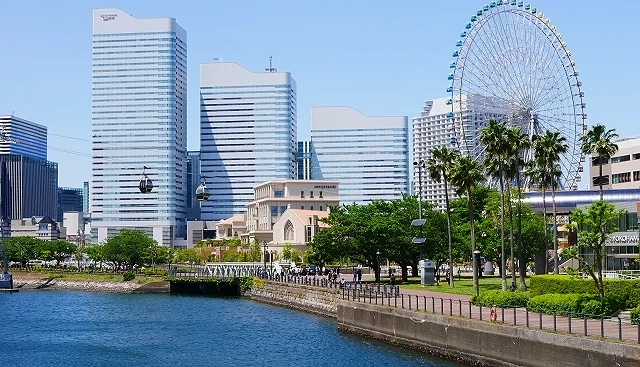
Kanagawa Prefecture borders Tokyo, yet it is rich in natural scenery and traditional Japanese culture. From the Minato Mirai business district in Yokohama and the seaside views of Enoshima in Shonan, to the multicultural atmosphere of Yokohama Chinatown and the natural hot-spring scenery of Hakone, Owakudani, and the Lake Ashi pirate ships, all of these attractions are in Kanagawa! This guide brings together transportation, climate, attractions, and accommodation information to help you plan an easy trip around Kanagawa.
Kanagawa Overview and Five Main Areas

Kanagawa Prefecture is located in the Kanto region, bordering Tokyo to the north and Shizuoka and Yamanashi prefectures to the west, while Tokyo Bay and Sagami Bay lie to the east and south. Thanks to its excellent location, Kamakura in Kanagawa was the ancient capital of the Kamakura shogunate, while the long coastline has become a popular summer seaside destination for people from the Kanto region. Yokohama City, the prefectural capital, was one of Japan's first international ports opened to global trade after the country's period of isolation, leading to strong commercial development. It is home to Yokohama Chinatown, the largest Chinatown in Japan, as well as the Red Brick Warehouse, which reflects the history of customs collection at Yokohama Port. Near the border with Shizuoka Prefecture is the internationally renowned Hakone hot-spring area. With its natural geographic advantages, Kanagawa offers abundant mountain and seafood products as well as rich tourism resources, making it an excellent destination for travelers.
Central Kanagawa Area

Centered around Atsugi and Ebina, the Central Kanagawa area is conveniently located along major transportation routes connecting to central Tokyo. The area has a strong industrial base, while also offering parks, natural surroundings, and well-developed everyday amenities.
Kawasaki・Yokohama Area

Led by Yokohama, the Kawasaki–Yokohama area is one of the largest port-city regions in the Tokyo metropolitan area. In addition to its thriving heavy industries, Yokohama Port serves as an important gateway connecting Japan with the world and is a major hub for international trade. The area is also known for its multicultural atmosphere, night views, food, and sightseeing, making it a popular destination for visitors.
Miura Peninsula Area

The Miura Peninsula is surrounded by the sea on three sides and has numerous fishing ports, with tuna being especially famous. Its varied landscape includes winding coastlines, sea caves, beaches, and old artillery battery ruins, making it a popular day-trip resort area for residents of Tokyo.
Shonan Area

The Shonan area is known for warm sea breezes and sunny beaches and is considered a birthplace of Japanese surfing culture. The coast is lined with tropical-style cafés and art markets, making it ideal for cycling or taking a sunset walk.
Western Kanagawa Area

Western Kanagawa is known for Hakone's hot springs and views of Mount Fuji, with abundant natural resources including mountains and lakes. Historical attractions such as Odawara Castle and Yugawara Onsen are especially popular with visitors.
Kanagawa Attractions
Yokohama Attractions
Yokohama Chinatown

No visit to Yokohama is complete without “Yokohama Chinatown,” the largest of Japan's three major Chinatowns. Passing through its ornate gates feels like entering a different world filled with Chinese culture. The area attracts large numbers of visitors every year and is home to many Chinese and Japanese businesses, as well as the large Yokohama Mazu Temple. Cross the overpass to the other side and the atmosphere changes completely at the Western-style “Motomachi Shopping Street.” Many shops specialize in premium leather goods, jewelry, and fashion, particularly for shoppers in their 30s to 50s. With stylish stores featuring high ceilings and large windows, it is also a great place to take your parents shopping for new clothes.
Address: Yamashitacho, Naka Ward, Yokohama, Kanagawa Prefecture
Access: Exit 3 of Motomachi-Chukagai Station on the Minatomirai Line
Recommended Reading:Yokohama Chinatown Guide: Must-Try Foods, Souvenirs, Transportation, and Attractions in Japan’s Largest Chinatown
YOKOHAMA AIR CABIN

The “Yokohama Air Cabin” is Japan's first urban circulating ropeway and officially opened in April 2021. It connects Sakuragicho with Canal Park, offering views from as high as 40 meters over the Ferris wheel, Red Brick Warehouse, and Yokohama's waterfront. In the past, there was no direct transportation to the Red Brick Warehouse, and visitors had to walk about 15 minutes from Sakuragicho Station. With the aerial cable car, the one-way trip now takes only about 5 minutes. Large windows on all four sides provide unobstructed 360-degree views of Yokohama.
Yokohama Minato Mirai 21

Yokohama Minato Mirai 21 is the city's center for business, entertainment, and tourism. Converted buildings from the former Yokohama shipyard and warehouses stand alongside the towering Yokohama Landmark Tower and Ferris wheel, showcasing the city's dual appeal as a “historic port town × futuristic city.” During the day, you can head to an observation deck for sweeping views of Tokyo Bay. Later, take a walk across Megami Bridge and enjoy the night scenery and departing cruise ships. As the lights of modern high-rises reflect on the water, the area takes on a romantic atmosphere, making it a popular date destination.
Address: Minatomirai, Nishi Ward, Yokohama, Kanagawa Prefecture
Yokohama Anpanman Children's Museum

The “Yokohama Anpanman Children's Museum,” which reopened at a new location in 2019, is a must-visit attraction for families. It originally began as a limited-time facility, but became so popular that it relocated and reopened on July 7, 2019. The complex has three floors. The first floor has shops and restaurants, where you can buy adorable Anpanman popcorn buckets and genuine character-shaped bread. The second floor contains the museum entrance and museum shop, with many exclusive souvenirs for fans to collect. The entire third floor is the museum itself, recreating the world of Anpanman with a bakery, school, and streets, plus opportunities to interact closely with Anpanman and other characters at WAIWAI PARK.
Address: 6-2-9 Minatomirai, Nishi Ward, Yokohama, Kanagawa Prefecture
Opening Hours: 10:00–17:00
Admission: ¥2,200–2,600 (Prices vary by date)
CUPNOODLES MUSEUM Yokohama

You have probably eaten Nissin Cup Noodles, but do you know how they are made? At the “CUPNOODLES MUSEUM,” you can choose your own toppings and soup flavor, decorate the cup yourself, and create a one-of-a-kind cup of noodles. There is also a museum dedicated to founder Momofuku Ando, including a recreation of the research shed where he invented the world's first instant noodles. The museum is especially crowded on holidays, so booking online in advance or arriving early to collect a timed-entry ticket can help reduce waiting time.
Address: 2-3-4 Shinko, Naka Ward, Yokohama, Kanagawa Prefecture
Opening Hours: 10:00–18:00
Admission: Adults (university students and older): ¥500 (High school students and younger are free)
Yokohama Red Brick Warehouse

The Yokohama Red Brick Warehouse was built in the late Meiji period and originally served as a brick warehouse complex. After redevelopment in 2002, Building No. 1 became an exhibition and event venue, while Building No. 2 was transformed into a district for arts, shopping, and dining. The outdoor plaza hosts a variety of events throughout the year, including beer festivals, Christmas markets, and music festivals. At the “Yokohama Red Brick Warehouse,” visitors can experience a distinctive blend of historic port atmosphere and contemporary design.
Address: 1-1-1 Shinko, Naka Ward, Yokohama, Kanagawa Prefecture
Opening Hours: Building No. 1: 10:00–19:00; Building No. 2: 11:00–20:00
Yokohama Hakkeijima Sea Paradise

Hakkeijima is an offshore artificial island in Yokohama's Kanazawa Ward and a resort complex combining marine and land attractions, including four aquariums, roller coasters, and a seaside hotel. Visitors can watch large-scale beluga and dolphin shows, ride the elevated “pirate ship” for views across Tokyo Bay, and take an island sightseeing boat to enjoy the scenery from the water. Whether traveling with children or visiting as a couple, you can easily spend a full day here, making it a great weekend or holiday destination.
Address: Hakkeijima, Kanazawa Ward, Yokohama, Kanagawa Prefecture
Opening Hours: 10:00–20:00
Admission: Adults ¥5,700; Seniors ¥4,100; Elementary and junior high school students ¥4,100; Young children ¥2,400 (Prices vary by season)
Sankeien Garden

Sankeien Garden was created in 1906 by silk trader Sankei Hara and covers about 175,000 square meters. The garden contains ten nationally designated Important Cultural Properties. The three-story pagoda of the former Tomyoji Temple from Kyoto's Muromachi period was relocated here and has become one of the garden's symbolic structures. Cherry blossoms in spring, lotus flowers in summer, autumn foliage, and plum blossoms in winter combine with the landscaped garden and thatched teahouses to create an atmosphere reminiscent of Taisho-era romance, as if time has slowed down.
Address: 58-1 Honmoku Sannotani, Naka Ward, Yokohama, Kanagawa Prefecture
Opening Hours: 9:00–17:00
Admission: Adults ¥900; Children (elementary and junior high school students) ¥200
Sarushima

“Sarushima” is the only natural island in Tokyo Bay. The island is dotted with historical remains from the Meiji period, including coastal artillery batteries, red-brick tunnels, and ammunition depots. Dense greenery and moss-covered walls create a mysterious atmosphere reminiscent of Castle in the Sky. In summer, you can snorkel and enjoy beach BBQs. In spring and autumn, walk through the “Tunnel of Love” and admire views of the former military port at sunset. A visit to Sarushima offers a distinctive “deserted-island adventure.”
Address: 1 Sarushima, Yokosuka City
Family Forest Theme Park “FOREST ADVENTURE”

Located in Yokohama's Asahi Ward, “FOREST ADVENTURE” is a forest adventure park worth saving for anyone who enjoys outdoor activities or family travel. The park uses the natural forest terrain to create aerial obstacle courses where visitors can climb, swing between trees, and challenge high zip lines for an experience unlike a typical city trip. At the Yokohama location, options include the TREK Course for beginners and elementary school children, the KID'S Course for younger children, and the NET Course, which feels like a playground in the sky. Adults and children can choose according to age and fitness level. Safety instruction and staff assistance with equipment are provided before starting, making it approachable even for first-time visitors.
Hakone Attractions
Hakone Shrine

Hakone Shrine has long played an important role as a guardian shrine of the Kanto region. After the Tokaido route connecting Kanto and Kansai was developed during the Heian period, Hakone became a major point along the highway. Travelers came here to pray for safe journeys, while the Kamakura shogunate, the Hojo clan, and even Tokugawa Ieyasu all paid respects at the shrine, making it a witness to Japan's changing eras. A visit should include the famous “Heiwa no Torii” standing in the water. After worshipping, you can also board a “pirate sightseeing ship” from the Lake Ashi pier, and on clear days you may even see Mount Fuji in the distance.
Address: 80-1 Motohakone, Hakone, Ashigarashimo District, Kanagawa Prefecture
Recommended Reading:[Hakone Shrine]Must-See Peace Torii on the Water! Over 1,000 Years of History, a Famous Power Spot, and Must-Buy Omamori Charms
Owakudani

Owakudani is a volcanic landscape in Hakone. Around 3,000 years ago, a steam explosion caused by volcanic activity covered the ground with large deposits, and about 2,900 years ago lava flowed through the area, creating terrain that resembles a “hell valley.” Owakudani remains an active volcanic area, where white steam still rises from vents and sulfur can be seen throughout the landscape. One local specialty you should try is the black egg. The hot-spring water contains iron, which adheres to the eggshell during boiling and reacts chemically with hydrogen sulfide to form iron sulfide, turning the shell black. Local tradition says eating one egg can extend your life by seven years, so it is a classic experience when visiting.
Opening Hours: 9:00–17:00 from March to November; 9:00–16:15 from December to February
Recommended Reading:Owakudani Guide: Explore a 3,000-Year-Old Volcanic Valley, Ride the Ropeway, Try the Famous Black Eggs, and Enjoy Stunning Views of Mount Fuji
Lake Ashi

This crater lake sits at an elevation of 724 meters and is surrounded by mountains. On clear days, Mount Fuji can be reflected on the lake's surface. The vermilion “Heiwa no Torii” rising from the water, pirate ships, and old cedar-lined road create a picturesque and harmonious scene. Cherry blossoms bloom in spring, foliage turns colorful in autumn, and winter offers clear views of snow-covered Mount Fuji, making Lake Ashi one of Hakone's most popular photography spots.
Address: Hakone, Ashigarashimo District, Kanagawa Prefecture
The Hakone Open-Air Museum

As Japan's first open-air sculpture museum, the site features about 120 modern sculptures spread across lawns and wooded hillsides, with the works taking on different appearances as nature and the seasons change. The Picasso Pavilion houses around 300 ceramic works and paintings, while another famous artwork is the stained-glass tower known as the Symphonic Sculpture. Its 360-degree spiral staircase is wrapped in colorful glass, creating the feeling of stepping inside a dreamlike kaleidoscope. Interactive artworks throughout the grounds further blend art and nature, allowing visitors to experience the works directly.
Address: 1121 Ninotaira, Hakone, Ashigarashimo District, Kanagawa Prefecture
Opening Hours: 9:00–17:00
Admission: Adults ¥2,000; High school and university students ¥1,600; Elementary and junior high school students ¥800
Odawara Castle

Odawara Castle was once one of the most extensive castles of the Sengoku period and is counted among Japan's famous castles. It is believed to have been built in the mid-15th century. By around 1500 it had become the base of the Odawara Hojo clan, and it was gradually expanded as a strategic center for controlling the Kanto region, reaching its greatest scale before Toyotomi Hideyoshi's siege. At its peak, it was one of Japan's largest medieval castles. In 1561, the army of Nagao Kagetora (Uesugi Kenshin) besieged it for a month but failed to capture it, earning the castle a reputation as an “impregnable fortress.” After the castle was abolished in 1870, the site was preserved as a historical landmark. Today, the castle park has around 300 cherry trees, as well as plum blossoms, wisteria, more than a thousand azaleas, and hydrangeas, making it a flower-viewing destination throughout the year.
Address: 6-1 Jonai, Odawara City, Kanagawa Prefecture
Opening Hours: 9:00–17:00
Admission: Varies by facility; see the official website for details
Enoshima Attractions
Enoshima

Enoshima is a small offshore island connected to the Shonan coast by the roughly 400-meter-long Benten Bridge. It is about one hour from Shinjuku by the Odakyu Line and is a popular day-trip destination from Tokyo. The island features attractions such as the three shrines of Enoshima Shrine, observation paths, ancient sea caves, and the Bell of Dragon's Love, combining traditional Japanese culture, geology, and natural scenery. From the Enoshima Sea Candle observation lighthouse, visitors can enjoy views of Mount Fuji, Sagami Bay, and the Kamakura coastline, with sunset being especially romantic. The island also has the Samuel Cocking Garden, which blends Japanese and Western elements and regularly hosts the Enoshima Lantern Festival. Illuminated gardens and lighthouse displays create a dreamlike sea of light, and the area is also known as one of Kanto's major illumination destinations.
Address: Enoshima, Fujisawa City, Kanagawa Prefecture
Recommended Reading:Enoshima Day Trip Guide: Top Attractions, Transportation, Food & Recommended Hotels
Enoshima Aquarium

“Enoshima Aquarium” is a well-known date spot near Enoshima. Located beside Sagami Bay, where warm and cold ocean currents meet, the aquarium recreates the bay in a large tank with a dual wave-generating system, underwater rocky reefs, and nearly 8,000 sardines. Watching the sardines shimmer silver as they swim in large schools is especially impressive. The aquarium's “Jellyfish Fantasy Hall” is also highly popular, offering graceful and mysterious views of jellyfish drifting through a dimly lit space. Its atmospheric and romantic setting has made it one of the aquarium's signature areas.
Address: 2-19-1 Katase Kaigan, Fujisawa City, Kanagawa Prefecture
Opening Hours: 9:00–17:00 (Varies by season)
Admission: Adults ¥2,800; High school students ¥1,800; Elementary and junior high school students ¥1,300
Kamakura Attractions
Great Buddha of Kamakura (Kotoku-in)

The “Great Buddha of Kamakura” at Kotoku-in was built in 1252. The bronze statue stands about 11.3 meters tall and weighs roughly 121 tons. Despite nearly a thousand years of history, it has retained much of its original form and is considered an important preserved monument in the history of Japanese religious art. In 1958, it was designated a Tangible Cultural Property by the Japanese government. Because of the Buddha's gentle and auspicious expression, related merchandise such as towels, keychains, chocolates, and cute figurines can be found throughout Kotoku-in and the old streets of Kamakura, making the statue something of a symbol of the city.
Address: 4-2-28 Hase, Kamakura City, Kanagawa Prefecture
Opening Hours: April–September 8:00–17:30; October–March 8:00–17:00
Recommended Reading:Kotoku-in Temple Guide: Great Buddha of Kamakura History, Tickets, Transportation, Interior Viewing, and Nearby Attractions
Slam Dunk Railroad Crossing (Enoden Kamakurakokomae)

Fans of Slam Dunk will probably remember the opening scene where Hanamichi Sakuragi meets Haruko. That scene was inspired by the area around “Kamakurakokomae” Station. Take the Enoden streetcar, get off at Kamakurakokomae Station, and walk to the railroad crossing to see the dreamlike view of a train passing beside the beach. The area becomes very crowded on holidays, so if you want a photo inspired by Hanamichi Sakuragi, arrive early to find a good spot.
Address: 1-1-25 Koshigoe, Kamakura City, Kanagawa Prefecture
Tsurugaoka Hachimangu

Tsurugaoka Hachimangu was founded in 1063 and became a spiritual symbol of the Kamakura shogunate during the era of Minamoto no Yoritomo, as well as a guardian shrine of the warrior class. One of the must-see features is Wakamiya Oji, a roughly 1.8-kilometer approach running straight from Yuigahama Beach toward the shrine. The route is lined with traditional shops, allowing visitors to enjoy shopping and a distinctly Japanese atmosphere while strolling through Kamakura.
Recommended Reading:Tsurugaoka Hachimangu Shrine Guide: Cherry Blossom Tunnel, Pigeon Charms, Transportation & Admission Information
Ugafuku Shrine

Ugafuku Shrine is located deep inside a rocky cave. According to legend, near the end of the Heian period, Minamoto no Yoritomo, the first shogun of the Kamakura shogunate, dreamed during a time of famine that the deity Ugafuku instructed him to create a spring from the rocks in the valley. The spring was said to bring abundant harvests and financial fortune. Yoritomo then established the shrine in 1185 to worship Ugafuku. Hidden deep in a valley, the shrine is about a 20-minute walk away and feels removed from the bustle of Kamakura. Visitors can take part in the famous money-washing ritual and enjoy a quiet, blessed atmosphere.
Address: 2-25-16 Sasuke, Kamakura City
Opening Hours: 8:00–16:30
Admission: 2-25-16 Sasuke, Kamakura City
Hasedera Temple

Hasedera Temple is famous for housing an approximately 9.18-meter-tall wooden statue of the Eleven-Headed Kannon, one of the largest wooden Buddhist statues in Japan. The temple lies at the foot and slopes of lush Mount Kannon, where flowers bloom throughout the seasons. In summer, around 2,500 hydrangea plants representing about 40 varieties attract large numbers of visitors. Because of its beautiful natural scenery, Hasedera is also known as the “Pure Land of Kamakura.” Combining nature, Buddhist culture, and a peaceful atmosphere, the temple is an ideal place for rest and cultural exploration.
Kawasaki Attractions
Kawasaki Factory Night Views

Kawasaki's coastal industrial zone is brightly illuminated at night, with lights and rising steam creating scenery recognized as one of Japan's five major factory night views. Visitors can take an approximately 90-minute guided cruise through areas such as Shiohama and the Keihin Canal to see blazing industrial flares and neon-lit pipelines, or choose a bus night-view tour. Whether viewed from the water or from land, the industrial landscape offers striking perspectives and has become a popular destination for photographers and fans of modern industrial scenery.
Address: 7-2 Ukishimacho, Kawasaki Ward, Kawasaki City
Kawasaki Daishi

According to legend, near the end of the Heian period, Kanenori Hirama was falsely accused and forced to leave his hometown. He eventually settled in the Kawasaki area and lived a difficult life as a fisherman. At the age of 42, he received a divine message in a dream instructing him to retrieve from the sea a sacred statue of Kobo Daishi believed to ward off misfortune. He worshipped it faithfully every day, and eventually his bad fortune was lifted, his name was cleared, and he was able to return safely to his hometown. Because of this story, the sacred statue of Kobo Daishi became highly revered, and Tokugawa Ienari, the 11th shogun of the Edo period, also visited to pray for protection from misfortune. The reputation of Kawasaki Daishi as a temple for warding off bad luck spread widely among the people of Edo. Today, worshippers continue to visit to pray for family safety, traffic safety, health, and longevity.
Address: 4-48 Daishimachi, Kawasaki Ward, Kawasaki City, Kanagawa Prefecture
Opening Hours: Vary by season; see the official website for details
Fujiko・F・Fujio Museum

Doraemon creator Fujiko F. Fujio lived in Kawasaki's Tama Ward for more than 30 years, from after his marriage until his death, giving him a deep connection with the city. After his passing, his wife hoped to express gratitude to Kawasaki, which led to the idea of creating a memorial museum. The “Fujiko F. Fujio Museum” officially opened in 2011. Visitors can see the artist's original hand-drawn manuscripts, a recreation of his studio, the Fujikoya souvenir shop, a café serving Memory Bread and character-themed desserts, and original animation shown only at the “F Theater.” Tickets require advance reservations, so remember to purchase them beforehand through LAWSON convenience stores in Japan.
Kanagawa Hot Spring Attractions
Hakone-Yumoto Onsen

Kanagawa Prefecture has a series of hot-spring areas collectively known as the “Twenty Hot Springs of Hakone.” In the past, these springs were called the “Seven Hot Springs of Hakone.” As new hot-spring sources were developed, the number gradually increased, eventually evolving into twelve springs. The oldest is “Hakone-Yumoto Onsen,” whose history dates back to the Nara period. Looking toward the Hakone mountains from Hakone-Yumoto Station, you can see Mount Yusaka stretching across the ridge like an elephant's back. Even today, abundant hot-spring water continues to flow naturally from Mount Yusaka, sustaining this historic hot-spring town.
Address: 211-1 Yumoto, Hakone, Ashigarashimo District, Kanagawa Prefecture
Yugawara Onsen

Yugawara Onsen rises from the foothills of the Sagami mountains and is famous as the only hot spring mentioned in the Man'yoshu, the oldest surviving anthology of Japanese poetry. During the Edo period, it became a gathering place for aristocrats, writers, and artists. The spring water is gentle, colorless, and odorless and has long been known as “Yakushi no Yu” for its reputation in treating wounds and abrasions. As transportation improved, more visitors began traveling from Tokyo and other areas for recuperation and tourism, making Yugawara one of the popular hot-spring destinations near Tokyo.
Address: Yugawara, Ashigarashimo District, Kanagawa Prefecture
Hakone Kowakien Yunessun

Hakone Kowakien Yunessun combines a hot spring resort with a water park, featuring as many as 23 creative baths and water slides, including wine, coffee, and chocolate-themed baths. It is especially suitable for families and groups of friends who want to enjoy water activities, hot springs, and fun photos at the same time. Outdoor baths offer views of the Hakone mountains and take on a dreamlike atmosphere after evening illumination. The complex also includes the traditional Japanese nude bathing area “Mori no Yu,” where visitors can enjoy a relaxing hot-spring experience surrounded by forest. Several hot-spring hotels nearby make it easy to turn the visit into a full resort stay.
Address: 1297 Ninotaira, Hakone, Ashigarashimo District, Kanagawa Prefecture
Opening Hours: 9:00–19:00
Admission: Varies by facility; see the official website for details
Recommended Food and Restaurants in Kanagawa
bills

Originally from Sydney and often called the home of the “world's best breakfast,” bills has a branch on the first floor of Building No. 2 at the Yokohama Red Brick Warehouse. Large floor-to-ceiling windows overlook Minato Mirai 21, the Ferris wheel, and cruise ships. Sunlight fills the restaurant during the day, while neon lights reflect on the water at night, adding to the romantic atmosphere. Signature dishes include ricotta pancakes and eggs Benedict, made with carefully selected cream and eggs. Even on weekdays, queues are common, and the restaurant has remained popular for many years.
Genpin Fugu

Fugu specialty restaurant “Genpin” uses carefully selected fresh tiger pufferfish with firm, naturally sweet flesh. A variety of set menus are available, from thin-sliced fugu sashimi and freshly fried fugu to traditional Japanese paper hot pot. To finish the meal, you can use the collagen-rich broth to make zosui rice porridge, completing a full fugu feast. “Genpin” is known for safe, professional preparation and consistent quality, allowing diners to enjoy pufferfish with confidence.
Yokohama Iekei Ramen

Japan has many ramen styles and schools, and “Yokohama Iekei Ramen” began with the owner of Yoshimuraya in Yokohama asking what would happen if Kyushu-style tonkotsu broth were combined with Tokyo-style soy sauce. The experiment became popular, and “Yokohama,” the location of the original shop, was added to the name. Iekei ramen has since become a major ramen style. Its defining feature is a pork-bone and soy-sauce broth topped with thick slices of chashu, sheets of nori, and a portion of spinach. The flavor is rich yet balanced. When traveling in Japan, restaurants with names ending in “-ya” are often associated with the Iekei style.
Shin-Yokohama Ramen Museum

Opened in 1994, this was the world's first ramen-themed facility. Its two basement floors recreate a 1958 Showa-era streetscape and bring together famous ramen shops from across Japan, allowing visitors to “taste ramen from around Japan in one place.” In addition to sampling regional ramen styles, visitors can learn about ramen history and try making noodles by hand. From cultural experiences to food, the museum feels like stepping back in time and is a paradise for fans of Japanese history and ramen.
SUBZERO

Located at Yokohama's Osanbashi International Passenger Terminal, the Italian-French restaurant “SUBZERO” features expansive floor-to-ceiling windows with close-up sea views, creating the feeling of dining aboard a luxury cruise ship. The chef combines Italian and French culinary styles to deliver both visual and culinary enjoyment. During Yokohama's summer fireworks season, SUBZERO also offers limited “Fireworks Courses” timed with local fireworks displays, allowing guests to enjoy refined cuisine while watching the show. In addition to everyday dining, its romantic atmosphere has made SUBZERO a popular wedding venue.
Yakiniku TORAJI

Famous yakiniku restaurant “Yakiniku TORAJI,” which originated in Ebisu, is known for its signature thick-cut beef tongue with a tender yet crisp, juicy texture, as well as melt-in-the-mouth thick-cut beef belly. Beyond yakiniku, the restaurant serves fresh seafood, Korean-style bibimbap, and other dishes to suit different tastes. The Shin-Yokohama branch features elegant wood-toned interiors, spacious seating, and seats with night views, making it suitable for family gatherings, dates, or meals with friends.
Misaki Tuna

Seafood lovers should not miss “Misaki Tuna.” Misaki Port sits at the southern tip of the Miura Peninsula, near the meeting point of Sagami Bay and Tokyo Bay. Fishing has developed here since the Muromachi period, and tuna fishing flourished from the Showa era onward. The port has long ranked among Japan's leading tuna landing ports, making Misaki almost synonymous with tuna. There is a fish market at the harbor and many nearby tuna restaurants serving popular dishes such as bluefin tuna sashimi, nigiri sushi, and sashimi rice bowls, making the area ideal for a food-focused trip.
Yokosuka Navy Curry

Why is curry one of the must-try foods in Yokosuka, home to one of the largest U.S. military bases in Japan? In the early Meiji period, many Japanese navy and army personnel suffered from beriberi. Naval physician Kanehiro Takaki believed the heavy reliance on white rice caused nutritional deficiencies. After referring to British Navy menus, curry was introduced together with salad and milk as a set meal, which helped reduce the spread of beriberi. Curry later became one of Yokosuka's signature foods. Even today, the Japan Maritime Self-Defense Force maintains the custom of eating curry rice every Friday. When visiting Yokosuka, try a set served with milk and salad for the classic style.
Sanma-men

The Japanese name “Sanma-men” sounds the same as the Japanese word for Pacific saury, which can make first-time visitors imagine noodles topped with a whole fish. That is not the case. Sanma-men originally began as staff food in restaurants, made by stir-frying meat with noodles and thickening the sauce with starch. After World War II, a Chinese restaurant in Yokohama first added it to the menu, stir-frying soy sauce, bean sprouts, napa cabbage, and other seasonal vegetables in a thickened sauce before pouring it over soup noodles. It may look somewhat like Nagasaki champon, but the flavor is different and highlights the texture of assorted vegetables.
Shonan Raw Shirasu Dishes

Many people are familiar with shirasu, or young whitebait, and it is also a specialty of the Shonan area. These tiny fish of various species are said to arrive on the Kuroshio Current before drifting into Sagami Bay. Shirasu fishing around Enoshima has therefore been famous since the Taisho period. Raw shirasu dishes can be found throughout Kamakura and Enoshima, including shirasu rice bowls and even shirasu burgers. Compared with the cooked shirasu commonly eaten in Taiwan, raw shirasu has a springy texture and relatively mild fishiness, making it one of Enoshima's must-try local foods.
Shopping in Kanagawa
Yokohama Minato Mirai 21
The “Yokohama Minato Mirai 21” area is home to several large shopping centers, including Queen's Square, MARK IS, and Landmark Plaza. They feature many popular brands covering fashion, home goods, and other categories, along with a wide variety of dining options. Beyond shopping and food, the brilliant night scenery is another highlight, making the area ideal for an evening walk in a romantic atmosphere.
MITSUI OUTLET PARK Yokohama Bayside
MITSUI OUTLET PARK Yokohama Bayside underwent a major renovation in 2020 and now has around 170 brand outlet stores. The complex preserves its seaside atmosphere while adding many restaurants and cafés with a wide range of dining options. It is only a 5-minute walk from Torihama Station on the Seaside Line, making access convenient, and it also has a spacious parking lot. Visitors can enjoy shopping, views of one of Asia's largest marinas, and a relaxed waterfront atmosphere in the renewed dining and retail spaces.
Komachi-dori Street
When visiting Kamakura, “Komachi-dori” is one attraction you should not miss. The shopping street runs beside the approach to Tsurugaoka Hachimangu, close to both the shrine and the East Exit of Kamakura Station. After visiting the shrine, you can stroll through the traditional streetscape, try Japanese snacks, look for souvenirs and gifts, or enjoy lunch and tea. Komachi-dori brings together Japanese creative goods, traditional crafts, and distinctive local foods, making it a great place to experience Kamakura's unique character.
AEON Sagamihara Shopping Center
“AEON Sagamihara Shopping Center” is a practical shopping destination near Tokyo. Rather than focusing on tourist attractions, it is designed around everyday convenience. In addition to a wide range of shops, the food court stays open late and popular brands such as 3COINS are available. It is convenient for restocking travel supplies, dining, or everyday shopping, and suits travelers who want a glimpse of local daily life or a relaxed shopping stop.
Recommended Kanagawa Souvenirs
Kiyoken

Since its establishment in 1928, Kiyoken has become famous across Japan for its distinctive shumai bento. Along with a variety of Japanese side dishes, the bento features its signature shumai and has become one of Japan's representative railway boxed meals. Kiyoken's classic shumai is made with carefully selected scallops from Hokkaido's Sea of Okhotsk and domestically produced Japanese pork, producing a savory flavor that remains delicious even when cooled. In addition to the classic version, shrimp shumai, crab shumai, and other varieties are also available. Whether enjoyed as an ekiben or an everyday boxed meal, Kiyoken's shumai has become a familiar classic for many people in Japan.
Kikukawa Shoten

“Kikukawa Shoten” is a long-established shop in the Hakone-Yumoto hot-spring district. Its signature Japanese sweet, “Hakone Manju,” has a cake-like outer layer similar to castella and is filled with smooth white bean paste made from Hokkaido beans. The flavor is light and sweet without being heavy. Visitors can also watch the Hakone Manju being made in the shop, with the aroma often drawing passersby to stop. Individual pieces are available to eat on the spot, while gift boxes make convenient souvenirs.
Recommended Accommodation in Kanagawa
Hakone Gora Onsen Tokinoyu Setsugetsuka

Located just a 1-minute walk from Hakone-Gora Station, “Tokinoyu Setsugetsuka” is a hot-spring ryokan combining traditional Japanese style with modern comfort. It has 158 guest rooms, each equipped with a private open-air hinoki cypress bath, allowing guests to relax in hot spring water surrounded by peaceful nature. Dining is another highlight, with two dinner options: the “Kacho” course featuring seasonal Japanese kaiseki cuisine and hot pot, and the “Fugetsu” course featuring wagyu hot pot and sushi kaiseki. If you get hungry after an evening soak, the hotel also provides complimentary late-night noodles.
Address: 1300-61 Gora, Hakone, Ashigarashimo District, Kanagawa Prefecture
Check-in / Check-out: Check-in 15:00 / Check-out 11:00
Sotetsu Fresa Inn Yokohama Higashiguchi

Business hotel “Sotetsu Fresa Inn Yokohama Higashiguchi” is conveniently located near Yokohama Station's East Exit, only about a 2-minute walk from the station. The hotel has a simple, modern design with bright, spacious, and clean interiors, and offers a variety of room types suitable for both families and solo travelers. It is also close to well-known attractions such as Yokohama Chinatown and Minato Mirai, making it a convenient choice for both business and leisure stays.
Address: 5-10 Kinkocho, Kanagawa Ward, Yokohama
Check-in / Check-out: Check-in 15:00 / Check-out 11:00
Hotel New Grand

Hotel New Grand is located in central Yokohama and features an elegant exterior and classical European-inspired interiors. The hotel's main building is recognized by Yokohama City as a historic structure and is listed as a Heritage of Industrial Modernization, giving the property a strong historical character. The hotel offers a range of room types across 230 rooms, including rooms in the tower with beautiful harbor views and the “MacArthur Suite,” which once served as General MacArthur's office. Its spacious and refined accommodations suit a variety of travelers.
Address: 10 Yamashitacho, Naka Ward, Yokohama City, Kanagawa Prefecture
Check-in / Check-out: Check-in 14:00 / Check-out 11:00
Gyokutei

The Japanese hot-spring ryokan “Gyokutei” in Hakone-Yumoto offers traditional tatami guest rooms and open-air baths. Its hot-spring water comes from local natural sources and is known for its beauty-related benefits. In addition to private baths in the rooms, there is also a large panoramic bath overlooking the Hakone mountains. Dinner features refined kaiseki cuisine made with fresh seasonal ingredients and can be enjoyed in the privacy of your room.
Address: 501 Yumoto, Hakone, Ashigarashimo District, Kanagawa Prefecture
Check-in / Check-out: Check-in 15:00 / Check-out 11:00
Richmond Hotel Yokohama Ekimae

“Richmond Hotel Yokohama Ekimae,” located in front of Yokohama Station, offers bright, clean, and convenient accommodation. Each guest room has a comfortable bed and free Wi-Fi, and the hotel provides 24-hour front desk service. The on-site restaurant serves a varied buffet with Japanese, Western, and Chinese dishes to suit different tastes.
Address: 2-13-7 Tsuruya-cho, Kanagawa Ward, Yokohama City, Kanagawa Prefecture
Check-in / Check-out: Check-in 14:00 / Check-out 11:00
Kanagawa Transportation
Tokyo to Kanagawa
【Train / JR Tokaido Main Line】
| Route | (Tokyo Station → Yokohama Station) |
|---|---|
| Time | Approx. 27 minutes |
| Fare | ¥528 (IC) |
【Train / JR Yokosuka Line】
| Route | (Tokyo Station → Yokohama Station) |
|---|---|
| Time | Approx. 30 minutes |
| Fare | ¥528 (IC) |
【Train / JR Keihin-Tohoku Line】
| Route | (Tokyo Station → Yokohama Station) |
|---|---|
| Time | Approx. 41 minutes |
| Fare | ¥528 (IC) |
Haneda Airport to Kanagawa
【Train / Keikyu Airport Line Express】
| Route | (Haneda Airport Terminal 1・2 Station → Yokohama Station) |
|---|---|
| Time | 35 minutes |
| Fare | ¥397 (IC) |
【Bus / Keikyu Bus】
| Route | (Haneda Airport Terminal 3 Bus Stop → Yokohama Station East Exit) |
|---|---|
| Time | 45 minutes |
| Fare | ¥800 |
Osaka to Kanagawa
【Shinkansen / JR Tokaido Shinkansen Nozomi + Yokohama Municipal Subway Blue Line】
| Route | (Shin-Osaka Station → Shin-Yokohama Station → Yokohama Station) |
|---|---|
| Time | 2 hr 27 min |
| Fare | ¥13,782 |
Nagoya to Kanagawa
【Shinkansen / JR Tokaido Shinkansen Nozomi + Yokohama Municipal Subway Blue Line】
| Route | (Nagoya Station → Shin-Yokohama Station → Yokohama Station) |
|---|---|
| Time | 1 hr 35 min |
| Fare | ¥10,142 |
Essential Transportation Between Kamakura and Fujisawa: Enoden

The Enoden is part of the Odakyu Group and opened in 1902, connecting Fujisawa and Kamakura. Riding the Enoden offers views of the blue coastline, historic city scenery, and narrow streets through residential neighborhoods, giving travelers a strong sense of local daily life. The seaside railroad crossing near Kamakurakokomae Station became internationally famous after appearing as inspiration in the anime Slam Dunk, turning it into a pilgrimage spot for railway and anime fans. The Enoden also offers the “Noriorikun” one-day pass, which allows unlimited boarding and is ideal for travelers who want to explore the line in depth.
Practical Travel Information for Kanagawa
Kanagawa Weather

Kanagawa Prefecture has a Pacific coast climate, with humid, rainy summers and relatively dry winters. The Miura Peninsula faces Tokyo Bay and Sagami Bay and is influenced by warm ocean currents, giving it a mild maritime climate. Rainfall is concentrated mainly during the rainy season, autumn rain season, and typhoon season. As autumn approaches, typhoons move northward from southern waters and may pass near Japan. When an autumn rain front moves through, heavy rainfall can occur.
| Item | Spring (March–May) | Summer (June–August) | Autumn (September–November) | Winter (December–February) |
|---|---|---|---|---|
| Average Temperature | March 9.7°C April 14.5°C May 18.8°C | June 21.8°C July 25.6°C August 27.0°C | September 23.7°C October 18.5°C November 13.4°C | December 8.7°C January 6.1°C February 6.7°C |
| Highest Temperature | May 23.1°C | August 31.0°C | September 27.3°C | December 12.5°C |
| Lowest Temperature | March 6.0°C | June 19.1°C | November 10.1°C | January 2.7°C |
| Rainfall (Highest in Each Season) | May 152.6 mm | June 188.8 mm | September 241.5 mm | January 64.7 mm |
| Activities | ・Cherry Blossom Viewing Along the Ooka River ・Lake Ashi Cruise | ・Swimming at Shonan Beaches ・Kamakura Fireworks Festival | ・Hiking in Tanzawa ・Hakone Daimyo Procession | ・Hakone Hot Springs ・Yokohama Illumination Displays |
| Recommended Clothing | ・Long-Sleeve T-shirt ・Knitwear ・Light Jacket | ・Short-Sleeve Shirt / Tank Top ・Quick-Dry T-shirt ・Light Jacket | ・Long-Sleeve T-shirt ・Light Jacket ・Knitwear | ・Down Jacket / Wool Coat ・Sweater ・Scarf and Gloves |
| Things to Note | ・Large Temperature Differences Between Morning and Evening ・Pollen Season | ・Hot and Humid Weather ・Sun Protection and Sudden Showers | ・Bring an Umbrella for Typhoon Rain ・Cooler Evenings | ・Dry Air and Static Electricity ・Watch for Strong Winds |
Below are specific seasonal clothing recommendations for visiting Kanagawa.
| Spring | Summer | Autumn | Winter |
|---|---|---|---|
| 【Upper Body】 Long-sleeve top, light jacket, knitwear | 【Upper Body】 Short-sleeve T-shirt, quick-dry tank top | 【Upper Body】 Long-sleeve top, light jacket, knitwear | 【Upper Body】 Down jacket / coat, sweater |
| 【Lower Body】 Long pants or skirt | 【Lower Body】 Shorts, lightweight pants, skirt | 【Lower Body】 Long pants, skirt | 【Lower Body】 Long pants, thermal pants |
| 【Shoes】 Sneakers, casual shoes | 【Shoes】 Sandals, sneakers | 【Shoes】 Sneakers, casual shoes | 【Shoes】 Boots, sneakers |
Seasonal Events and Festivals in Kanagawa
Kifune Festival
The “Kifune Festival” is an annual summer festival held by Kifune Shrine in Kanagawa. During the festival, boats decorated with elaborate floral ornaments and mikoshi boats form a maritime procession to pray for good health and protection from illness. The festival was designated an Intangible Cultural Property of Kanagawa Prefecture in 1958, an Intangible Folk Cultural Property of Kanagawa Prefecture in 1976, and an Important Intangible Folk Cultural Property in 1996. Together with the Kangen Festival held at Itsukushima Shrine in Miyajima, Hatsukaichi City, Hiroshima Prefecture, and the Shiogama Port Festival held by Shiogama Shrine and Shiwahiko Shrine in Shiogama City, Miyagi Prefecture, it is known as one of Japan's three major boat festivals. Its spectacular scenes attract many visitors every year.
Hakone Daimyo Procession
The “Hakone Daimyo Procession” is one of Hakone's three major festivals. During the Edo period, the Tokugawa shogunate required daimyo lords from across Japan to reside in Edo every other year. While the daimyo traveled between Edo and their home domains, their wives and children were required to remain in Edo as a way of ensuring loyalty. During these journeys, local lords displayed their status and wealth by dressing retainers in elaborate clothing and carrying symbols of prosperity, making daimyo processions grand and highly decorative. Around autumn each year, Hakone-Yumoto recreates these processions with participants in traditional samurai clothing marching through the streets, accompanied by traditional music and dance performances. The event offers visitors a vivid way to learn about Japanese history and culture.
Enoshima Lantern Festival
Known as one of the Kanto region's major illumination events, the “Enoshima Lantern Festival” is held on Enoshima every summer. Around 1,000 lanterns illuminate locations across the island, including Enoshima Shrine and Samuel Cocking Garden, creating a spectacular and romantic atmosphere. The event combines natural scenery, sea breezes, and light, immersing visitors in a poetic summer evening. Large numbers of travelers come each year to enjoy the peaceful atmosphere and add a memorable experience to their summer trip.
Odawara Plum Blossom Festival
The “Odawara Plum Blossom Festival” is known for its magnificent plum scenery. At Soga Bairin, around 35,000 plum trees bloom with Mount Fuji visible in the distance. Odawara Castle Park has around 250 plum trees, with the castle keep, Akagane Gate, and Tokiwagi Bridge forming a picturesque background. During the festival, Soga Bairin has stalls selling local specialties and food, while Odawara Castle Park hosts a variety of limited-time events, allowing visitors to enjoy both plum blossoms and local culture and cuisine.
Lake Sagami Illumination Festival
The winter illumination event “Lake Sagami Illumination Festival” is held in Sagamihara City, Kanagawa. Its venue is the Lake Sagami resort “MORI MORI,” which combines an amusement park, camping area, barbecue facilities, and hot springs. More than six million LED lights cover the park's rolling terrain and slopes, creating a dynamic and spectacular display of light.
After reading this introduction to Kanagawa, do you feel you know this fascinating destination better? Located right next to central Tokyo, Kanagawa offers an impressive mix of natural scenery, history and culture, food, and shopping. On your next trip to Tokyo, consider setting aside a few days to explore this diverse and surprising prefecture.
Kanagawa Travel FAQ
1. What Is the Best Way to Visit Kamakura and Enoshima in One Day from Tokyo?
A convenient plan is to travel from Shinjuku to Kamakura by Odakyu or JR, visit Tsurugaoka Hachimangu and stroll along Komachi-dori in the morning, then head to Enoshima in the afternoon for sea views and sunset. Buying the “Enoshima-Kamakura Freepass” can also save money.
2. I'm Visiting Hakone for the First Time. Does the Weather Change a Lot, and What Should I Wear?
Hakone has large elevation differences, so mornings and evenings can be cool. Even in summer, bringing a jacket is recommended. Temperature changes are greater in autumn and winter, so wear warm, wind-resistant clothing and carry rain gear as well.
3. Are Yokohama Red Brick Warehouse and Minato Mirai Safe at Night? Are They Good for Evening Walks?
Yes. Yokohama Minato Mirai is beautifully illuminated at night and has a pleasant atmosphere, making it one of the most popular night-view walking areas for couples and photographers. The area is generally considered safe for an evening stroll and photography.